Invest2 publishers3 min readPublished
UAE security chiefs join the first high-level Saudi talks since the Yemen split
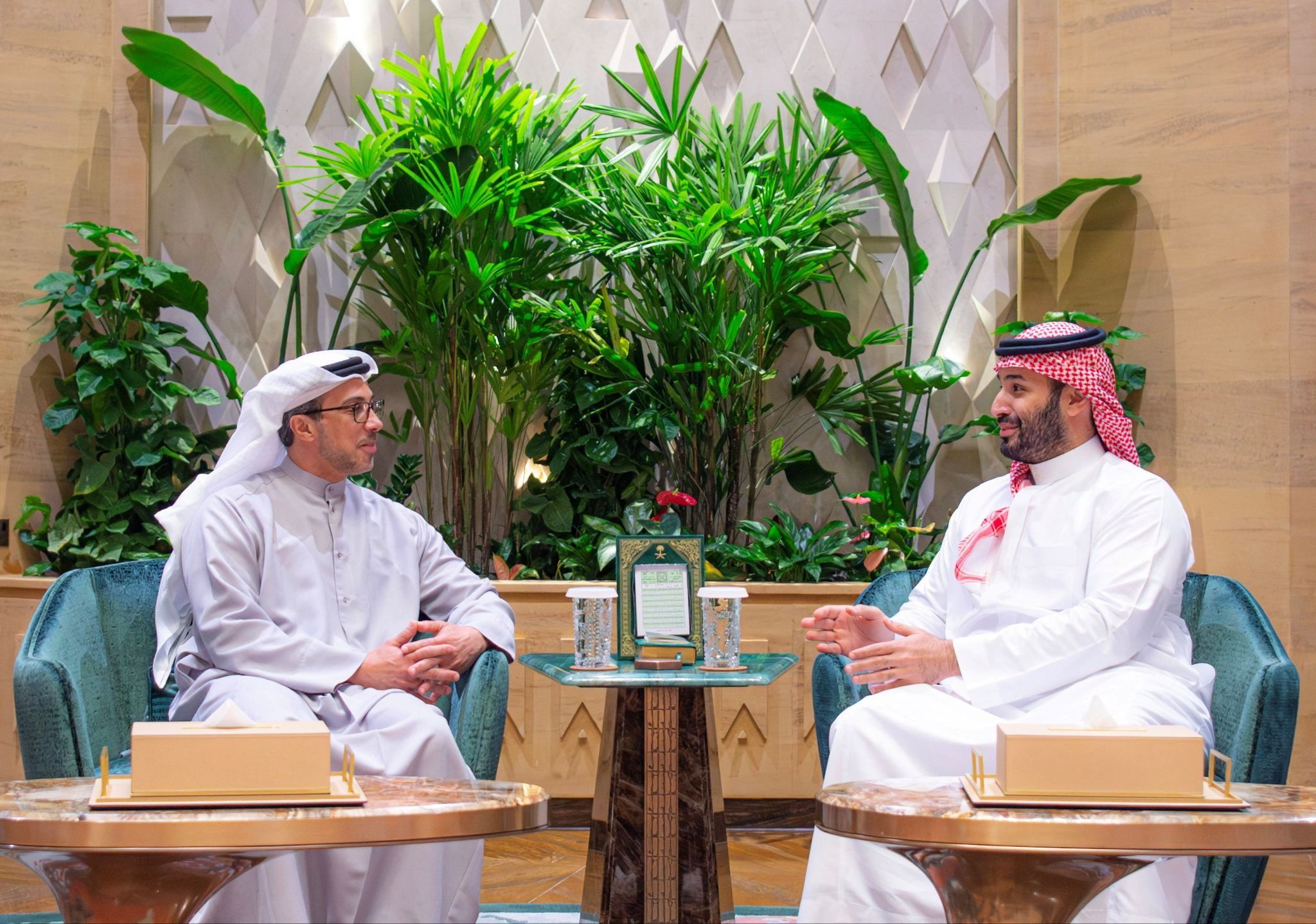
UAE vice president Sheikh Mansour bin Zayed met Mohammed bin Salman in Riyadh on Tuesday, their first high-level meeting since January's split over Yemen. Whether the thaw outlasts a US-Iran deal on Hormuz will show which threat is holding it together.
The Investor · Invest desk
What happened
- Saudi forces defeated the UAE-aligned Southern Transitional Council in January, and the UAE then effectively withdrew from Yemen.
- In September the Iran-aligned Houthis pushed south toward the Bab al-Mandab Strait, beating pro-government forces including Tareq Saleh's UAE-backed National Resistance Forces.
- The UAE delegation in Riyadh included the heads of its national security council, crisis management authority and defense procurement body, Semafor reported.
- Houthi missile attacks have hit critical infrastructure and major cities in Saudi Arabia over the past month, according to Semafor.
- Iran has offered to reopen the Strait of Hormuz within seven days if Washington lifts its naval blockade, frees Iranian funds, eases oil sanctions and agrees to a ceasefire.
Compiled by The InvestorSomething wrong?How this is made
Why it matters
- decision Abu Dhabi now has to decide whether to take back a role in southern Yemen that it gave up after January, this time with Riyadh as the party asking.
- contradiction Fortune credits the Houthi advance and Semafor the US-Iran war, and the difference sets the thaw's lifespan: as long as the Houthi threat lasts, or only as long as the Iran war.
- exposure A US answer on Iran's seven-day Hormuz offer can change the pressure behind the Saudi-UAE thaw faster than the Yemen front can, so the reset is exposed to talks run between Washington and Tehran through Qatari mediators.
Riyadh wants the UAE back in Yemen, or rather, it wants Abu Dhabi to manage the southern factions and keep them from undermining the anti-Houthi front [9]. Ali Shihabi, a Saudi commentator close to the royal court, gave that account to the Financial Times, according to Semafor [9]. On its terms the ask is a puzzle. The factions are the ones Saudi forces fought in January, and the patron now asked to manage them is the one that then left [2]. The Houthi defeat of Tareq Saleh's UAE-backed forces in September, eight months later, gave Abu Dhabi a beaten ally of its own [3][1]. The UAE's future role in Yemen came up on Sunday in Abu Dhabi, at a meeting attended by Benjamin Netanyahu, Sheikh Mohammed bin Zayed and Saudi representatives [5].
The two reports disagree on what forced the thaw. "This has changed the strategic goalposts," Fortune's Gulf Brief wrote of the Houthi advance [4]. Semafor puts the weight on the US-Iran war, saying it threatens trillions of dollars invested in transforming the region's economies, and notes that the rupture ran through Sudan as well as Yemen [6][7]. Riyadh is collecting defenders either way. "Any enemy of Saudi Arabia is an enemy of Pakistan," Pakistan's defense minister told reporters in Rome [11].
The Houthis are moving on Bab al-Mandab, yet neither report includes a freight rate or a transit count for the strait. The strait with negotiating terms attached is Hormuz, where Iran's seven-day offer, passed through Qatari mediators, would trade a reopening for US concessions [12]. Washington can accept; Iranian foreign minister Abbas Araghchi told state broadcaster IRIB he expected a formal response by the end of Tuesday [13]. It can stall, and Trump has set out an opening position, writing on Truth Social after an Axios report of possible sanctions relief, "This is untrue. I offered them NOTHING" [14]. Or the Houthis keep advancing whatever happens at Hormuz. In Tehran's open market the rial fell to more than 2.54 million per dollar on Tuesday from around 2.4 million on Monday, according to Pashizi [15], a loss of about 5.5% of its dollar value in one day [2].
The largest private commitment in the material was made with the war under way. Microsoft plans more than $10 billion of cloud and AI spending across the UAE, Saudi Arabia, Qatar and Kuwait by 2030 [16], plus more than $400 million in subsea and terrestrial connectivity across the Middle East [18], after Iranian drones damaged three AWS facilities in the UAE and Bahrain in March [19]. Brad Smith, Microsoft's vice chair and president, told Reuters it was "an aggressive spending schedule" [17]. Two of the four countries are the pair now repairing ties over Yemen [16].
I think the reset is a wartime security arrangement held together mainly by the Iran war, and the strait to price it against is Hormuz. The counter-thesis follows from Fortune's reading: if the Houthi push changed the goalposts on its own, the thaw should survive a Hormuz deal. If Hormuz reopens and the UAE still takes on southern Yemen, the Houthi threat is what binds Riyadh and Abu Dhabi, and I have it wrong. If the Yemen and Sudan disputes come back within weeks of a deal, Semafor had the better explanation [7].
What to watch
- The US reply to Iran's seven-day Hormuz proposal, and whether it includes the sanctions relief Trump denied offering.
- Any UAE commitment of forces, money or command to southern Yemen following Sunday's Abu Dhabi discussion of its role.
- Whether the Houthis reach the Bab al-Mandab Strait itself or widen missile strikes on Saudi infrastructure.