Invest1 publisher3 min readPublished
Barkin says inflation's drivers are proving harder to shake after the Fed's first hike since 2023
Richmond Fed President Tom Barkin said tariffs, gasoline and AI spending are keeping inflation up after the Fed's first rate increase since mid-2023. Planning for cuts now means betting against the persistence Barkin described.
The Investor · Invest desk
What happened
- The Federal Reserve raised interest rates last week, its first increase since mid-2023, as some of the forces behind inflation prove harder to shake.
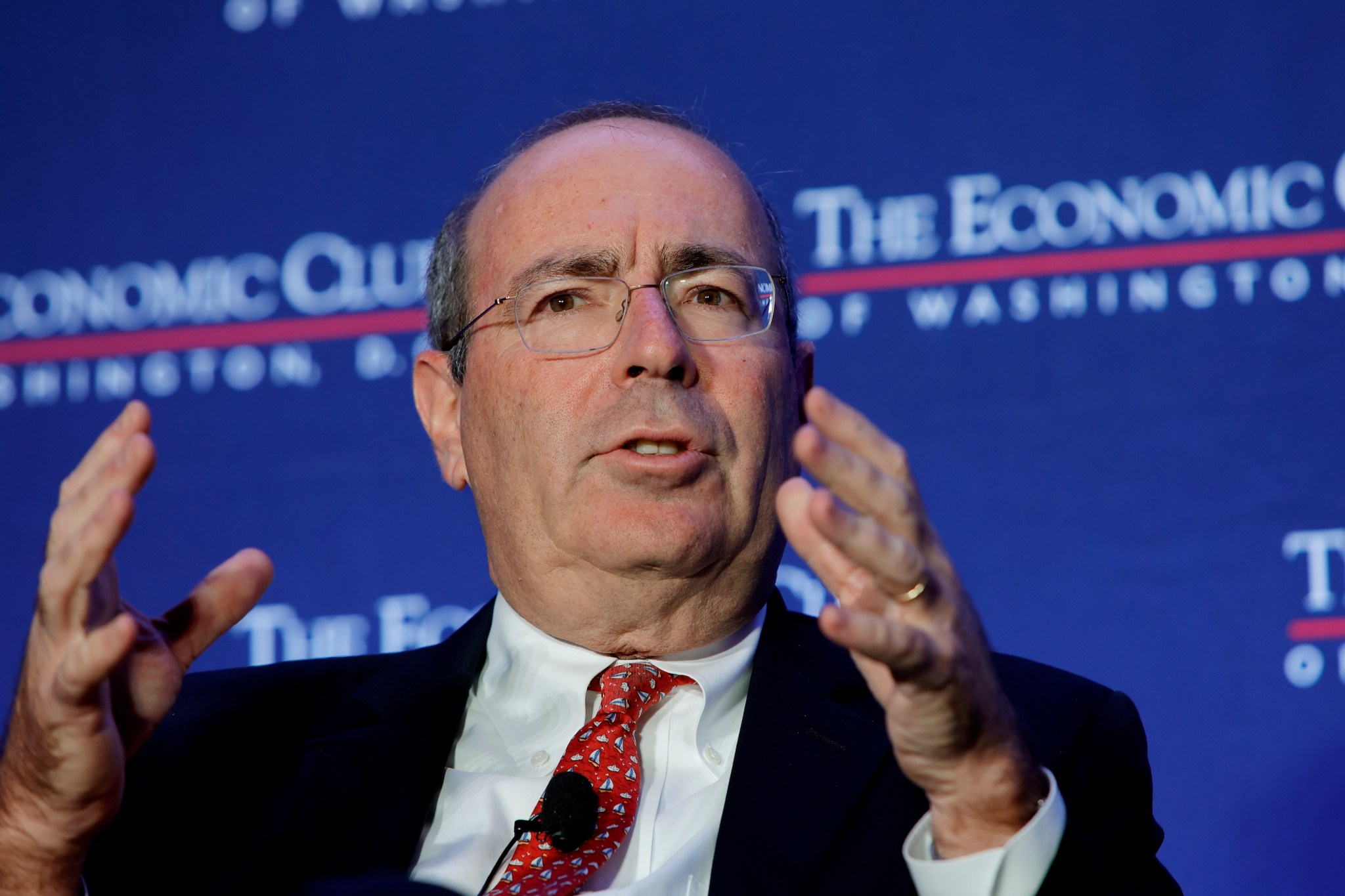
- Richmond Fed President Tom Barkin named tariff costs, higher gasoline prices and AI spending that is lifting some tech equipment prices, speaking at the Economic Club of Washington, D.C.
- Barkin said it was easier six months ago to argue that oil, tariffs and the AI buildout would eventually fade out of inflation.
- Barkin said strong earnings are holding off AI-driven layoffs, with firms that have deep project backlogs redeploying freed-up staff.
Compiled by The InvestorSomething wrong?How this is made
Why it matters
- decision Operators who time debt or capex plans around rate cuts are now betting against the premise of a sitting Fed president's own reasoning.
- exposure Companies buying technology equipment for AI projects are paying prices the Fed now counts among the inflation it raised rates to fight.
- constraint While AI hiring caution stops short of layoffs, the Fed is left without a jobs-based argument for easing soon.
"If inflation's not going to come down relatively quickly," Barkin said, "then you have to look in the mirror and say inflation looks like it's been here for a while." [4] The sentence is a conditional. Anyone who moves from planning for cuts to planning for rates held high is accepting its premise, that inflation will not come down relatively quickly, before accepting its conclusion.
Fortune's account does not give the size of last week's increase, the new target range or any guidance for the next meeting. So the case for rates staying high rests on one regional president's description of prices. Barkin also put the rate decision itself with the chair. "You go slowly up the hill of the last ramp, and then you go full speed down into a pool of water, and the pool of water comes and soaks the guy in front," he said. "That's Kevin Warsh or Jay Powell. The rest of us are in back. Our hands are in the air." [5] In Fortune's telling, Warsh is the one who inherited that front seat [6].
Of the three pressures Barkin named, only AI investment is a spending decision [2]. Tariffs and gasoline are costs companies pay. Barkin said companies are spending aggressively on AI because they expect it to lift productivity, even as that expectation makes them more cautious about hiring [7]. Caution on hiring is a different thing from layoffs. Companies can see how AI makes a task more efficient without knowing what that means for the person who performs it, and many have not yet turned task-level efficiency into a redesigned staffing model, Fortune reported [12]. "The unit of an AI-enabled task is not precisely the same as a mid-level manager and what they do," Barkin said [9]. Until they work it out, firms with deep project backlogs are redeploying people [8].
In my view the labor half of Barkin's account matters as much for rates as the price half. "I think there's a lot of talk about the AI apocalypse," Barkin said. "We're clearly not yet there." [10] He said he is hearing "a lot less fervency in the conviction that we're going to be there" than six months ago [11]. Put that beside his inflation remark and both of his six-month comparisons moved toward higher rates: prices look more lasting, and AI job losses look further off [1].
The higher-for-longer case fails if inflation comes down relatively quickly, the premise of Barkin's own sentence [4]. It also fails if firms finish redesigning their staffing models and turn hiring caution into cuts [12], handing the Fed a labor reason to ease. Or Warsh, in the front seat, could weigh the same data differently from a president who describes himself as sitting in back [5]. I think planning for rates to stay where last week's increase left them is the sounder base case, since each pressure Barkin named is still in place [2]. The strongest counter is the first path, and Barkin left it open himself with his "if" [4].
What to watch
- The next inflation reports, and whether tariff and gasoline pressure eases fast enough to count as inflation coming down 'relatively quickly', the condition in Barkin's remark.
- What Warsh says about the path after last week's increase, since Barkin placed the rate call with the chair.
- Layoff announcements at companies now redeploying staff, which would show hiring caution turning into cuts once staffing models are redesigned.