Science1 publisher2 min readPublished
Stream sticklebacks outperformed rivals from a few kilometres away in a Bern field trial
Sticklebacks bred for two generations in identical Bern tanks still did best at the exact stream their grandparents came from. Local adaptation sits at a finer scale than the lake-versus-stream contrast.
The Scientist · Science desk
What happened
- A University of Bern team bred threespine sticklebacks taken from Lake Constance and from four of its tributary streams in Switzerland, Liechtenstein and Germany, then raised them for two generations in identical laboratory conditions.
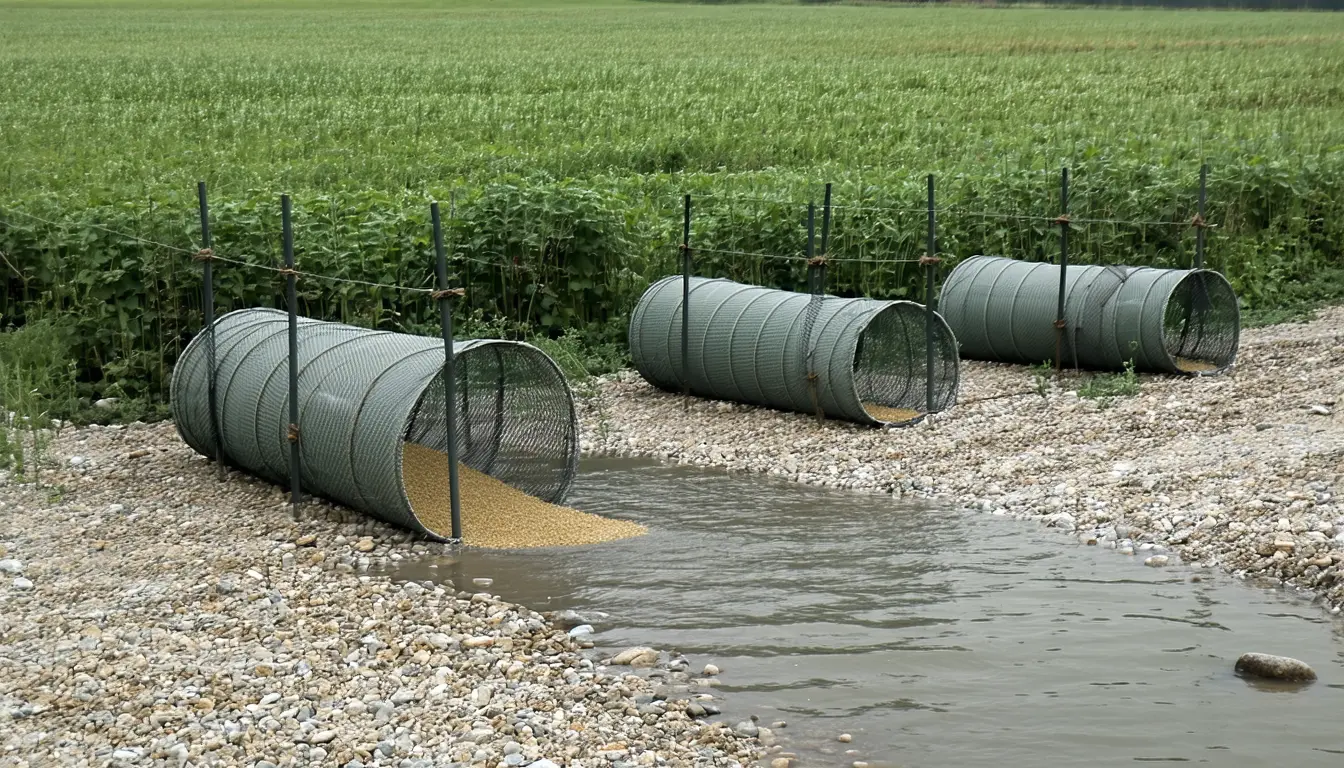
- More than 700 of those lab-raised fish went into specially designed enclosures at three natural sites: Lake Constance itself, plus two of the source streams, one Swiss and one in Liechtenstein.
- Lake fish survived and grew better than stream fish in the lake, and stream fish did better in the streams, matching the lake-and-stream differences earlier surveys had recorded in the wild.
- At both stream sites the best performers were the fish from that same stream, ahead of the lake fish and ahead of fish from other streams as little as a few kilometres away.
Compiled by The ScientistSomething wrong?How this is made
Why it matters
- constraint Habitat type is too coarse a unit for planning. A programme that sorts donor fish into 'lake' and 'stream' categories is grouping populations that this experiment separated by fitness at both stream sites.
- decision Anyone choosing donor stock now has a reason to prefer the resident population over the nearest one, on evidence covering five populations and three sites rather than a survey of body shapes.
- cost Getting this evidence took captive breeding across two generations, purpose-built enclosures and hundreds of animals, which is more than most conservation programmes can spend per species.
- capability Common-garden rearing plus reciprocal release turns a correlation between habitat and body shape into a causal claim about heritable fitness, and that design can be copied for other species.
Two generations of identical tank conditions is the part of the design that makes the result interpretable. The fish placed in the enclosures had never encountered the lake or the streams their grandparents came from [6]. A resident's advantage at its home site therefore cannot be a learned habit, and it cannot be a lingering effect of the water that individual fish grew up in. Marius Roesti, who led the work at the University of Bern's Institute of Ecology and Evolution, said the rearing lets the team "rule out individual experience or direct environmental effects" [11] [2].
The field has a strict test for local adaptation. Most published evidence does not meet it. Similar body shapes recurring in similar habitats is consistent with selection [13]. A direct demonstration requires individuals to perform better in their own habitat than individuals brought in from elsewhere [12], and reciprocal placement across three sites is what supplies that comparison. The paper is in the Proceedings of the National Academy of Sciences [3].
Then there is the denominator. One lake population and four stream populations make five sources, and five sources across three field sites make fifteen population-by-site combinations. If every population went to every site, more than 700 fish averages roughly 47 per combination [16]. The paper reports which groups survived and grew better. It does not give percentages [17].
The outcomes were survival and growth inside a fixed enclosure [8]. Reproduction is not among them. What the experiment shows is residents staying alive and putting on size at home.
The conservation implication comes from the transplant the experiment already performed. Fish moved a few kilometres into a stream that looks much like their own did worse than the fish already living there [10]. A restocking or reintroduction plan that treats stickleback as one interchangeable pool makes exactly that move, on purpose, and the Bern group's framing is that this hidden diversity matters both for how biodiversity arises and for keeping it [14] [1]. The evidence behind that framing is one species, the threespine stickleback [4], five populations, and three sites in Lake Constance and its tributaries [5] [7].
What to watch
- Whether the PNAS paper reports per-population survival and growth effect sizes, which would tell managers how large the home advantage actually is.
- A follow-up that identifies which environmental variables at each stream site produce the resident advantage.
- Whether the same reciprocal design, run on a species used in hatchery restocking, reproduces the kilometre-scale effect.