Science1 distinct publisher2 min readPublished
A PNAS study finds old-growth and secondary grasslands diverge consistently worldwide. What it measured was plants and traits, not the soil carbon that restoration accounting leans on.
The Scientist · Science desk

Compiled by The ScientistSomething wrong?How this is made
Slow growth is what makes an ancient grassland durable, and it is also what loses the race after a plow. The perennials that characterise unplowed sites are slow growers, and Ashish Nerlekar, the study's lead author, says that is precisely what stops them competing in post-destruction grasslands [9]. In the pine savannas of the southeastern United States, wiregrass marks the old stands, while the regrowing patches are distinguished by fast-reproducing annuals such as white goosefoot [11]. That is not a queue the original residents are standing in. It is a filter they fail.
It is worth being exact about what the paper measured. The team analysed 742 plant species across six continents, comparing never-plowed grassland with secondary patches at different stages of regrowth [3][4], and what it reports is species composition and growth traits [1]. The often-quoted figure that grasslands hold about a third of Earth's terrestrial carbon is background about grasslands in general [6], not a measured old-growth-minus-secondary gap in this dataset [1]. So nobody gets a discount coefficient out of this paper for a restored-grassland carbon ledger. What they get is the loss of the equivalence assumption: the extensive root systems credited with storing that carbon and slowing runoff belong to the long-lived, tough-leaved perennials [6][8] that the study finds do not come back [9].
The supply arithmetic runs one way. India's savannas fell from 100 million acres in 1880 to 60 million in 2010, according to one study cited in the report [14], a 40 percent loss averaging roughly 308,000 acres a year [2]. Less than half of North America's historical grassland acreage remains [15], and Brazil's Cerrado loses an area the size of London every three months [13]. Against that, millions of acres of farmland are abandoned worldwide, and secondary grassland springs up in their place [16]. Old-growth stock falls, regrowth stock rises, and the two are being counted as the same asset class while the trait evidence says the second is a different community.
There is a density point buried in the figures as well. Grasslands cover nearly a quarter of Earth's land and hold a third of its terrestrial carbon [6][7], so per hectare they carry more than an average share [3]. That makes the plowing decision expensive in a way that a treeless horizon does not advertise, and it makes the recovery timescale the operative number. Nerlekar's earlier work found secondary grasslands taking decades to approach old-growth biodiversity, with some species still absent after centuries of regrowth [12]. Restoration projects do not report on centuries. They report on cover, and cover is the one thing that does come back.
Ranked by verification strength, evidence, and original report placement.
A new study of grasslands worldwide was published in the journal Proceedings of the National Academy of Sciences.
The study's lead author is Ashish Nerlekar, a postdoctoral researcher at Michigan State University; co-authors include Michigan State professors Lauren Sullivan and Lars Brudvig.
Nerlekar and a global team of co-authors analysed data for 742 plant species from grasslands across six continents.
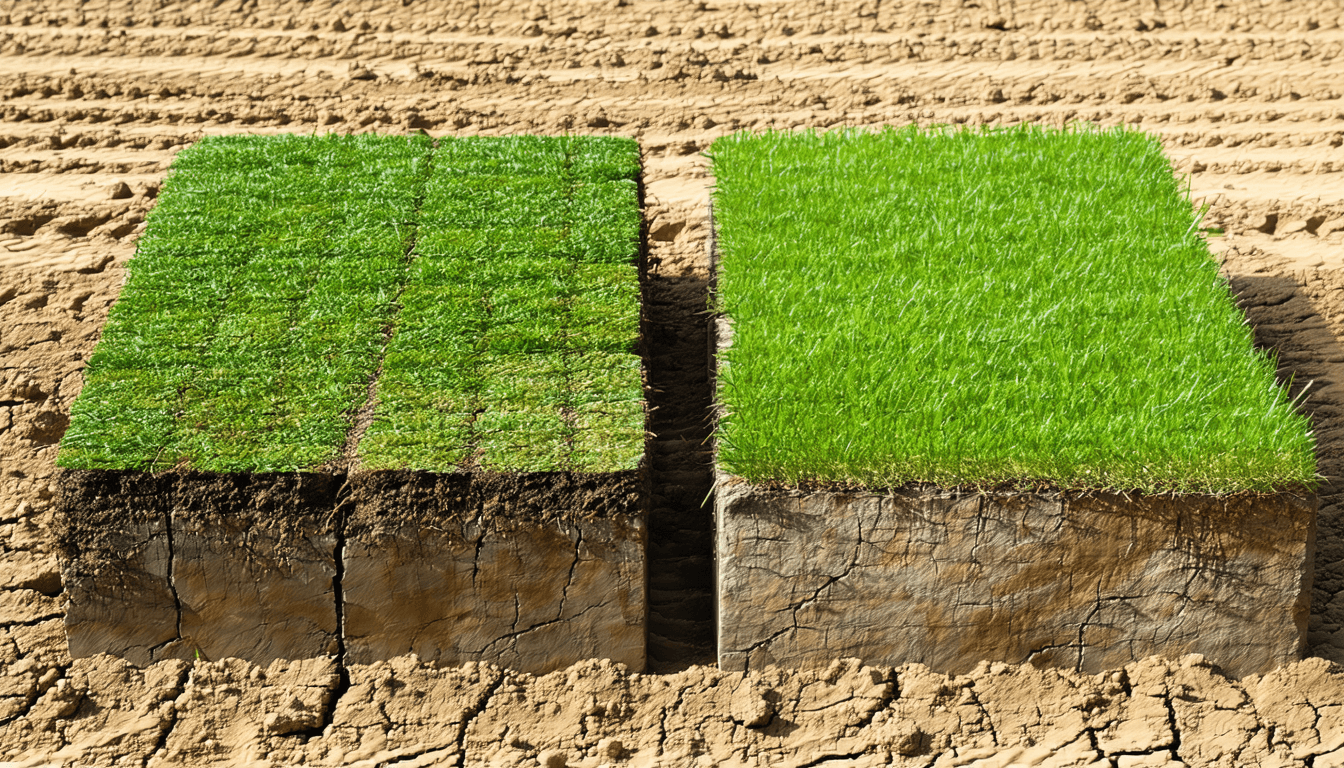
The study compared older grasslands that had never been plowed or converted to farmland with patches of younger secondary grassland at varying stages of regrowth.
Co-author Lars Brudvig said the analysis indicates that differences between old-growth and secondary grasslands are remarkably consistent around the globe.
Grasslands have extensive underground roots that reduce water runoff, control erosion and store a third of Earth's terrestrial carbon.
Follow any of these and your For You feed starts watching them — no settings page required.
Evidence-backed comparisons of source perspectives and observed adoption signals. Read the methodology
Which Builder, Operator, and Investor concerns the observed source mix emphasized—not a truth score.
Evidence, demonstrated adoption, hype gap, incentives, and confidence are assessed independently, each on its own current evidence. How these are measured.
Peer-reviewed anchor, thin reported detail
The claims trace to a named, DOI-identified PNAS paper with an identified author team and a described comparative design across 742 species and six continents, which is a strong evidentiary anchor for a science story. It is discounted because a single outlet carries all of it, no effect sizes, site counts or dataset provenance are reported, no scientist outside the author team is quoted, and the surrounding loss and carbon statistics are uncited.
No uptake evidence supplied
The supplied source reports a research finding and the authors' restoration recommendation. It contains no evidence of any restoration program, agency policy, funder or land manager adopting the finding, and no deployment, procurement or usage disclosure. Adoption cannot be scored without inventing facts.
Mildly overstated by carbon framing
The trait findings are presented soberly and the authors themselves flag that carbon uptake and nutrient cycling were not measured. The modest positive gap comes from packaging: prominent one-third-of-terrestrial-carbon and billion-livelihoods framing sits next to a plants-and-traits result, and 'remarkably consistent around the globe' is a strong generalization delivered as a quote without reported effect sizes or heterogeneity statistics.
Institution-sourced, restoration-policy advocacy
All quotes come from the paper's own authors and their institutions, and the piece closes on explicit policy advocacy — that active seeding and transplanting are needed and that preserving old-growth grassland matters — which aligns with the authors' research and funding interests. This is ordinary academic promotion rather than commercial interest, and the article does include the authors' own limitation, so the score sits mid-range.
Credible single-source read
Confidence is moderate: the underlying artifact is a peer-reviewed paper with a DOI and the reporting is internally consistent and includes its own caveat, but the assessment rests on one publisher, no adoption evidence exists, and quantitative detail needed to test the generalization is absent from the supplied material.
science
A PNAS study says X's feed learns from your arguments, not your likes2 distinct publishers
science
Neanderthal hips had the wide birth canal without the walking penalty1 distinct publisher
science
RNA overload damages mitochondria directly, making load itself a variable for mRNA drugs1 distinct publisher
science
7,500 dated shells put a price on the blur in the marine fossil record1 distinct publisher
Distinct publishers with included, body-backed reporting in this cluster.
phys.org
1 article · August 24, 2026