ProductNot yet confirmed elsewhere1 publisher3 min readPublished
Epic Systems heats about 40 campus buildings with summer server heat stored in 6,100 wells
Epic Systems stores a 3.5 MW data center's heat in roughly 6,100 wells and draws it back to warm about 40 campus buildings. An operator weighing heat reuse has to say where July's heat goes.
The Product Desk
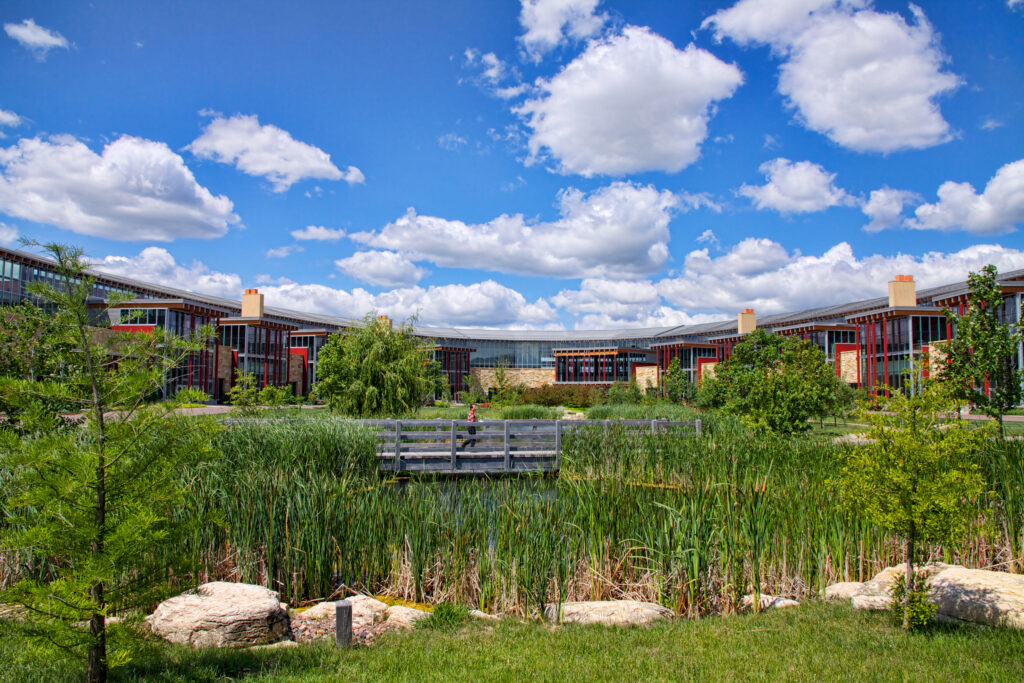
Four figures. Epic's data center draws 3.5 MW. Servers produce heat at about 140 F. A few hundred feet down, the ground stays around 50 F (10 Celsius). Epic has about 150 wells per campus building.
| Figure | Value | Note | Claim |
|---|---|---|---|
| Data center feeding the wells | 3.5 MW | 2 | |
| Server heat temperature | 140 °F | about 140 F, too low to drive a turbine | 10 |
| Ground temp a few hundred ft down | 50 °F | around 10 Celsius | 11 |
| Wells per campus building | 150 wells | about 150 wells per building | 19 |
What happened
- In July the water heated by the servers goes down a pipe and warms the rock, and in January water pumped back through the pipe picks that warmth up and returns to the surface warmer than it left.
- Epic uses the recovered heat for offices and for hot water in its dining halls, and it melts snow off the sidewalks with it.
- If more heat goes into the ground each summer than comes out each winter, the rock warms year after year until the field can no longer accept heat at the temperature it was built for.
Why it matters
- decision A site has to choose between building a store and leaving summer heat without a buyer, because a pipe to neighbors answers only the heating season.
- constraint Server heat is too low to drive a turbine, so its only buyer is a building that wants warmth, and the size of the store has to follow that demand.
- cost Both remedies for a field that fills with heat carry a price: using more heat needs new loads, and more boreholes need land, equipment and money.
In July the data center makes the same heat it makes in February, and the buildings around it do not need any [4]. Piping heat straight to nearby buildings, wrote the article's author, a researcher whose own work goes into wells that turn stored heat back into electricity [17], "works beautifully in February, but solves nothing in July" [5]. Most US buildings need heating for only about four months [4], so a direct pipe has a customer for about a third of the year [18].
The simple version of heat reuse is a pipe to the next building. What Epic built over two decades [1] is a drilling program. Divide it out and the campus has about 150 wells per building [19] and about 1,700 wells per megawatt of data center load [20]. Those ratios are crude, since the same wells also cool the buildings [2], but they show the size of the store next to the load it serves.
The ground does the storing. A few hundred feet down it stays near the local yearly average, which can be around 50 F [11]. Rock conducts heat poorly, so warmth stays near where it was put, and there is no buried tank and no battery [12]. Heat leaves a warmed zone only through its edges, so a large enough volume of rock still holds most of it months later [13].
What comes back is lukewarm. Similar systems in the Netherlands bring the water up at around 59 F [14].
Google's geothermal purchase in Nevada comes to 115 MW, and Meta's contract with a New Mexico plant covers 150 MW [15]. Those projects drill for heat the earth already holds [16]. Epic's wells hold heat the data center put there, and the ground only has to keep it [16].
In this account one company, Epic, runs its data center's heat into its own buildings [2]. We think that is the condition that travels least well. When the heat's owner and the heat's user are different companies, someone has to pay for drilling a store whose benefit lands on the other company's books. The account does not include a cost for the wells or the share of the data center's heat the campus uses, so a reader cannot check the return on the field.
Two tests sort a site, and we'd apply them before asking for a drilling quote. The first: the company that makes the heat also owns the buildings that use it. The second: winter demand at least matches the summer input. Pass both and the site resembles Epic, which kept adding boreholes as its campus grew [8]. Pass ownership but fail demand and the rock warms year after year [7]. Pass demand but fail ownership and the first document needed is a contract. Fail both and there is no buyer to build the store for.
What to watch
- Whether Epic or anyone running a similar field publishes what the wells cost and what share of the data center's heat the buildings take.
- Whether Epic's field stays in balance as the campus and data center grow, or keeps needing more boreholes.
- Whether a data center operator that does not own the nearby buildings signs a storage-and-supply contract with its neighbors.
Clarity's read
What the record supports and how the coverage leans. The claims behind it follow.
Reality
- Evidence50
- Adoption10
- Hype gap−5
- Incentives35
- Confidence55
Claim ledger
Ranked by verification strength, evidence, and original report placement.
- [1]
In Verona, Wisconsin, the health software company Epic Systems has spent two decades turning the ground's stable temperature into infrastructure.
ReportedSupportedSource: Fast Company article2 sources— create a free account to open themView cited source - [2]
Epic has drilled roughly 6,100 wells, 300 to 800 feet deep, that heat and cool about 40 buildings on its own campus using the waste heat from a 3.5 megawatt data center.
ReportedSupportedSource: Fast Company article2 sources— create a free account to open themView cited source - [3]
At Epic, the recovered heat warms offices, supplies hot water to the dining halls, and melts snow off the sidewalks.
ReportedSupportedSource: Fast Company article2 sources— create a free account to open themView cited source - [4]
Servers make heat every hour of the year, while in most of the U.S. buildings need to be heated for only about four months.
- [5]
The author wrote: "Piping it straight to nearby buildings works beautifully in February, but solves nothing in July."
- [6]
In July, water heated by the servers is pumped through a pipe deep underground and warms the rock around it; in January, water pumped back through the pipe picks up the stored warmth and returns to the surface warmer than it left.
- [7]
If more heat goes into the ground each summer than comes back out each winter, the rock around the boreholes slowly gets warmer year after year, until the field can no longer take heat at the temperature it was built for.
- [8]
As Epic's campus grew, the company drilled more boreholes to be able to store, and use, more heat.
- [9]
There are two ways to fix the heat imbalance: use more of the heat, such as preheating water for the buildings' boilers or melting snow, or drill more boreholes so the heat spreads through more rock; drilling takes land, equipment and money.
- [10]
At about 140 F, the temperature servers produce, recovered heat is not enough to drive a turbine to generate electricity, but it is efficient for warmth because a heat pump can move large amounts of heat with relatively little electricity.
- [11]
A few hundred feet down, the ground stays close to the local yearly average all year, which can be around 50 degrees Fahrenheit (10 Celsius).
- [12]
Rock is a poor conductor of heat, which keeps the warmth close to where it was stored; there is no tank buried underground and no battery being charged, because the rock is the storage and what is stored is heat.
- [13]
Push enough heat into a large enough volume of rock and most of it is still there months later, because heat can escape only through the edges of the warmed zone.
- [14]
The water that comes back up is lukewarm; in winter, similar systems in the Netherlands pull their stored heat out with water that surfaces at around 59 F.
- [15]
Google is buying 115 MW of geothermal power in Nevada, and Meta has contracted for 150 MW from a geothermal plant in New Mexico.
- [16]
The Google and Meta projects drill for heat the earth already holds, deep and hot enough to generate electricity; storing heat underground is the mirror image, where the heat comes from the building and the ground's job is to keep it rather than supply it.
- [17]
The author writes that much of their own research goes into wells that turn stored heat back into electricity.
- [18]
A direct pipe to nearby buildings has a heating customer for about one third of the year.
- [19]
Epic has about 150 wells per building.
- [20]
Epic has about 1,700 wells per megawatt of data center load.
Sources
1 independent publisher whose own reporting we read for this story.
- fastcompany.comData centers produce heat year-round. Here’s how to save it for winter
1 article · October 12, 2026
Topics and entities
Follow any of these and your For You feed starts watching them — no settings page required.