Science1 publisher3 min readPublished
Ecologists doubt Norfolk's £2,675-per-home nature levy will cut chalk stream pollution
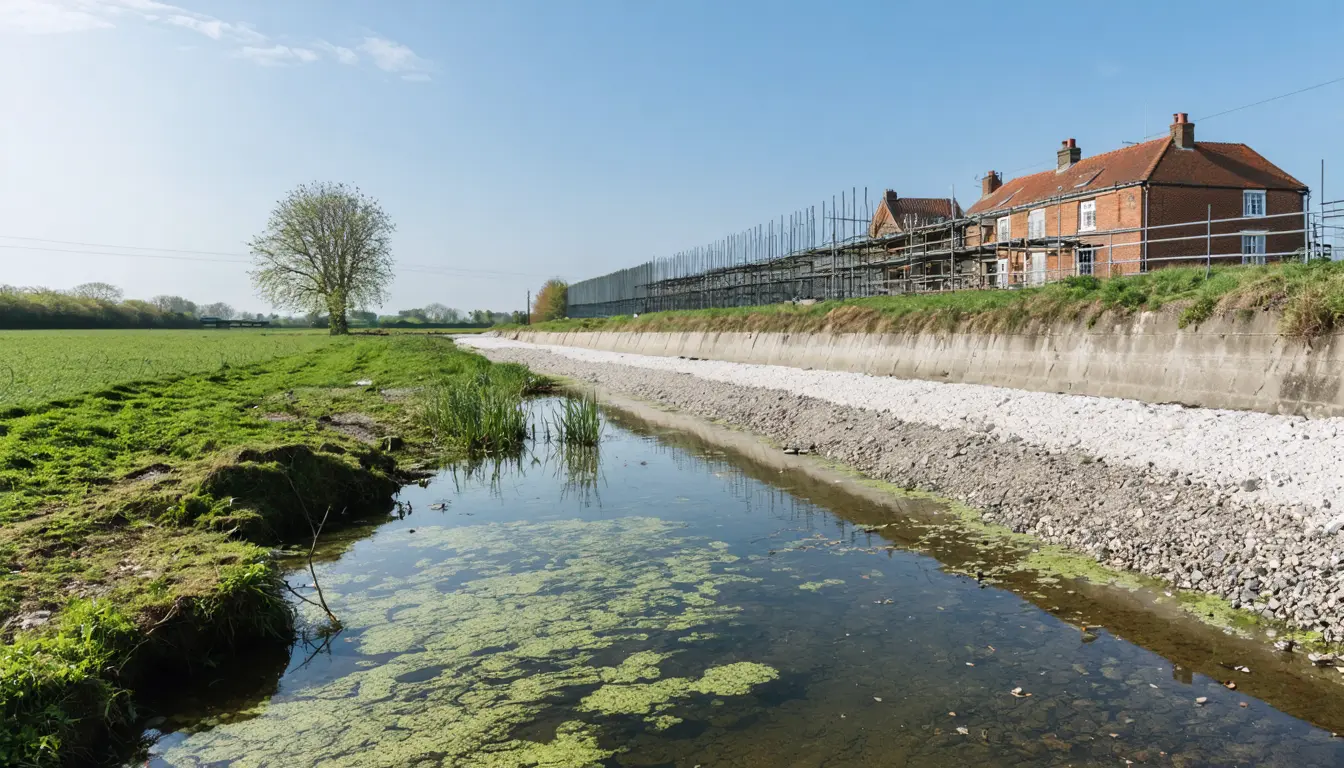
England's first Environmental Delivery Plan would charge Norfolk housebuilders £2,675 per home, a levy the government says frees 15,780 stalled homes. Ecologists say the habitat work it funds would not necessarily cut the pollution reaching the county's chalk streams.
The Scientist · Science desk
Drafted by a language model from the sources cited here and checked against its claim ledger before publication. How we use AISend a correction
What happened
- Restoration projects would be built for the River Wensum, the Bure broads and marshes and the River Yare catchment, across much of central Norfolk and parts of The Broads.
- Some of the money would go to deer management, including targeted culling, because booming deer numbers in The Broads are damaging habitat through grazing.
- The levy is designed to replace nutrient neutrality rules, which were blamed for blocking regeneration of the former Colman's Mustard Factory at Carrow Works in Norwich.
- A public consultation runs from 17 September to 27 October, after which Natural England will submit its final plans to Environment Secretary Angela Eagle's department.
Compiled by The ScientistSomething wrong?How this is made
Why it matters
- capability Housebuilders on stalled sites get a fixed, known price for clearing river-protection rules that previously had to be met site by site, a change the government says makes life easier for developers.
- constraint With the charge fixed per house, the restoration budget for the three catchments arrives only as fast as the stalled homes are actually built and pay in.
- precedent Natural England wants EDPs elsewhere in England, so whatever Norfolk's plan accepts as an offset for river pollution is likely to become the template for other areas.
Multiply the two headline figures and they agree. At £2,675 a house, 15,780 houses come to £42.2m [1], close to the government's hope of about £42m [9]. That sum is revenue. The thing it doesn't tell you is the effect size.
The pooled cash is to be spent on measures that help offset pollution from new homes [7]. An offset is a comparison between two quantities: what the new homes add to Norfolk's rivers, and what the funded work takes back out. The published account of the plan does not include an estimate of either.
Natural England, which is leading the project, argues that pooling is the improvement. "Instead of tackling pollution piecemeal, site by site, we can now deliver conservation measures that make a real difference for rivers, wetlands and wildlife across Norfolk," said Marian Spain, its chief executive [12]. Angela Eagle, the Environment Secretary, calls the scheme a "win-win" for development and nature [8].
Norfolk's chalk streams, often described as England's rainforests, are particularly vulnerable [22]. The ecologists' objection is about whether habitat spending protects them [3]. Sally Haines, chief executive of the Chartered Institute of Ecology and Environmental Management, said that while the actions outlined in the plan would improve ecological habitats in the area, they would not necessarily address the pollution that will be going into the water [4]. "Unless you do that, you are not going to get good nature recovery," she said [5].
Mark Dye, a chalk stream campaigner with the Gaywood River Revival group in west Norfolk, said that "if you are polluting a chalk stream or a river and you're putting more and more pollution into that river, and not seeking to address the underlying causes of that, then it's only going to get worse" [20].
A housebuilder and an ecologist both play down new homes, for different reasons. Steve Turner, executive director of the Home Builders Federation, said pollution from farmers was a bigger issue than new homes, and criticised water companies for not investing in infrastructure to stop sewage entering rivers [21]. Haines called it a "fallacy" to blame environmental concerns as the main stumbling block to building, pointing to the availability of materials and labour, and to land prices [13].
If Turner and Haines are both right, the levy charges a smaller source of river pollution to release homes held back by other things. I think the habitat gains it buys are likely to be real. The critics' point stands until the final plan shows how much of the rivers' pollution the funded work removes.
Norfolk Wildlife Trust said it needed more time to review the proposals, and that it was worried about wider changes to planning rules [18]. "We are concerned that it weakens existing protections for Norfolk's nationally and globally important wildlife sites such as chalk streams, wetlands and valley fens," said Eliot Lyne, its chief executive [19].
What to watch
- Whether the final plan Natural England sends to Angela Eagle after 27 October estimates the pollution the funded work removes against the pollution the new homes add.
- How many of the 15,780 stalled homes actually start once the levy is available, given Haines's point about materials, labour and land prices.
- Which areas Natural England picks for the next EDPs, and whether they copy Norfolk's flat per-home charge.