Science1 publisher2 min readPublished
NGC 4693's core appears to rotate out of step with its own arms and bulge
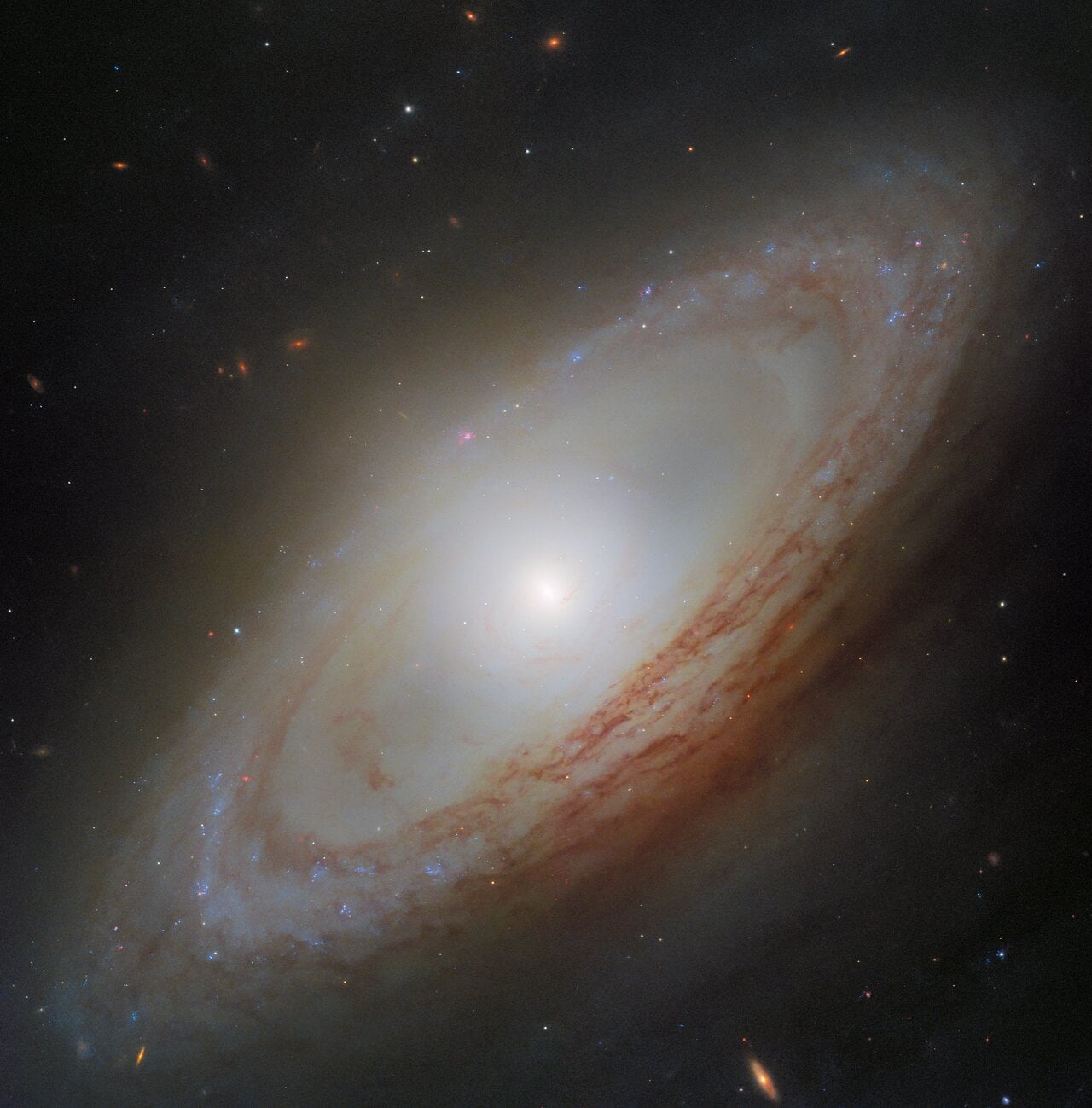
Hubble observations suggest the core of NGC 4693, a Virgo Cluster spiral about 55 million light-years away, turns out of step with its arms and bulge. Both explanations on offer point to outside influence, though nothing reported yet settles which applies.
The Scientist · Science desk
What happened
- NGC 4693's spiral arms do not appear to connect to its central region, and its bulge seems to extend above the plane of the disk.
- One proposed cause is a past merger or close encounter with another galaxy that destabilized stellar orbits while shock fronts pushed gas clouds around.
- A second idea is that the galaxy drew in gas from the cluster's intergalactic medium and that the gas settled in the centre on perpendicular orbits.
Compiled by The ScientistSomething wrong?How this is made
Why it matters
- contradiction Until a study of NGC 4693 itself is identified, its out-of-sync rotation rests on the article's description, because the one reference given concerns NGC 4698.
- constraint The feeding black hole at the core also moves nearby stars and gas, so disturbed central motions alone cannot single out a merger or captured gas as the cause.
- decision If the arms' star formation shares a cause with the core, as the article proposes, dating those young stars is the most direct way to weigh a merger against captured gas.
The article sets out two possible origins for NGC 4693's odd core. Either the galaxy evolved with these features, or something knocked its stars and gas out of sync [12]. Every structural observation behind that choice comes with the word "seems" attached [2][3].
The case for an outside cause leans on the neighbourhood. The Virgo Cluster appears to be still assembling, and most of its members seem to be losing gas through ram-pressure stripping [5]. It has been gathering galaxies for at least 7 billion years [6]. The merger explanation says NGC 4693 did what most of its siblings did [7]. Because encounters are common among cluster members, a past encounter is a sensible first guess for any Virgo spiral. That frequency cannot show that this particular galaxy had one.
The article does lean toward the merger reading in one place. It puts the star formation in the arms down to "the same merger activity," on the grounds that shock fronts from interacting galaxies often set off bursts of star formation [10]. The gas-capture idea, as written, concerns the core alone [8].
NGC 4698 and NGC 4693 differ by one digit. The only study the article lists is a 1999 Astrophysical Journal paper whose title names NGC 4698 [11]. That paper's subject is a bulge decoupled at right angles from its disk. The article describes the same arrangement for NGC 4693, where the central material follows perpendicular orbits [11][8]. The article does not say whether the citation is a slip, or which observations measured the rotation it attributes to Hubble's close look [1][11].
In my view an outside cause is the better bet for a spiral in a cluster this busy [5][7]. That view holds only if a study of NGC 4693 itself confirms the core's rotation [11].
What to watch
- A peer-reviewed kinematic study of NGC 4693 itself, or a correction to the article's reference to the NGC 4698 paper.
- Age estimates for the young stars in NGC 4693's arms, to test whether they formed in the event that disturbed the core.