Invest1 publisher3 min readPublished
Zhu Rongji's obituary is a bull case on Chinese demand. Test it before you buy it
The argument that China's deflation is a policy choice rather than fate rests on a 1998 wealth transfer that cannot be run again. What an allocator can actually verify is thinner still.
The Investor · Invest desk
Drafted by a language model from the sources cited here and checked against its claim ledger before publication. How we use AISend a correction
What happened
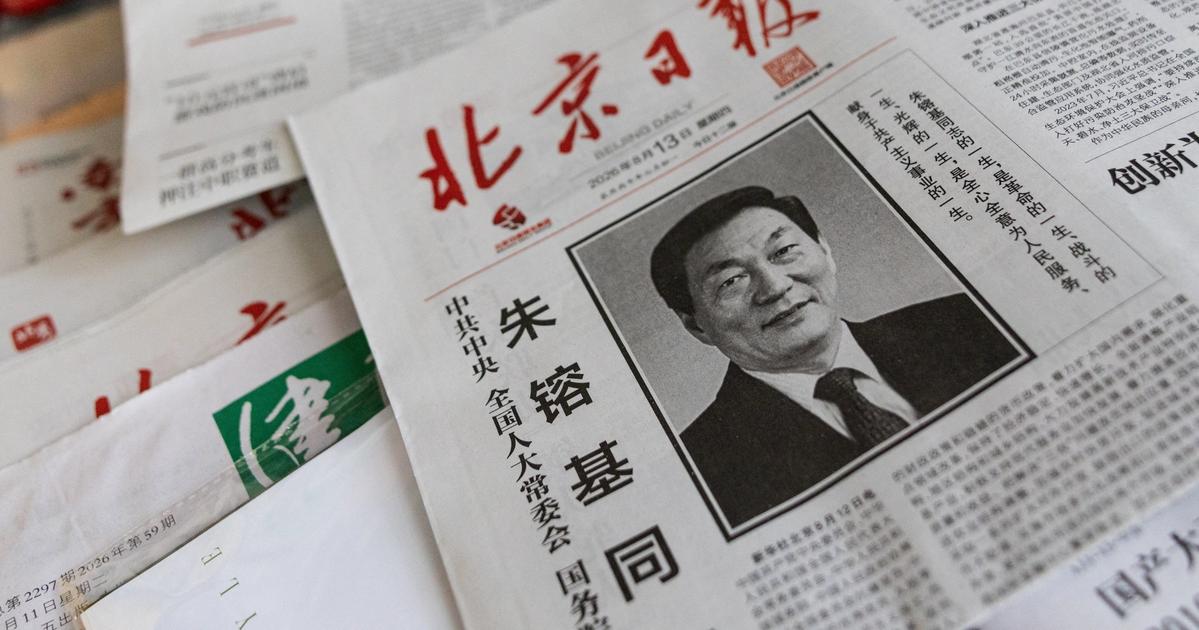
- Zhu Rongji, the former Chinese premier, died last week.
- Zhu Rongji took office in 1998, amid the Asian financial crisis.
- A Semafor column headlined "China needs another Zhu Rongji" argues that China needs another Zhu.
- The column states that China's current economic woes are strikingly similar to those Zhu encountered in 1998: slowing growth, price deflation, mounting debt.
- Fred Hu, once part of Zhu's informal kitchen cabinet and now founder and CEO of Primavera Capital Group, said that were Zhu in government now he would have wondered why China wasn't doing more to boost consumer confidence and stimulate domestic demand.
Compiled by The InvestorSomething wrong?How this is made
Why it matters
Zhu Rongji, the former Chinese premier who took office in 1998 amid the Asian financial crisis, died last week [1][2]. The obituaries have arrived with a thesis attached, and for anyone holding Chinese assets or competing with subsidised Chinese capacity, the thesis matters more than the eulogy: that slowing growth, deflation and mounting debt are the product of demand-side policy choices, and choices can be reversed.
Semafor's column makes the case directly, arguing that China needs another Zhu because today's conditions closely resemble the slowing growth, price deflation and mounting debt he inherited [3][4]. The witnesses have standing. Fred Hu, once part of Zhu's informal kitchen cabinet and now founder and CEO of Primavera Capital Group, told Semafor that Zhu would have wondered why China was not doing more to boost consumer confidence and stimulate domestic demand [5]. Arthur Kroeber of Gavekal Economics said Zhu would have been impressed by Chinese high-tech success but "appalled by the waste, debt, and indifference to consumer welfare and sentiment" that grew alongside it [6]. A chorus of economists outside China, and some inside it, wants national wealth redistributed from state enterprises to households to lift consumption [7].
Now the mechanism, which is where the analogy gets expensive. Zhu's demand impulse was not a spending package. He forced socialist work units to hand ownership of workers' apartments to the workers themselves, which Semafor describes as perhaps the greatest one-off transfer of public wealth into private hands in human history [8]. Those flats were cheap and mostly sat in city centres around factories; they appreciated rapidly, and a new owner class began spending [9]. He also shuttered thousands of loss-making state enterprises, smashing the iron rice bowl in the process [10]. The consumption came from a balance sheet, handed over before the price ran.
That is the part that does not repeat. Lizzi Lee of the Asia Society Policy Institute's Center for China Analysis argues the real estate boom Zhu encouraged has now turned bust, leaving local governments pathologically dependent on land sales for revenue [11]. So the channel that once converted a transfer into spending is the channel now impaired [12]. A household transfer today must be funded in cash, by governments whose revenue base is the deflating asset.
Verification is the second problem. Joerg Wuttke, a partner at Albright Stonebridge Group and formerly China head of BASF, recounted meeting Zhu in retirement in 2018, when the former premier asked how policy decisions can be made when data like non-performing loans cannot be trusted [13]. Since then, numerous data sets including youth unemployment have been abandoned [14]. Anyone underwriting a demand pivot has fewer series with which to check it.
The personnel version of the trade is weaker again. Zhu privatised housing, rationalised the state financial system, brought China into the global trading system and launched colossal infrastructure projects, and the net effect, per Semafor, was to strengthen the state's control of the economy and entrench opposition to the market overhauls he himself promoted [15]. Reform arriving through a reformer has been tried. Meanwhile Xi Jinping's leadership is doubling down on manufacturing and subsidised exports, further imbalancing the economy [16], which Michael Froman, the former US trade representative, argued in Foreign Affairs threatens the next global financial crisis [17]. Hu's summary is that what Zhu would find most uneasy is the loss of reform momentum altogether [18].
Two things to watch, both cheap to monitor. First, whether any stimulus carries a household name on it, transfers, pensions, welfare portability, rather than another round of industrial capacity. Second, whether abandoned statistical series come back; a government confident in a demand pivot has less reason to hide the labour market. Until one of those shows up, supply-side is the base case, and the demand-choice argument stays a hypothesis with a good obituary behind it.