Invest1 publisher3 min readPublished
CENTCOM dates its six-month Hormuz shipping high to the start of the war
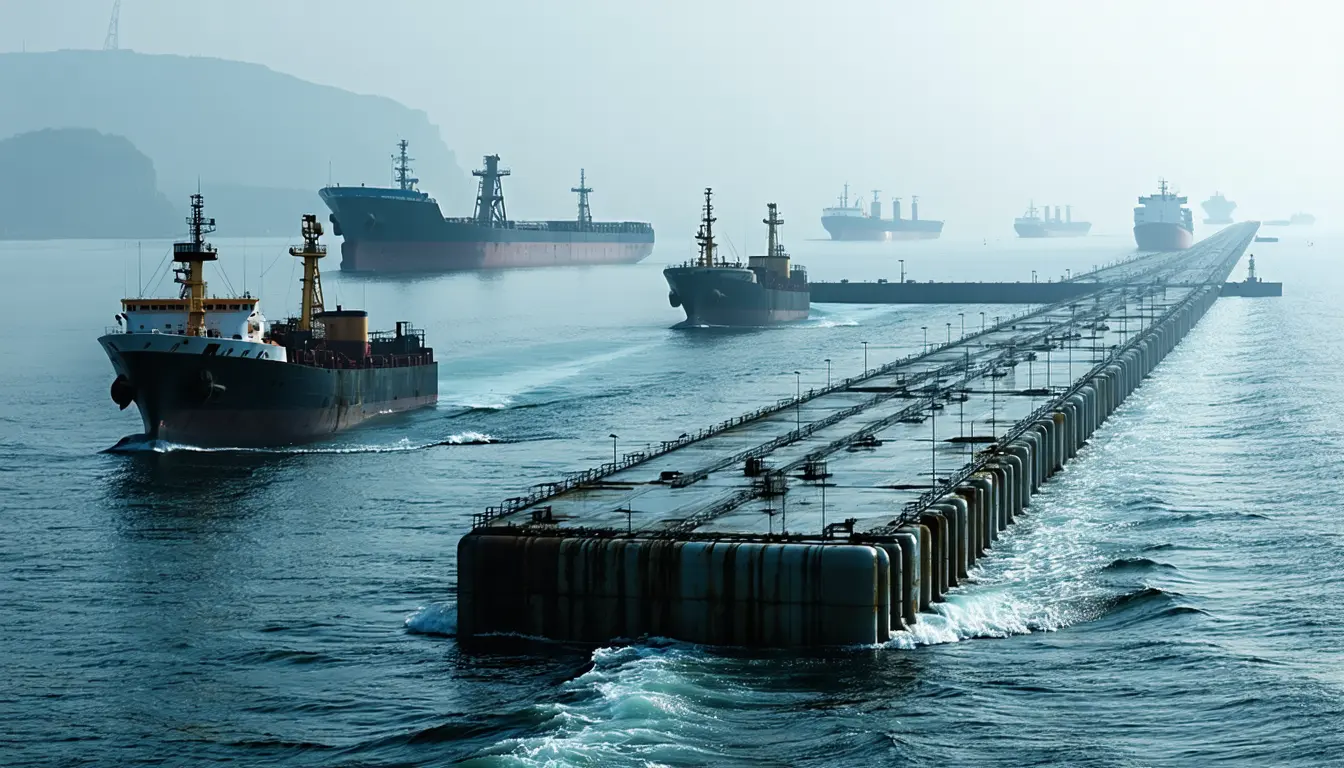
Adm. Brad Cooper says the US military supported the transit of a billion barrels of oil in two months, about 16 million a day, and that Iran exported none, while monitors put Hormuz traffic well below prewar.
The Investor · Invest desk
What happened
- Cooper claimed Iran has exported zero barrels because of a U.S. blockade, and said the strait's primary transit lanes have been cleared of mines.
- He said the volume of oil, natural gas and cargo moving through the strait in the past two weeks is the highest in six months, a window he dated to shortly after U.S. and Israeli strikes began the war.
- Monitors say shipping traffic through Hormuz remains well below prewar levels, and Iran is still attacking ships as it asserts control of the waterway.
Compiled by The InvestorSomething wrong?How this is made
Why it matters
- constraint A six-month comparison window that starts after the strikes limits what the volume high can prove: it measures recovery from the wartime trough. Prewar capacity is a separate question.
- exposure Importers without naval cover absorb the price of rerouted supply, and in Pakistan that is now political: an Islamist party has threatened to march on Islamabad unless fuel prices come down.
- capability If a billion barrels moved because the U.S. military supported the transits, then how much Gulf crude reaches buyers depends on whether that support is sustained.
A billion barrels over two months is about 16 million a day on a 61-day count [14], and that figure describes transits the US military supported, not the strait's total throughput [1]. Adm. Brad Cooper said Iran has "exported zero barrels" because of a US blockade [2].
Both halves can be true without adding up to a restored market. The comparison Cooper offered for the past two weeks was six months, the highest volume of oil, natural gas and cargo in that window. He dated the window to shortly after the war began with US and Israeli strikes [4]. So it is a high against the war. Monitors cited in the Fortune account say shipping traffic remains well below prewar levels [5], in a waterway that carried about a fifth of the world's traded oil and natural gas before the fighting [7]. Iran is still attacking ships [6]. Cooper also said the primary transit lanes have been cleared of mines [3].
For a redistribution reading to work, the sales Iran is not making would have to be turning up as someone else's at a comparable total. Fortune does not report Iran's prewar export volume or the current total throughput, so the size of that transfer cannot be worked out from it [15].
There is evidence buyers are short. Pakistan's foreign minister, Ishaq Dar, spent a phone call with his Iranian counterpart Abbas Araghchi on uninterrupted energy supplies and safe passage for commercial ships [8]. Pakistan's foreign ministry said Dar cited the potential effects of disruptions on developing countries and global supply chains [9]. That is an importing government asking the blockaded party for safe passage.
The replacement barrels carry their own risk. Saudi Arabia warned of a "hostile aerial threat" and ran emergency alerts across the kingdom overnight, including the first for Riyadh since the escalation with the Iran-backed Houthis [11]. At least one explosion was heard in the capital, with no casualties or damage reported [12]. Saudi authorities gave no reason for the alerts, though they had previously reported intercepting Houthi missiles and drones [13].
Three readings survive this material. In the first, Cooper's count is accurate and Gulf producers have absorbed Iran's share, so the war has moved export revenue between sellers and left buyers roughly whole. In the second, the escorted volume is real but the total sits materially under prewar, and importers without naval cover pay the difference; Pakistan asking Iran for uninterrupted supplies fits that one [8]. In the third, Iranian barrels are moving where the blockade cannot see them, and zero is the blockading party's own count [2]. I lean to the second, because the same report that carries the billion-barrel figure carries monitors putting traffic well below prewar [1][5]. A current throughput figure published next to a prewar one at parity would settle it against me.
What to watch
- Independent tanker tracking showing Iranian loadings above zero would undercut the blockade claim CENTCOM is making about its own operation.
- Whether the Saudi aerial alerts turn into damage at a loading terminal, which is where the replacement barrels are physically exposed.
- Whether Pakistan's threatened march on Islamabad over fuel prices materialises, and what price level triggers it.