Science1 publisher2 min readPublished
A count of 32 fruits and vegetables at Kew carries the case against bland Georgian food
Six years of monthly accounts at Kew list 32 kinds of fruit and vegetable, and the authors of The King's Dinner treat that as evidence of a various Georgian table. Their explanation for the bland reputation, wartime rationing, comes without 20th-century data.
The Scientist · Science desk
What happened
- They also report finding evidence of Britain's growing global power as it took in cooks and ingredients from across the globe and appropriated their tastes into the emerging national cuisine.
- The Hindostanee Coffee House, which served Indian-style food in London, closed in 1812, partly because the nearby Norris Street Cafe had been offering curries alongside other fare since 1773.
- In 1815 an eating house in Soho called the Four Nations served German, Italian, French and English dishes.
Compiled by The ScientistSomething wrong?How this is made
Why it matters
- constraint Anything built on the Kew ledgers describes one royal kitchen's purchasing, so households that could not buy cucumbers out of season stay outside the sample entirely.
- contradiction The damage is placed in the 20th century while the measurements are all Georgian. Nothing in the piece connects the best-documented part of the argument to its central explanation.
- capability Monthly household accounts give food historians a countable series for a single address, which recipe books and printed menus cannot supply because they record intention rather than spending.
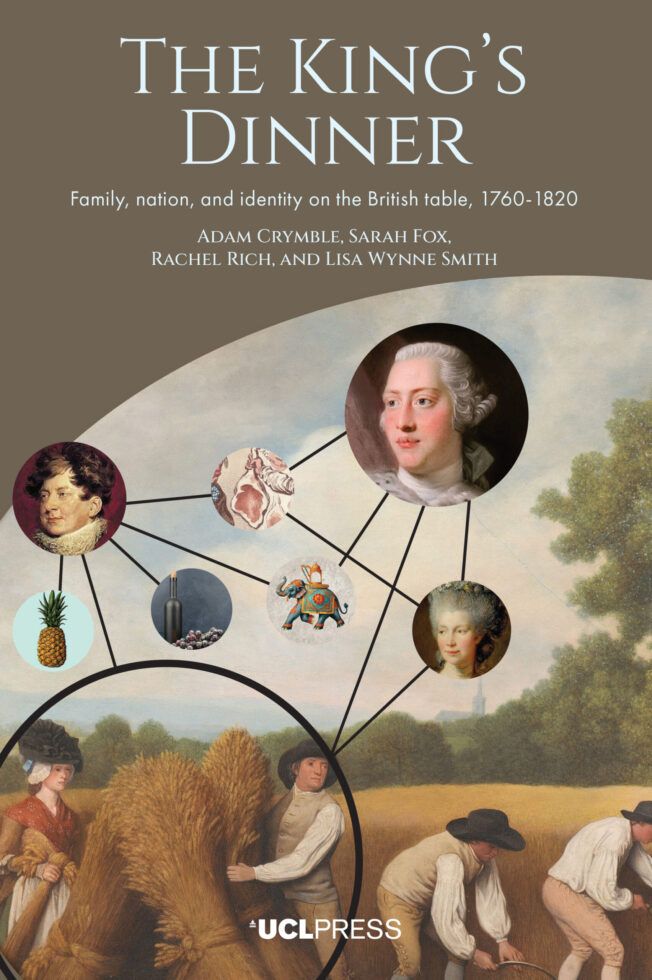
The Kew books are a purchase ledger. They record what the household bought, month by month, between 1794 and 1799, and the count that comes out of them is 32 types of vegetables and fruits [1]. Broccoli, potatoes and cucumbers sit alongside samphire, cabbage and artichokes [2]. The 32 counts kinds. The article gives no quantities or prices, and does not say how often each item appeared.
The window is narrow: six calendar years against the sixty of the reign the book covers, a tenth of it [15]. And one address. Kew's meals were comparatively heavy on fish and vegetables, close to what was eaten in Germany, which is where Queen Charlotte came from [6]. A claim about British food needs households beyond the palace, and the ledger evidence here comes from the palace.
Everything turns on the causal claim. "It was wartime rationing that damaged Britain's culinary reputation," the authors wrote [4]. The dated evidence in the piece runs 1773, 1792, 1794-99, 1810, 1812 and 1815 [19]. Showing that Georgian cooks used turmeric, ginger, cloves, mace and mustard [12] establishes that the food was spiced. It does not establish when the stereotype formed, and a stereotype that hardened in 1850 or in 1905 would leave exactly the same Georgian record.
The authors also wrote that they found "surprisingly diverse flavors, as well as evidence of Britain's growing global power as it incorporated cooks and ingredients from across the globe and appropriated their tastes into the emerging national cuisine" [5]. The ingredients half is documented in detail: Eliza Smith's recipe "to mango cucumber" [12], piccalilli in the East Indian style advertised by Warehouse No. 42, and Skill's Warehouse claiming several royals among the buyers of its Indian pickles by 1800 [13]. The cooks half rests on one named person. Deen Mahomet opened the Hindostanee Coffee House in 1810 and it closed in 1812 [8][9], a run of about two years [17], and the competitor that helped close it had been selling curries since 1773, 37 years earlier [16]. The article attributes curry's spread to returning East India Company employees [10].
Gillray's 1792 cartoon is worth keeping separate from the diet evidence. "French Liberty, English Slavery" shows the rotund John Bull with a steaming plate of beef while his rail-thin French counterpart dines on raw green onions and live snails [14]. The cartoon records what Britons said about their food during a war with France. The royal encounter with Indian flavours that the article can put on an actual plate is smaller: the Prince Regent was served pullet with India pickle on at least one occasion [11].
What to watch
- Whether The King's Dinner publishes quantities and prices from the Kew ledgers.
- Comparable monthly accounts from a non-royal 1790s household would test whether 32 kinds of produce was ordinary or royal.
- Dated evidence on British menus and home cooking before and after 1940 would test the rationing explanation directly.