Science1 publisher3 min readPublished
Three decades of monitoring show rising phosphorus pushed the Bothnian Sea into nitrogen limitation
Umeå University researchers used 30 years of Swedish and Finnish monitoring data to show the Bothnian Sea became nitrogen-limited soon after 2000. Water short of nitrogen can favour summer cyanobacteria blooms, and the lead author wants nutrient cuts kept up across the whole Baltic.
The Scientist · Science desk
Drafted by a language model from the sources cited here and checked against its claim ledger before publication. How we use AISend a correction
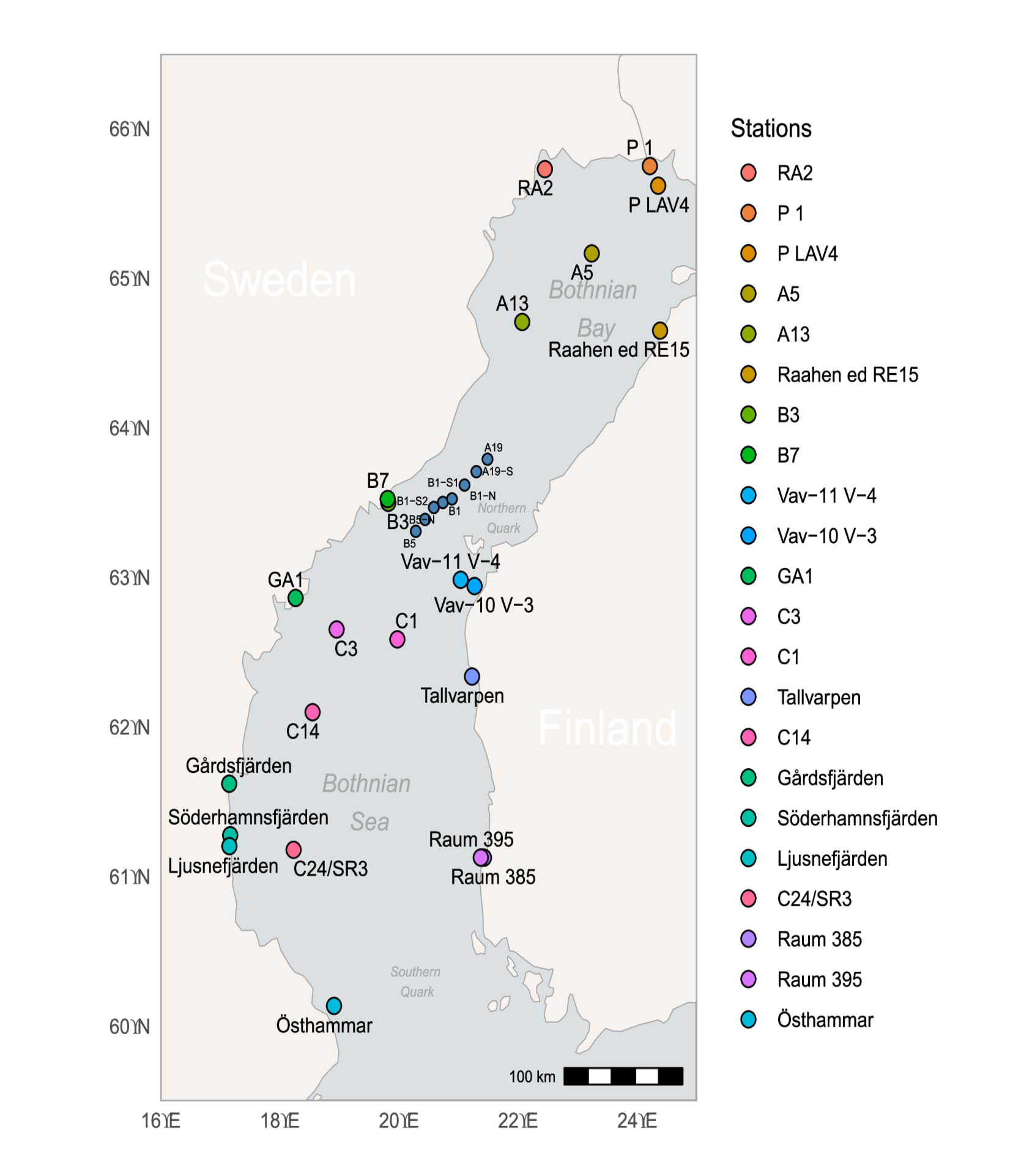
What happened
- Over the three decades, phosphorus concentrations in the Gulf of Bothnia rose substantially while nitrogen levels held steady or fell.
- The Bothnian Bay to the north is still phosphorus-limited, but its nutrient balance is moving in the same direction as the Bothnian Sea's.
- The researchers name phosphorus-rich water moving north from the central Baltic Proper as one possible source of the increase.
Compiled by The ScientistSomething wrong?How this is made
Why it matters
- decision Eutrophication plans for the northern Baltic that assume phosphorus limitation now rest on a premise the Bothnian Sea data no longer support, and the authors say they need revisiting.
- constraint If much of the extra phosphorus comes from the Baltic Proper, Swedish and Finnish measures in the Gulf cannot reverse the trend alone; progress then depends on Baltic-wide cooperation through HELCOM.
- exposure If the Bay's ratio keeps falling, Huseby expects it could turn nitrogen-limited within a few decades and host the filamentous cyanobacteria now increasing in the Bothnian Sea.
- contradiction The study summary calls the Baltic Proper inflow one possible explanation, while Huseby says much of the increase originates there; the regional management advice leans on the firmer version.
The shift came mostly from phosphorus. Over the record, nitrogen in the Gulf of Bothnia held flat or declined while phosphorus climbed [5]. Which nutrient limits production depends on the balance between the two. When phosphorus grows and nitrogen does not, nitrogen becomes the scarcer one even if its own concentration barely moves [19]. Siv Huseby of Umeå Marine Sciences Centre, the lead author [18], said: "We can see a clear shift in the Bothnian Sea. The nutrient balance that characterized the area a few decades ago no longer exists. This is important because the limiting nutrient influences how the entire ecosystem functions." [11]
Further north, the finding is a projection. Huseby said she "was surprised by the clear decline in the DIN:DIP ratio, especially in the Bothnian Bay. If this trend continues, the area could become nitrogen-limited within a few decades." [12] For now, the Bay is still phosphorus-limited [4].
The ecological risk comes through cyanobacteria. Water that is short of nitrogen can favour species that fix their own, and some of them form large summer blooms [7]. Rising phosphorus may also raise overall primary production [17]. Huseby said nitrogen limitation "favors filamentous cyanobacteria over other phytoplankton, which can disrupt ecosystems and increase the risk of harmful algal blooms." [13] The thing this doesn't tell you is how many more blooms a given fall in the ratio produces. As Umeå describes it, the study assesses how nutrient balances changed across the Gulf over time [16]. The case for more blooms rests on the conditions that balance creates, plus a separate observation that blooms are already increasing in parts of the northern Baltic [8].
Where the extra phosphorus comes from is the least settled part. The study's summary on Phys.org offers phosphorus-rich water moving north from the Baltic Proper as "one possible explanation" [9]. Huseby was firmer: "Much of the phosphorus increase originates from the Baltic Proper, making regional cooperation through HELCOM, the Baltic Marine Environment Protection Commission, essential." [14] A concentration record can show that phosphorus rose. Tying the rise to water from the south takes more than the record itself.
The finding changes one of management's premises. For decades the Gulf was treated as phosphorus-limited [6]. Current strategies were built on that assumption, and the researchers say it may need to be reconsidered [10]. Huseby's own prescription still centres on nutrient reduction, at the scale of the whole sea. "Reducing dead zones, cutting nutrient inputs and addressing climate change are all key to limiting harmful cyanobacterial blooms," she said [15]. In my view the practical message is about geography. If her attribution holds, the phosphorus behind the Bothnian Sea's shift is set largely by conditions in the central Baltic, and Swedish and Finnish measures in the Gulf would not be enough on their own [14].
What to watch
- Follow-up work that traces phosphorus moving north from the Baltic Proper directly, turning a possible explanation into a measured source.
- Whether HELCOM revisits nutrient targets for the Gulf of Bothnia now that the Bothnian Sea is classed as nitrogen-limited.
- Summer cyanobacteria monitoring in the Bothnian Bay, where the first sign would show if its falling nutrient ratio continues.