SecurityWidely confirmed8 publishers3 min readPublished Updated
At Boston Scientific, downtime is the leverage and hospitals hold the schedule risk
A network outage has blocked order processing and shipping since August 25, with no restoration date. The exposure lands in operating rooms as much as in the vendor's incident response room.
The Watch · Security desk
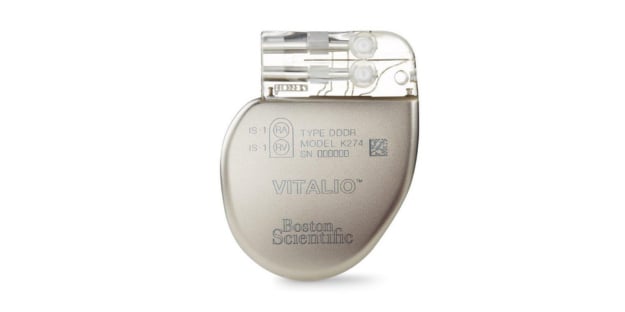
What happened
- Boston Scientific says a network outage cut access to certain operating systems and business applications, including the ability to process and ship customer orders.
- It detected the incident on August 25, activated incident response procedures and contracted outside cybersecurity experts.
- The SEC filing names no attacker, no initial access method and nothing about stolen data, and no extortion group has claimed the intrusion.
Why it matters
- exposure The scheduling risk sits with providers: an implant date now depends on a shipment the manufacturer cannot promise, and a missed ship date shows up as a cancelled procedure.
- cost Roughly $59 million of daily sales pace is what a demand would be priced against, while the hospital side pays in rebooked theatre time it cannot bill for.
- decision Buyers must choose whether to hold buffer stock or qualify alternate suppliers for single-sourced lines while the restoration date is still unknown.
- precedent If Stryker's recovery is the benchmark, purchasers should plan for weeks of degraded fulfillment rather than days, and treat vendor outages as a supply problem they own.
The part of the disclosure that decides who suffers is the layer that broke. Boston Scientific puts the damage in operating systems and business applications, and names order processing and shipping among them [1]. That is the machinery between a hospital purchase order and a box arriving at a cath lab, and it is the part a provider cannot route around on its own.
The extortion arithmetic follows from that. Jacob Krell of Suzu Labs told eSecurityPlanet that a cardiac device missing its ship date can mean a cancelled surgery, and that an attacker in this position does not need to destroy anything, only to make downtime more expensive than whatever is being asked for [13][14]. So price the downtime. The company reported $5.4 billion in net sales in the second quarter of 2026 [18], which is about $59 million a day [19] and roughly $415 million a week [20]. Not all of that stops when shipping stops, but it is the order of magnitude any demand would be measured against. That pace annualises to about $21.6 billion, consistent with reported 2025 revenue above $20 billion [21][6], so the quarter is not an outlier. Investors were told recovery may take weeks [22], the company will not give a date [10], no group has claimed the intrusion [5], and a spokesperson declined to say whether ransomware was involved [15].
The sector's recent record contains two different failure modes, and only one of them reaches the ward. Medtronic notified more than 3.8 million people of possible data exposure last month, in an attack reportedly linked to a prominent cybercrime group [9]. Stryker's attack earlier this year, claimed by a group connected to the Iranian government, took weeks to clear and had downstream effects on US hospitals and medical facilities according to the FBI [11]. Ross Filipek of Corsica Technologies counts Stryker, Medtronic and Abbott as having already disclosed incidents [8]. Notification letters are absorbed by lawyers. A fulfillment outage is absorbed by whoever has an implant booked for Thursday.
Damon Small of Xcape argues the controls that matter here are strict logical boundaries between corporate administrative networks and fulfillment environments, immutable offline backups, and manual failover protocols that are actually validated [16]. eSecurityPlanet's own recommendation is to identify which systems are critical to manufacturing and fulfillment before an incident, and to rehearse manual procedures rather than file them [17]. All of that sits on the vendor's side of the contract. The buyer's version is duller and entirely within reach: which device lines have a single supplier, and how many days of consignment stock sit behind them. That is the only question a hospital can answer without waiting on Boston Scientific's restoration timeline [10].
What to watch
- Whether an extortion or ransomware group claims the intrusion, or a demand becomes public, which would test the downtime-pricing read.
- Whether Boston Scientific gives a restoration date or a quantified operational and financial impact in a follow-up SEC filing.
- Whether hospitals or distributors begin reporting rescheduled implant procedures tied to the shipping gap.
Clarity's read
What the record supports and how the coverage leans. The claims behind it follow.
Reality
- Evidence72
- Adoption
- Insufficient
- Hype gap+25
- Incentives40
- Confidence66
Perspective Coverage
8 publishers- Builder
- Builder 28%
- Operator
- Operator 49%
- Investor
- Investor 23%
Claim ledger
Ranked by verification strength, evidence, and original report placement.
- [1]
Boston Scientific said the incident caused a network outage and impacted access to certain operating systems and business applications, including the ability to process and ship customer orders.
- [2]
Boston Scientific detected the cybersecurity incident on August 25.
- [3]
After identifying the intrusion, the company activated its incident response procedures and contracted external cybersecurity experts to investigate impact and help with containment.
- [4]
In the SEC filing disclosing the attack, the company does not share details about the type of cyberattack, the attacker, the initial access method, or whether data has been exposed or stolen.
- [5]
At the time of writing, no data extortion or ransomware threat actor had claimed responsibility for the Boston Scientific breach.
- [6]
Boston Scientific has 59,000 employees, 13 manufacturing facilities, a presence in 127 countries, and annual revenue of over $20 billion in 2025.
- [7]
Its devices include stents, catheters, pacemakers, defibrillators and endoscopes, used in minimally invasive procedures.
- [8]
Ross Filipek, CISO at Corsica Technologies, said medical device companies have had a rough year and that Stryker, Medtronic and Abbott have already disclosed cyber incidents.
- [9]
Last month Medtronic notified more than 3.8 million people that their data may have been exposed in an attack reportedly linked to a prominent cybercrime group.
- [10]
Boston Scientific said the timeline for a full restoration of affected systems is not yet known.
- [11]
Stryker was hit by a cyberattack earlier this year that was eventually claimed by a group connected to the Iranian government; the company took weeks to recover and the incident had downstream effects on hospitals and medical facilities in the US, according to the FBI.
- [12]
Boston Scientific says its investigation continues as it works to determine the nature, scope, and operational or financial consequences of the incident.
- [13]
Jacob Krell, senior director of Secure AI Solutions and Cybersecurity at Suzu Labs, told eSecurityPlanet that a cardiac device that misses its ship date can mean a cancelled surgery.
- [14]
Krell said that is what makes a company like Boston Scientific an attractive extortion target, because the attacker does not need to destroy anything and only needs to make downtime more expensive than whatever they are asking for.
- [15]
A Boston Scientific spokesperson declined to say whether the incident involved ransomware and told Recorded Future News that a timeline for full restoration is still unknown.
- [16]
Damon Small, a board member at Xcape, Inc, said maintaining operational continuity during an intrusion requires strict logical boundaries between corporate administrative networks and fulfillment environments, immutable offline backups, and regularly validated manual failover protocols.
- [17]
eSecurityPlanet recommended that organisations identify which systems are critical to manufacturing and fulfillment before an incident occurs, use network segmentation and tested offline backups, and document and exercise manual procedures for essential operations.
- [18]
Boston Scientific reported $5.4 billion in net sales during the second quarter of 2026.
- [19]
Second-quarter net sales of $5.4 billion equate to roughly $59 million a day.
- [20]
At that rate, a week of sales is roughly $415 million.
- [21]
The second-quarter 2026 pace annualises to about $21.6 billion, in line with reported 2025 revenue of over $20 billion.
- [22]
Investors told CNBC they were told it may take weeks for the company to restore its systems.
Sources
8 independent publishers whose own reporting we read for this story.
- bleepingcomputer.comBoston Scientific says cyberattack disrupted operations globally
2 articles · August 26, 2026
- esecurityplanet.comBoston Scientific Cyberattack Disrupts Operations Worldwide | eSecurity Planet
1 article · August 26, 2026
- helpnetsecurity.comCyberattack causes network outage at Boston Scientific, disrupts global operations
1 article · August 27, 2026
- infosecurity-magazine.comBoston Scientific Reveals Global Disruption After Cyber Incident
1 article · August 27, 2026
- scworld.comBoston Scientific operations disrupted by ongoing cyberattack
1 article · August 26, 2026
- securityweek.comCyberattack Causes Global Disruption at Boston Scientific
2 articles · August 27, 2026
- thecyberexpress.comBoston Scientific Cyberattack Disrupts Order Processing, Shipping Worldwide
2 articles · August 26, 2026
- therecord.mediaMedical device firm Boston Scientific says cyberattack has disrupted shipment processes
1 article · August 26, 2026
Topics and entities
Follow any of these and your For You feed starts watching them — no settings page required.
Topics
Entities
- Jacob KrellFollow
- StrykerFollow
- Corsica TechnologiesFollow
- MedtronicFollow
- Suzu LabsFollow
- Ross FilipekFollow
- Damon SmallFollow
- U.S. Securities and Exchange CommissionFollow
- AbbottFollow
- Federal Bureau of InvestigationFollow
- Boston ScientificFollow