Science1 publisher2 min readPublished
Hydrogen glows along black hole jets far past galaxies' edges in stacked survey data
ASU-led astronomers stacked hundreds of jet galaxies and found hydrogen glowing along the jets for hundreds of thousands of light-years. The glow fits one explanation for why gas-rich galaxies stop making stars, though what was measured is ionized gas, not star formation.
The Scientist · Science desk
What happened
- The gas at stake is the circumgalactic medium, a reservoir around large galaxies that extends roughly 10 to 20 times farther than their visible parts.
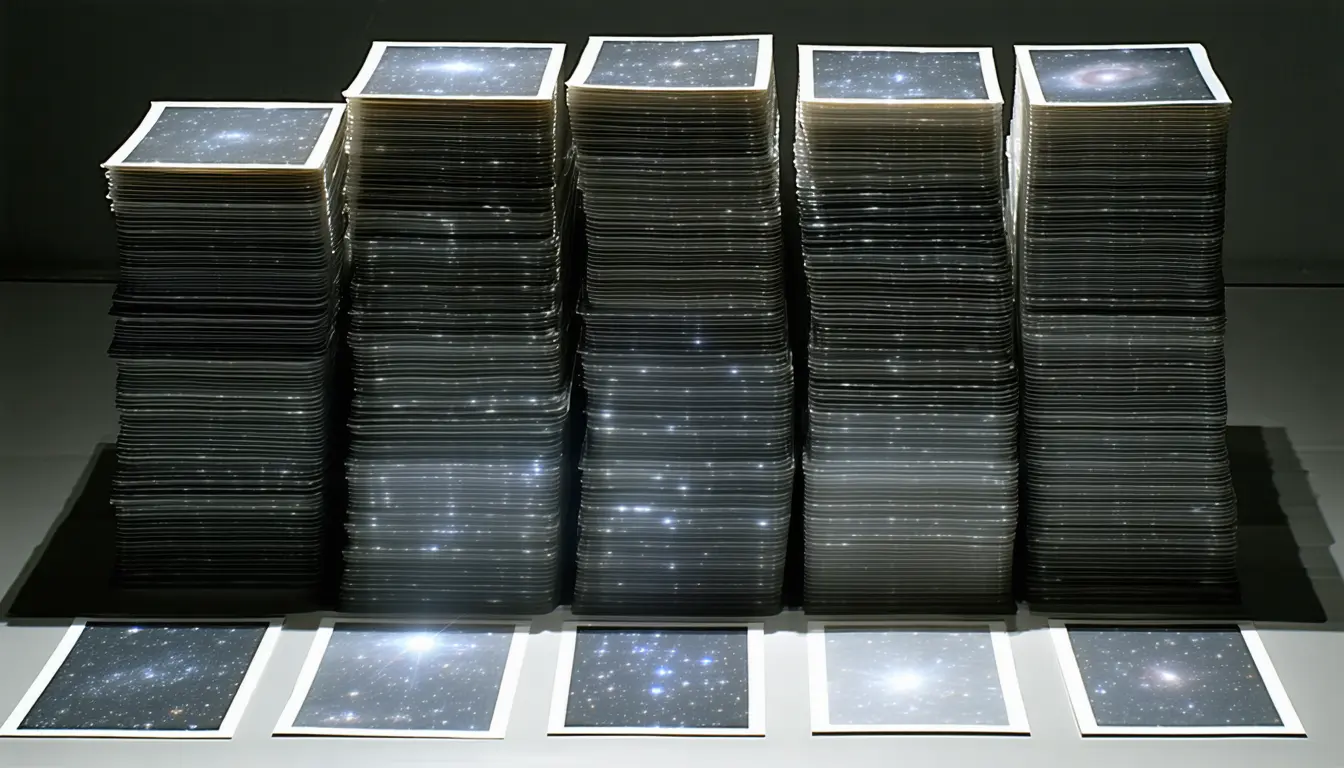
- The team paired Dark Energy Spectroscopic Instrument survey data with LOFAR Two-meter Sky Survey radio maps of the jets, combining measurements taken along each jet's axis.
- Averaged over every direction around the galaxies, the H-alpha signal of ionized hydrogen stayed weak, while along the radio jets it became much stronger.
- The study, led by Sanchayeeta Borthakur of Arizona State University and Namrata Roy, now at the Raman Research Institute, appeared in the Astrophysical Journal Letters.
Compiled by The ScientistSomething wrong?How this is made
Why it matters
- capability Lining a stack up on radio-jet axes turns a glow too faint for any single galaxy into a detectable signal, so where jet energy lands in outer gas can be traced across whole samples.
- precedent Using a radio jet catalogue to pick the stacking direction in an optical survey gives other teams a template for hunting other faint signals in the gas around galaxies.
- contradiction Borthakur calls the question solved, while the release's own summary says only that jets may help decide a galaxy's fate; the evidence described supports the summary's wording.
Combining hundreds of galaxies gets around a glow too faint to see cleanly in any one of them [4]. The smarter choice was to combine them along a direction. The radio data locate each jet, so the team could test whether ionized hydrogen collects along that line or spreads evenly through the surrounding gas [5][12].
The control comes from the same galaxies. The all-direction average and the along-jet stack draw on the same targets and the same data [6]. A brightening confined to the jet axis is therefore hard to blame on how the sample was chosen, and gas lit by a source with no preferred direction would not line up with the jets. The thing this release doesn't tell you is the effect size. It describes the stack as "hundreds" of galaxies and the on-jet signal as "much stronger", and gives no figures for either [4][6].
Roy framed the physical puzzle as one of scale. "The surprising question is: how can something so small energetically impact something so enormous?" she said [9]. According to the release, a supermassive black hole is roughly comparable in scale to our solar system, while the galaxy around it may contain about 100 billion solar systems [10]. Astronomers already knew active black holes release immense energy. How that energy travels so far, and how it changes on the way, has been unclear [13]. The jets are narrow streams of hot, fast-moving plasma that reach well past the visible galaxy [11]. This result is evidence that they carry some of that energy out into the gas reservoir [7].
Borthakur went further. "This is a pathbreaking result that solves the long-standing mystery of how black holes influence galaxies, their stars, and life as we know it!" she said [8]. The observation behind that sentence is ionized hydrogen concentrated in one direction [12]. Turning it into an account of why galaxies with plenty of gas stay quiet takes more steps [2]. The gas has to stay hot, it has to be kept from falling inward, and the galaxies carrying the glow have to be forming fewer stars than comparable galaxies without jets [7].
In my view the directional result is the solid part, because the design carries its own comparison [6]. The step from lit-up gas to quiet galaxies is a reasonable hypothesis. This stack is consistent with it but does not test it [7].
What to watch
- The Astrophysical Journal Letters paper's figures for how many galaxies were stacked and how much brighter H-alpha is along the jets than in the all-direction average.
- A jet-axis stack split by the galaxies' star-formation rates, which would test whether the glowing gas goes with galaxies that have stopped making stars.