LeadershipNot yet confirmed elsewhere1 publisher2 min readPublished
Badenoch's future homes pledge swaps a £5,000-£8,000 build cost for a retrofit above £20,000
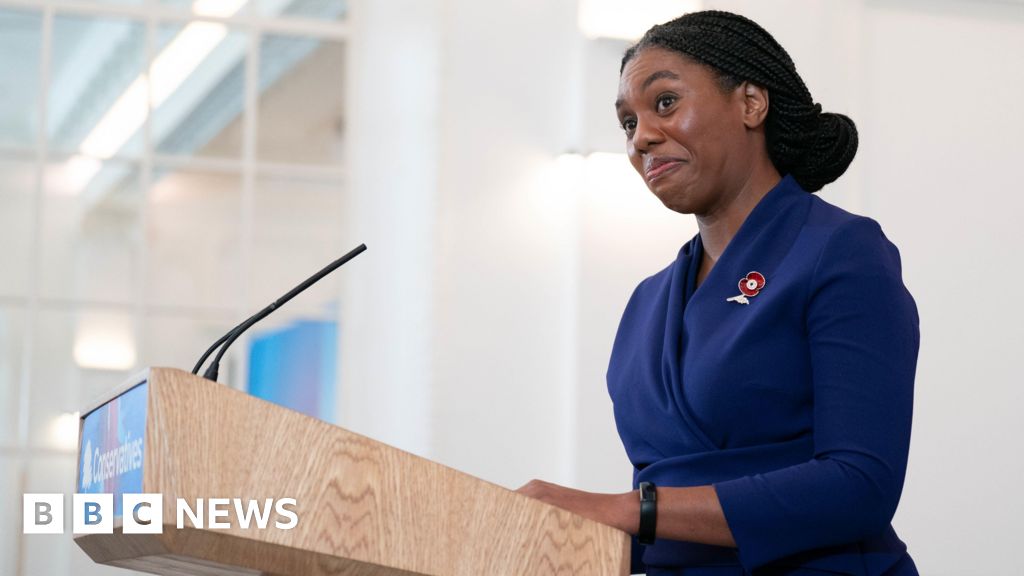
Kemi Badenoch would scrap the future homes standard, whose energy measures cost £5,000-£8,000 a home at build but over £20,000 to retrofit. Buyers of homes built without them would carry that gap, in a country the Guardian says needs about 6m new homes.
The Board Room · Leadership desk
Guardian: new homes lacking efficient, low-carbon energy would leave households with higher bills for decades. UKGBC chief: industry spent years preparing; reversal would risk slowing progress. UKGBC: industry is prepared and must implement it anyway, so scrapping it is of little benefit.
- cost Households in new homes Guardian: new homes without efficient, low-carbon energy would leave households with higher bills for decades, claim 11
- exposure Housebuilding industry UKGBC chief says industry spent years investing in skills, supply chains and products; reversal would risk slowing progress, claim 9
- capability Construction industry UK Green Building Council says it is well prepared and must implement the standard anyway, so scrapping it is of little benefit, claim 7
| Who | How | Kind | Claim |
|---|---|---|---|
| Households in new homes | Guardian: new homes without efficient, low-carbon energy would leave households with higher bills for decades | cost | 11 |
| Housebuilding industry | UKGBC chief says industry spent years investing in skills, supply chains and products; reversal would risk slowing progress | exposure | 9 |
| Construction industry | UK Green Building Council says it is well prepared and must implement the standard anyway, so scrapping it is of little benefit | capability | 7 |
What happened
- Badenoch made the repeal one of the central planks of her bid for prime minister at this week's Conservative conference, though it drew far less notice than her inheritance tax announcement.
- The Conservatives quoted cost estimates of £30,000 for new-build houses, a figure the Guardian says is likely well above the real cost.
- Heat pumps, solar panels, batteries and insulation fitted at build save more than £1,300 a year on household energy bills, according to the Guardian.
- The housing pledge is part of a wider Conservative rollback of green policy that would also abolish the Environment Agency and Natural England.
Why it matters
- cost The outlay at build is paid once, while the higher bills and any later retrofit fall on the people living in the home for decades.
- decision Builders and suppliers that invested in skills and products for the standard now face a choice over further spending while repeal remains a live election promise.
- contradiction Whether repeal saves buyers money depends on whose cost estimate holds: on the Guardian's it costs them, while on the party's the standard's payback stretches past two decades.
The pledge makes a new home cheaper to build and dearer to run [2]. On the Guardian's figures, the £5,000 to £8,000 spent at build comes back through bill savings in roughly four to six years [12]. That saving was estimated in 2024, when energy was cheaper, and the Guardian expects it is substantially higher now, so the payback today is probably shorter [4]. A household that buys without the measures and fits them later pays more than £12,000 to £15,000 above the build-time cost [13].
The strongest case against the standard is the Conservatives' own cost figure. Set their estimate of £30,000 for a new-build house [15] against the Guardian's range and it is about four to six times higher [16]. At £30,000, a saving of £1,300 a year would take about 23 years to repay the outlay [17]. The Guardian did not say where the party's estimates came from.
We think the pledge is a bigger cost decision than the attention it drew at conference suggests [1], because of scale. The UK needs approximately 6m new homes [3]. If every one were built without the measures and retrofitted later, the extra cost over fitting them at build would exceed £72bn [14]. Neither assumption is safe. The 6m is a national need, not one parliament's build programme, and an owner who never retrofits pays through higher bills instead [11].
Housebuilders, who carry the build-time cost, have been among the Conservatives' biggest donors, though that giving has fallen off in recent years [8]. They have also already spent on getting ready [9]. Simon McWhirter, chief executive of the UK Green Building Council, said: "The housebuilding industry has spent years preparing for the introduction of the FHS, investing in skills, supply chains and new products. Reversing course would ... risk slowing progress towards building the homes that people want and need." [9]
The sequencing turns the pledge into a reversal. Repeal depends on a Conservative win at the next general election [2], and the UKGBC says the industry will have to implement the standard before then [7]. A Conservative government would be unwinding rules builders already follow [7]. In our view, the cost before the vote is the uncertainty the pledge adds to builders' and suppliers' plans. Jan Rosenow, a professor of climate and energy policy at the University of Oxford, said: "Every home constructed today that runs on fossil fuels is a liability for the occupants. It also results in investor uncertainty and disrupts the supply chain that has been gearing up for this. What we need is less political point scoring and more long-term clarity." [6]
What to watch
- Whether the Conservatives publish the source and method behind their £30,000-per-home estimate.
- Whether the standard is in force before the next general election, as the UK Green Building Council expects, making the pledge a repeal of live rules.
- Whether housebuilders' donations to the Conservatives, which have fallen off in recent years, pick up after the pledge.
Clarity's read
What the record supports and how the coverage leans. The claims behind it follow.
Reality
- Evidence35
- Adoption
- Insufficient
- Hype gap
- Insufficient
- Incentives55
- Confidence30
Claim ledger
Ranked by verification strength, evidence, and original report placement.
- [1]
Kemi Badenoch made scrapping the future homes standard (FHS) one of the central planks of her bid to become the next prime minister at the Conservative party conference this week; the announcement gained little attention compared with her inheritance tax announcement.
- [2]
New homes could be built without solar panels, heat pumps and high-grade insulation, leading to higher household bills, if the Conservative party wins the next general election.
- [4]
Installing heat pumps, solar panels, batteries and insulation costs about £5,000 to £8,000 at the point of building, a figure estimated in 2024 when energy prices were much lower, to save more than £1,300 a year on bills, a saving likely to be substantially higher now.
- [5]
Retrofitting homes after they are built would cost more than £20,000.
- [6]
"Every home constructed today that runs on fossil fuels is a liability for the occupants. It also results in investor uncertainty and disrupts the supply chain that has been gearing up for this. What we need is less political point scoring and more long-term clarity."
ReportedSupportedSource: Jan Rosenow, professor of climate and energy policy, University of Oxford, quoted by the GuardianView cited source - [7]
According to the UK Green Building Council, the construction industry is well prepared for the FHS and will have to implement the policy before the next general election, so scrapping it is of little benefit.
- [8]
Housebuilders have been among the biggest donors to the Conservative party, though this has fallen off in recent years.
- [9]
"The housebuilding industry has spent years preparing for the introduction of the FHS, investing in skills, supply chains and new products. Reversing course would ... risk slowing progress towards building the homes that people want and need."
ReportedSupportedSource: Simon McWhirter, chief executive, UK Green Building Council, quoted by the GuardianView cited source - [10]
The Conservatives' housebuilding plans are part of a wider rollback of the party's green policies; the party would abolish the Environment Agency and Natural England.
- [11]
Failing to equip new homes with efficient and low-carbon energy sources would leave households with higher bills for decades to come.
- [12]
On the Guardian's figures, the build-time measures pay back through bill savings in roughly four to six years.
- [13]
Retrofitting later costs more than £12,000 to £15,000 per home above fitting the measures at build.
- [14]
If all 6m needed homes were built without the measures and retrofitted later, the extra cost over fitting at build would exceed £72bn.
- [15]
The Tories quoted estimates of £30,000 for new-build houses; the Guardian says the real cost is likely to be much less.
ReportedContestedSource: The Guardian, reporting Conservative estimates2 sources— create a free account to open themView cited source - [16]
The Conservatives' £30,000 estimate is about four to six times the Guardian's £5,000 to £8,000 range.
- [17]
At the Conservatives' £30,000 cost, a £1,300 annual saving would take about 23 years to repay the outlay.
Sources
1 independent publisher whose own reporting we read for this story.
- theguardian.com‘We need less point scoring’: What party conference season taught us about UK climate action
1 article · October 10, 2026
Topics and entities
Follow any of these and your For You feed starts watching them — no settings page required.
Entities
- Kemi BadenochFollow
- Conservative PartyFollow
- Future Homes StandardFollow
- UK Green Building CouncilFollow
- Simon McWhirterFollow
- Jan RosenowFollow
- Environment AgencyFollow
- Natural EnglandFollow