Science1 publisher2 min readPublished
MIT's hands-off mixing process sets lipid nanoparticle size and shape before testing begins
MIT chemical engineers built an automated process that lets developers set a lipid nanoparticle's size and shape before testing which one performs best. It replaces bench trial-and-error, though the study does not show a chosen size reaches a chosen organ.
The Scientist · Science desk
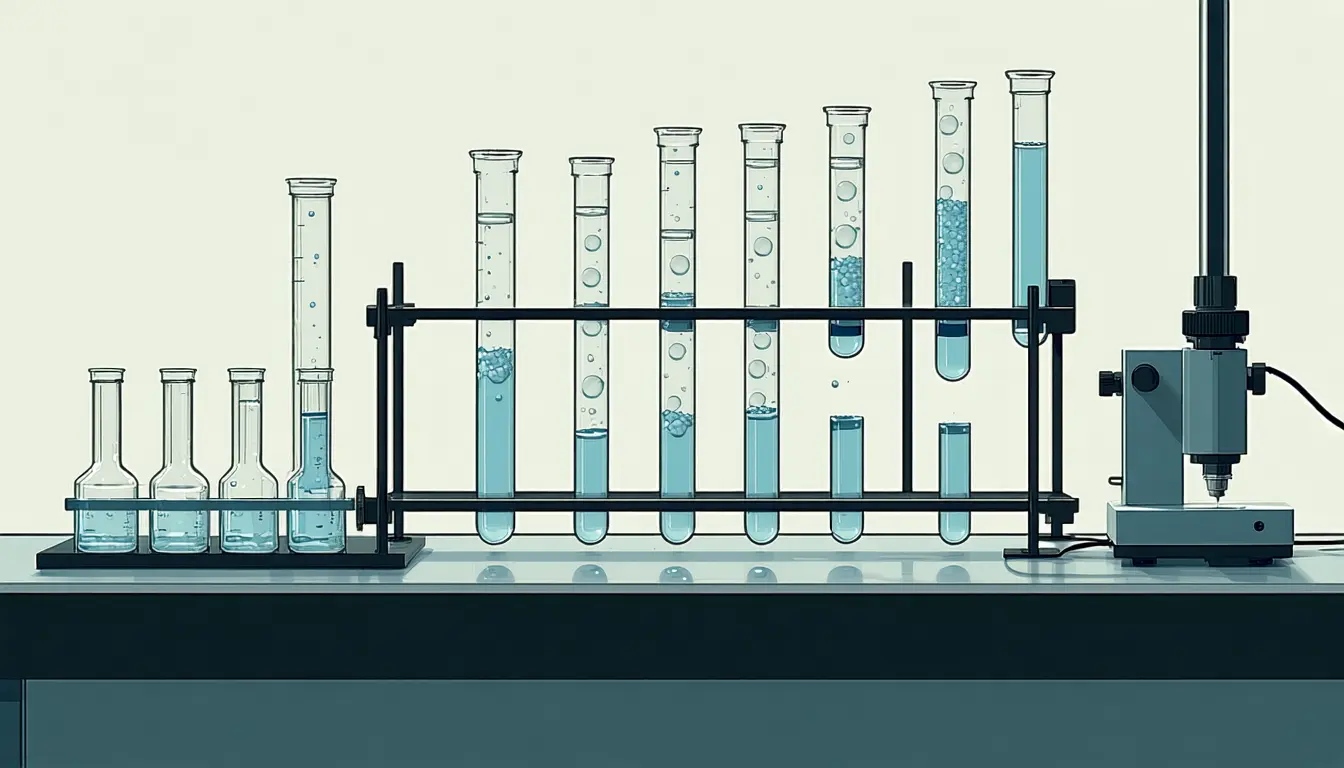
What happened
- The size lever is a delay: the two feed streams are mixed at equal rates, then extra buffer is added after a pause to stop growth, and longer pauses yield larger particles.
- Changing the concentration of the buffer added in the second step reshapes the particles from spheres into elongated forms the team likens to avocados.
- Both levers, the timing and the buffer, change a particle's size and shape without altering its underlying lipid composition.
- A commercially available dynamic light scattering device, built into the rig, measures particle sizes as they form.
Compiled by The ScientistSomething wrong?How this is made
Why it matters
- capability Because size and shape can steer where a particle goes, presetting them opens a path to targeting particular organs and tissues.
- constraint The method controls and measures the particle, not its delivery, so the hard question of whether a given shape reaches its target and expresses still sits downstream.
- decision Formulation teams that now search for size and shape by hand gain a way to pre-select parameters before making a single batch.
The control the group demonstrates is over what a particle looks like, not where it ends up in the body. As Cedric Devos, an MIT postdoc and one of the lead authors, put it, the method can "determine what are the parameters that will generate specific size and shape attributes, before you take those particles and see which one will perform best." [4] The performance test comes after. So this is a development tool, and the paper does not show that a particle built to a chosen size or shape delivers its payload better.
Why control was hard sits in how the particles are usually made. Two streams meet at high speed, lipids dissolved in ethanol and mRNA in an acidic buffer, and the mRNA solution runs at about three times the volume of the lipid solution. [11][12] That lopsided ratio drives mRNA into the particles but leaves their size and shape to chance. [12] Allan Myerson, the chemical engineering professor who was senior author, said the problem is deceptive: "The size and shape of LNPs could not be reliably controlled by any previous production method. The problem may appear simple at first glance, but in reality it requires a deep understanding of lipid nanoparticle assembly." [7]
The two-step recipe itself is a year old. The group introduced it in a 2025 paper, also in ACS Nano. [13] The new paper's contribution is running that recipe as an automated process, without a person at the bench. [18]
The speed claim is qualitative. The researchers describe a process that could "greatly speed up" the development of new RNA and DNA therapeutics [21], but the material gives no throughput number and no head-to-head against a manual workflow. The delivery problem it aims at is real. Injected on its own, mRNA is broken down quickly in the body. [8] The COVID-19 vaccines got around that by wrapping it in these particles. [9] Those particles matter, Devos said: "These are really a revolutionary type of therapeutics, but they need some kind of delivery vehicle to bring them to the right cells in the body." [19]
What to watch
- Whether particles tuned to a chosen size or shape are tested in animals for organ targeting and payload expression, the step this paper does not cover.
- A published throughput figure or side-by-side comparison against the standard single-step mixing workflow.
- Whether other labs adopt the automated rig with in-line light scattering for formulation screening.