Product1 publisher3 min readPublished
Apple's home thaw is a chip catch-up, not a platform reset
With Siri AI shipped, the reported blocker on new Apple home hardware is gone. What follows is mostly silicon bumps inside existing shells, plus one new display category.
The Product Desk · Product desk
Drafted by a language model from the sources cited here and checked against its claim ledger before publication. How we use AISend a correction
What happened
- 9to5Mac published its Apple home product roadmap article on 15 August 2026, written by Michael (byline links to X/Twitter, Bluesky, Instagram).
- Apple's home products, primarily HomePod mini and Apple TV, have been discussed for years because the current iterations are 4-6 years old.
- Siri has been the holdup for new hardware releases, supposedly, but now that Siri AI is finally here, new Home products should start being released very soon.
- HomePod mini and Apple TV 4K should debut later this fall, per current reporting.
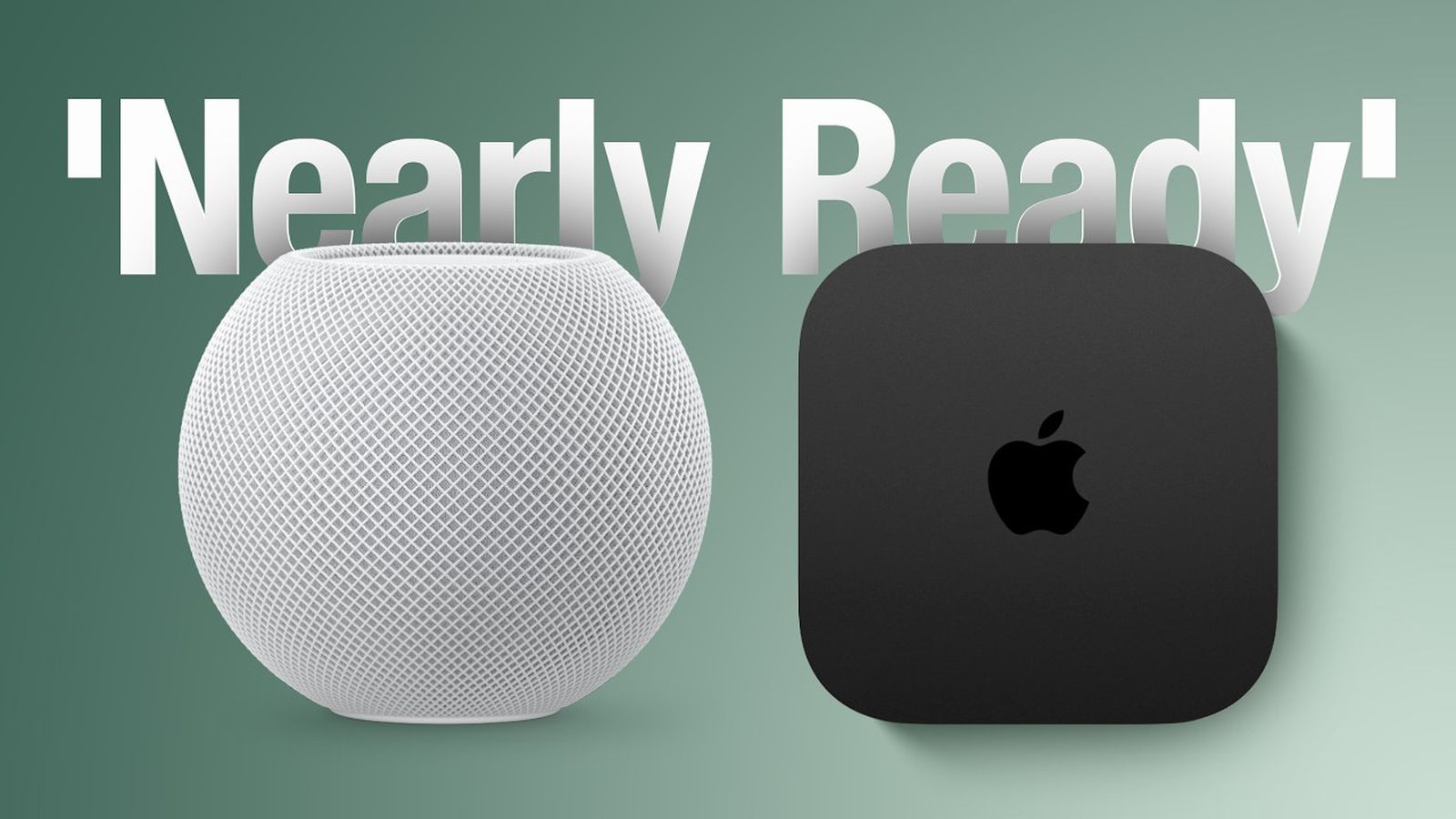
- HomePod mini should receive a bump from the S5 chip to the newer S9 chip, or potentially even better, plus possibly a few new color options, a new wireless chip (likely the same N1 that debuted in the iPhone last year), and audio improvements; 9to5Mac calls it a modest improvement hardware-wise, with the main hope being Siri AI support.
Compiled by The Product DeskSomething wrong?How this is made
Why it matters
Apple's home hardware has sat still long enough that its current HomePod mini and Apple TV are four to six years old [1]. According to 9to5Mac, writing on 15 August 2026, Siri was the holdup, "supposedly," and with Siri AI now shipped the backlog can start moving [0][2]. For anyone specifying, installing, or building on Apple's home stack, the practical question is what is actually in that backlog, and the answer is mostly catch-up silicon in existing enclosures.
Per current reporting cited by 9to5Mac, HomePod mini and Apple TV 4K both arrive later this fall [3]. HomePod mini moves from the S5 to the S9 chip "or potentially even better," possibly with new colors, the N1 wireless chip that debuted in last year's iPhone, and audio improvements; 9to5Mac describes it as a modest hardware improvement whose real payload is Siri AI support [4]. Apple TV 4K moves from the A15 Bionic to the A17 Pro, which 9to5Mac notes is already three years old, reportedly alongside a tweaked remote design [5][6]. On the numbering alone that is a four-step jump on the watch line and a two-step jump on the phone line [1], and the stated purpose is to bring the box up to spec for Siri AI and let some Apple Intelligence run locally [5].
Prices at present are $129 for HomePod mini and $199 for Apple TV 4K, both set in June's increases, which 9to5Mac hopes will hold through the refresh [7]. That hope is the thing to test, because nothing here reads like a product Apple would want to reprice upward twice in a year.
The one genuinely new shape is the smart home display, in development for some time and reported for a window between October and early next year [8]. There are two variants: a screen that attaches to walls magnetically, and a screen on a speaker base [9]. It carries a 7-inch square display and an A18, and runs a new operating system called homeOS internally, handling FaceTime, Siri AI, and smart home device management [10][11]. Worth noting for anyone sizing local inference: the A18 in the new category device is a generation ahead of the A17 Pro going into Apple TV [2]. A full-size HomePod refresh is also in the works, per Bloomberg's Mark Gurman, with a newer chip to support Siri AI to some degree and no reported timeline [12].
Further out, Apple is preparing its first own-brand smart home accessories, a security camera and a doorbell, with no known launch date [13], plus a more advanced display with a robotic arm and a 9-inch screen, described as a tabletop robot [14].
Read as a whole, three of the four near-term devices are chip bumps inside shapes that already exist [3]. That is a capability change, not an architecture change. Integrators should plan for feature gating by silicon generation rather than for a new interconnect, a new pairing model, or a new accessory protocol.
What to watch: whether the "or potentially even better" hedge on HomePod mini's chip turns into a real split in which Siri AI features work on which speaker; whether the June prices survive; and whether homeOS stays confined to the display or becomes the name for where Apple TV and HomePod are heading. Also watch the camera and doorbell, since Apple building its own sensors is the only item on this list that changes the competitive position of everyone else selling into HomeKit.