Leadership1 publisher2 min readPublished
Last US troops leave Iraq on the day Iranian-backed militias were due to disarm
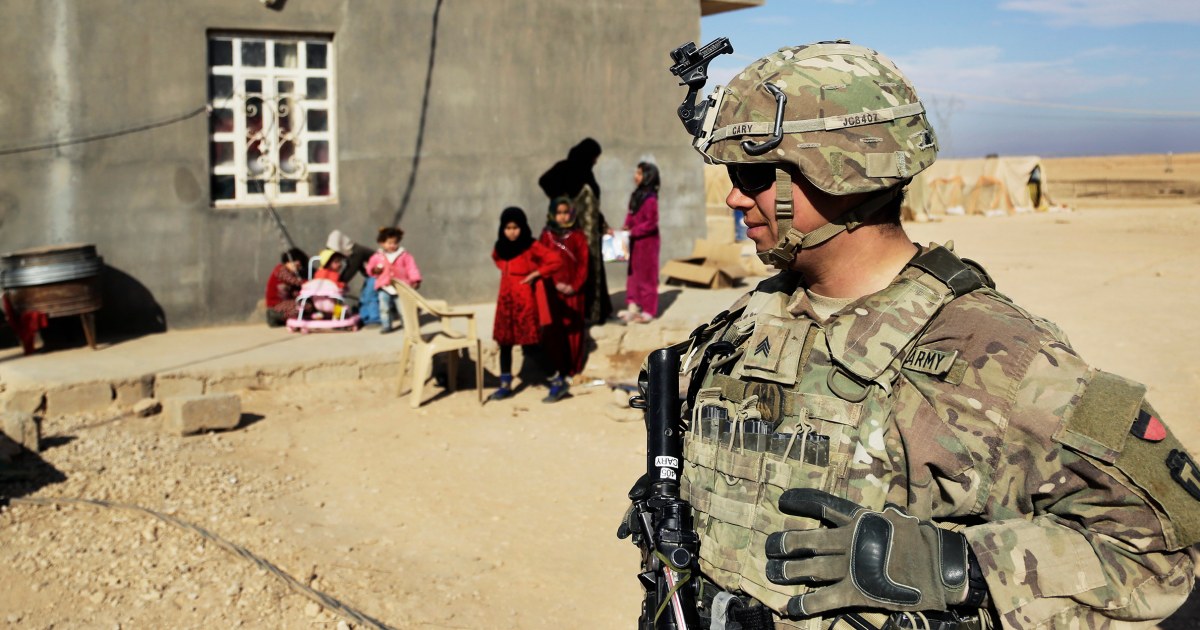
US forces completed their formal withdrawal from Iraq 23 years after the invasion, closing a phased drawdown the Biden administration agreed. Baghdad has postponed the militia disarmament it pinned to the same day, so the harder half of that timetable is still open.
The Board Room · Leadership desk
What happened
- Since 2003 Tehran has built ties to figures such as Hadi al-Amiri, whose Badr Organization is a major force in Iraqi politics, and has armed and trained powerful paramilitary groups.
- The commander of one Iranian-backed militia called the withdrawal "a crushing defeat for the American project."
- The first deployment left Iraq in 2011, and a smaller contingent returned three years later after the Islamic State gained a major foothold.
- More than 4,500 Americans have died in Iraq over the past 20 years, according to Vox.
Compiled by The Board RoomSomething wrong?How this is made
Why it matters
- constraint With no US troops left in Iraq, Washington cannot press the delayed militia disarmament from inside the country, so its pace is set by Baghdad and the armed groups themselves.
- exposure Iraqis who told reporters they fear their country "could be swallowed up" by Iran-linked groups now face those groups without a US force in the country.
- precedent The 2011 exit led to a return within three years. If the Islamic State regains ground, a future administration would weigh re-entry starting with no troops in Iraq.
Vox's newsletter called the withdrawal historic "but also a pretty low-key one," and put the calm down to years of steady cuts under the phased drawdown the Biden administration signed [2]. Most of the reduction came before the formal date. The account does not measure whether that reflects a lasting change in US priorities. It notes that neither campaign was particularly popular with the American public by the end [6].
The date also mattered in Baghdad. The Iraqi government had set the official day of the US withdrawal as the deadline for Iranian-backed militias to disarm, and it has pushed that deadline back [14]. One half of a shared timetable held and the other slipped. The US half was the easier one to deliver: it meant removing a force that had been shrinking for years [2].
Iran's position also rests on spending outside the militias. Tehran poured hundreds of millions of dollars into soft-power projects, including expanding Shiite pilgrimage sites in Iraq, according to Vox [10]. The two countries were historically bitter rivals, and Saddam Hussein invaded Iran in 1980 [17].
A skeptic would say the formal exit of a force already cut down changes little on the ground. The previous exit is the answer. After the first deployment left in 2011, a smaller force went back to fight the Islamic State [4]. That second mission ran 12 years, four years longer than the roughly eight-year deployment that began in 2003 [1]. Vox wrote: "By dipping in and out of places like Iraq, the US may risk giving Tehran more openings." [16]
The trade-off is between the costs of staying and the influence given up by leaving. Staying had a price inside Iraq too. Civilian casualties, and drone strikes seen as violations of Iraqi sovereignty, fueled periodic protests against American intervention [7]. Vox's newsletter put the limit this way: "The US may have the resources to handily win any military spat it gets itself into. But securing a desired political outcome is a different and more time-consuming project altogether." [15]
What to watch
- Whether the Iraqi government sets a new disarmament date for Iranian-backed militias, and whether groups such as the Badr Organization accept it.
- Signs of the Islamic State regaining ground in Iraq, the condition that brought US troops back three years after the 2011 exit.