Science1 publisher2 min readPublished
Neutrons at Oak Ridge image a healing vessel network inside Scotty's cracked rib
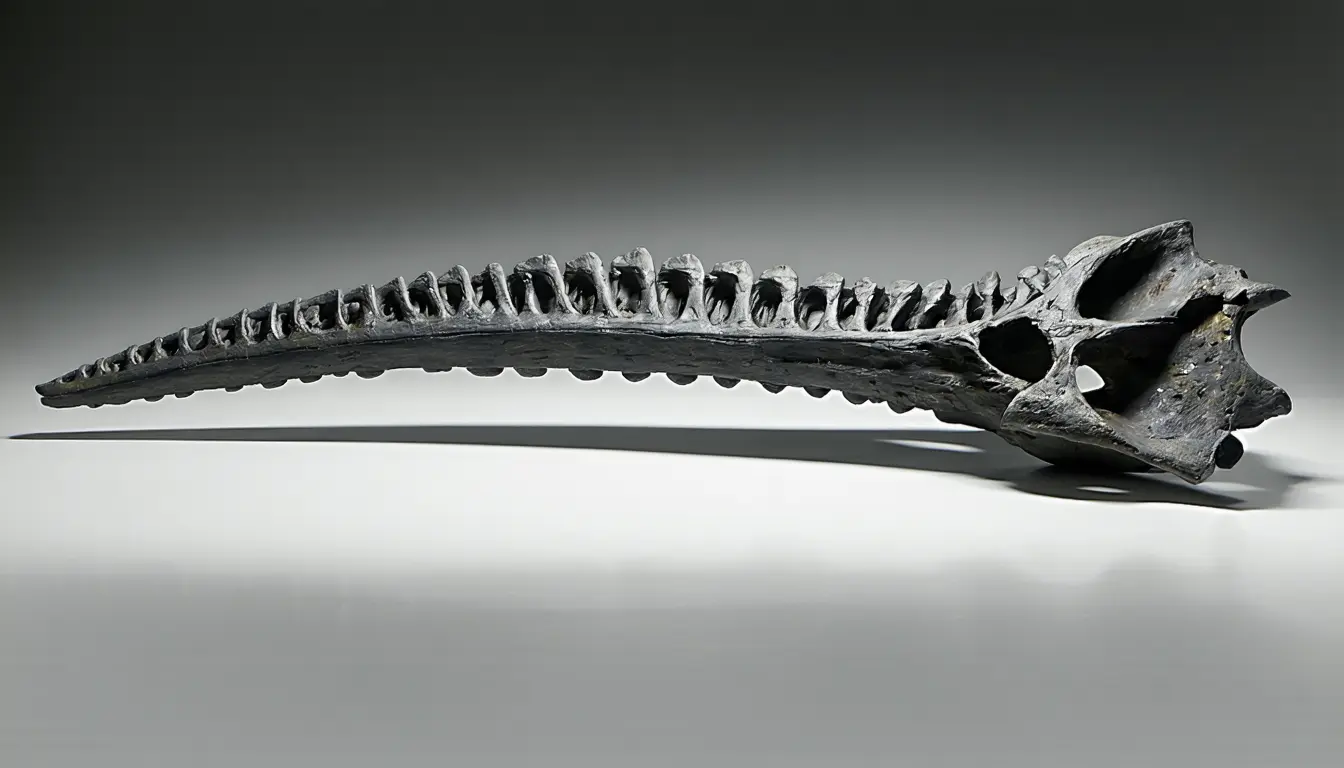
A University of Regina group took a fractured Tyrannosaurus rex rib to two neutron instruments at Oak Ridge in April 2026, six years after X-ray scans first found soft tissue inside it, and the lab describes the neutron result as confirmation.
The Scientist · Science desk
What happened
- A fractured rib from Scotty, the largest known Tyrannosaurus rex skeleton, preserves a fossilized network of blood vessels that formed while the injury was healing, and the animal died before the fracture closed.
- In April 2026 the team imaged the fossil on the MARS instrument at Oak Ridge's High Flux Isotope Reactor and the VENUS instrument at the Spallation Neutron Source.
- Neutron imaging produced detailed 3D views of the rib's interior without damaging the preserved soft tissue.
- The investigation began in 2020, when Jerit Mitchell, then an undergraduate, used micro-CT at the Canadian Light Source and confirmed fossilized soft tissue in cut sections of the rib.
- Scotty was collected by Royal Saskatchewan Museum teams in the Frenchman River Valley, in rocks that record dinosaur life shortly before the extinction of the nonavian dinosaurs.
Compiled by The ScientistSomething wrong?How this is made
Why it matters
- capability Because neutrons respond to hydrogen and X-rays to heavier elements, a group can put a question about organic residue to an intact specimen instead of preparing a new slice for each question.
- constraint Answers of this kind now depend on scheduled access to reactor, spallation and synchrotron sources that the museums and universities holding the fossils do not own.
- contradiction The damage-free framing belongs to the neutron stage; the first confirmation of soft tissue was made on cut sections of the rib. That is a different standard of intactness.
- precedent One group's six-year path through three facilities gives future beam-time proposals something to cite. It does not show that beam lines have become standard paleontology instruments.
Neutrons are good at picking out light elements, hydrogen above all, while X-rays are better with the heavy ones [7]. That split is why one rib went through two kinds of beam line. The structures the team was chasing formed during repair: after the bone broke, iron-rich blood entered the injury and new vessels grew in as part of the healing [9]. Blood vessels normally rot away long before fossilization finishes [8]. Scotty's carcass settled in a salty marsh, where conditions slowed decomposition [9].
The X-ray phase did not stop at micro-CT. The group added synchrotron radiation at the Canadian Light Source and microscopy, which let them examine the healing injury and the preserved tissue at the cellular level [11]. Six years separate the first detection from the neutron measurements [19].
"It's like winning the lottery," said Mauricio Barbi, a professor of physics at the University of Regina [3]. "Scotty's rib contains a vast network of mineralized blood vessels that has never before been observed in a fossil," he said [4]. The claim of a first rests on Barbi's assessment. Oak Ridge's announcement cites no published paper, and it gives no resolution figure or measurement of the network [18].
Jerit Mitchell, the doctoral candidate who leads the project under Barbi's direction, put the framing more modestly [12]. "Every fossil is a tiny snapshot of the past," he said [13].
Whether beam lines are becoming standard paleontology instruments is a different question from whether they worked here. This account covers one specimen, one group and three facilities over six years [19], plus the same group's parallel work on fossilized amber, dinosaur scales and bones from other dinosaurs [16]. The neutron instruments belong to a Department of Energy laboratory, and the researchers are in Saskatchewan [20].
Oak Ridge says the neutron imaging let the team confirm earlier observations [17]. Corroboration by a method that leaves the specimen intact is a sound use of beam time when the specimen is unique, and it is thin ground for the stronger claim that reactor and spallation sources are now routine equipment in the field. I would expect that case to need several independent groups reporting on different specimens.
What to watch
- A peer-reviewed paper with resolution figures and neutron contrast maps would let other groups judge what the beam lines actually resolved.
- Whether other paleontology teams win beam time at the High Flux Isotope Reactor and the Spallation Neutron Source, or the fossil work stays with this one collaboration.
- Whether the same imaging sequence yields anything on the amber, scales and other dinosaur bones the Regina group is working on.