Product1 publisher3 min readPublished
Anthropic rents 2,900 acres in Texas: $16bn of other people's risk, plus its own gas plant
Eagle Point's $1.3bn mezzanine slice closes phase one of Nexus's Hubbard campus. Google guarantees the senior debt. Anthropic signs as tenant and owns none of it.
The Product Desk · Product desk
Drafted by a language model from the sources cited here and checked against its claim ledger before publication. How we use AISend a correction
What happened
- Eagle Point Credit Management is providing a loan of about $1.3bn to help build a giant AI data centre in Texas that will house Anthropic, Bloomberg reported.
- The $1.3bn loan sits within a roughly $16bn project-finance package for the developer, Nexus Data Centers, a person familiar with the project told Bloomberg.
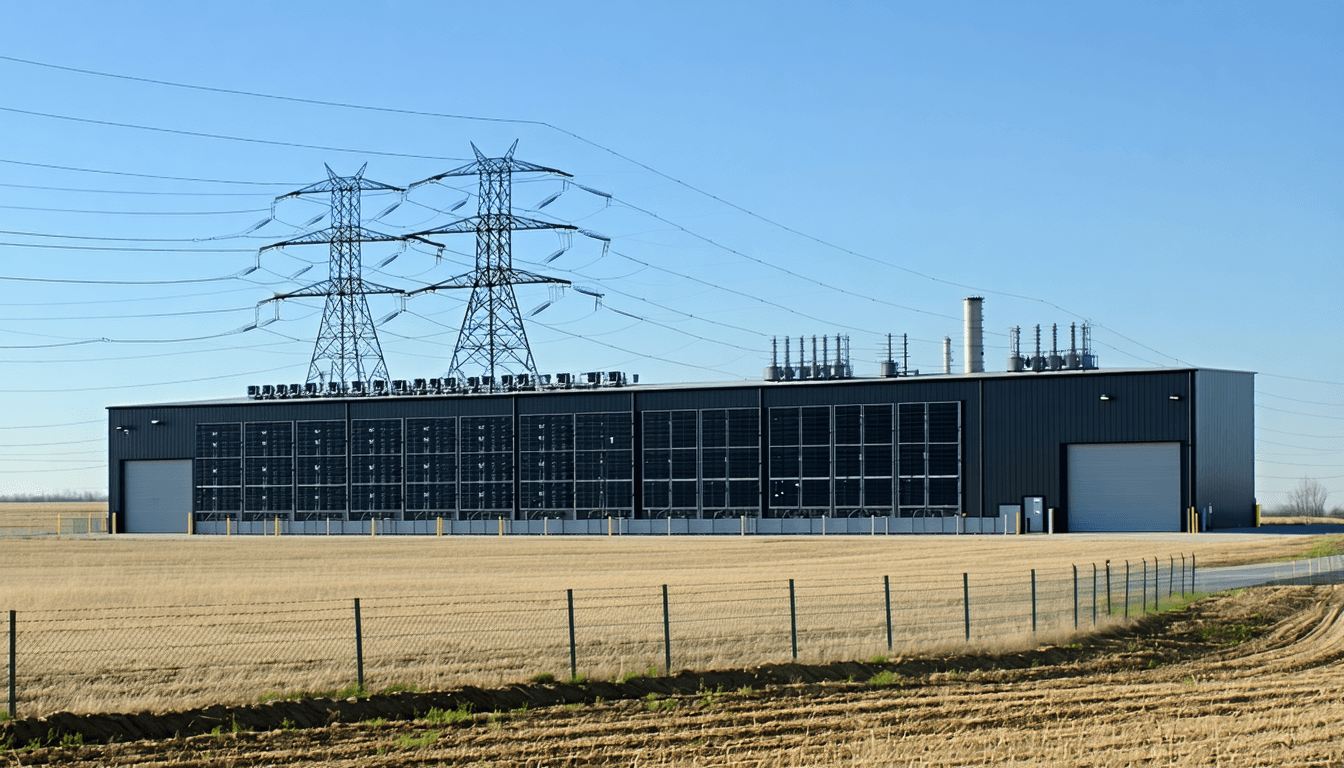
- Nexus will use the money to finish a 2,900-acre campus in Hubbard, Texas, a city about 70 miles south of Dallas.
- Anthropic will be the primary tenant of the Hubbard campus, according to the same person familiar with the project.
- The campus will have its own gas-fired power plant to run it; Eagle Point described the site as a data-centre and "behind-the-meter" power project, meaning it generates its own electricity rather than drawing it from the grid.
Compiled by The Product DeskSomething wrong?How this is made
Why it matters
Eagle Point Credit Management is lending about $1.3bn as the riskier layer of a roughly $16bn project-finance package for Nexus Data Centers, which will use the money to finish a 2,900-acre campus in Hubbard, Texas, about 70 miles south of Dallas, with Anthropic as primary tenant [1][2][3][19]. Anthropic's name is on the tenancy, not the capital structure: the buildings and the on-site gas-fired power plant belong to somebody else's balance sheet, while the campus's decision to make its own electricity instead of drawing from the grid is attached to Anthropic's compute [8][14].
The layering is the story. About $15bn of the roughly $16bn total is a bank-led senior portion, with Morgan Stanley among the leads [6]. Eagle Point's roughly $1.3bn sits on top as mezzanine debt, described by the firm as a "HoldCo" loan, ranked below the safest parts of the package and therefore paying more [4][5]. That slice is about 8 percent of the total [15]. Bloomberg reported two things made the financing easier to arrange: Anthropic won a competitive process to become primary tenant, and Google agreed to guarantee the senior debt [20]. Bloomberg also noted that Google has backstopped debt payments at a number of data centres, and that such guarantees reassure lenders while concentrating exposure in fewer parties [21].
Read the risk map as it is written. Nexus is the developer finishing the site, and Hubbard is its first campus [3][7]. The credit support on the senior tranche comes from Alphabet's Google, not from the tenant [20]. Anthropic's position, per Bloomberg, is the one it has taken elsewhere, including a financing partnership with Macquarie: secure capacity without owning the buildings or paying for them up front [14].
The lender is small for the role. Eagle Point is based in Greenwich, Connecticut, manages about $14bn, was founded in 2012 by Thomas Majewski with Stone Point Capital, and has more than 120 staff [10]. The package it helped close is larger than the firm's entire book [16]. It started work around September last year on roughly $150mn of senior debt secured by the Hubbard land, then resized and restructured the deal several times [11] to something roughly nine times that first plan [17]. Jennifer Powers, Eagle Point's head of infrastructure credit, called Nexus reaching a final investment decision in under a year "a truly remarkable achievement" [12]; Nexus chief executive Ivan Van der Walt said the firm had backed the project across four financings and helped complete the structure "at a critical moment" [13].
On the power: the campus will have its own gas-fired plant, and Eagle Point described the site as a data-centre and "behind-the-meter" power project, meaning it generates its own electricity rather than drawing it from the grid [8]. The material supplied does not describe fuel supply, permits, emissions terms or local approvals, so the only established fact is the design choice. The 2,900 acres work out to about 4.5 square miles [18], and the plant that runs it sits inside the fence rather than in a utility queue [8].
What to watch: the mezzanine closing completed the capital structure for the first phase only, of a multi-phase campus [5], so later phases need fresh capital, and nothing in the source says Google's guarantee travels with them. Nexus declined to comment and Anthropic did not respond to Bloomberg outside business hours [9].