Science1 publisher3 min readPublished
Harvard's KinoPlex cuts 1.8 million phosphorylation sites down to 250,000 plausible ones
The atlas turns kinase-inhibitor selection into a matching problem. What is missing is evidence that the match predicts which drug works in a patient.
The Scientist · Science desk
Drafted by a language model from the sources cited here and checked against its claim ledger before publication. How we use AISend a correction
What happened
- A Harvard Medical School team built an AI-enabled tool called KinoPlex that maps the three-dimensional structures and biochemical environments of all potential kinase sites on human proteins and matches them with the specific kinases that can interact with them.
- The KinoPlex work was published in Nature Biotechnology: David R. Vanderwall et al, 'An AI-enabled structural atlas decodes kinase specificity across the human proteome,' Nature Biotechnology (2026), DOI 10.1038/s41587-026-03239-5.
- There are 1.8 million sites on human proteins that kinases might act on.
- Researchers have fully characterized fewer than 1% of the 1.8 million potential kinase sites.
- There are roughly 500 different kinases, and each has different requirements for its binding sites.
Compiled by The ScientistSomething wrong?How this is made
Why it matters
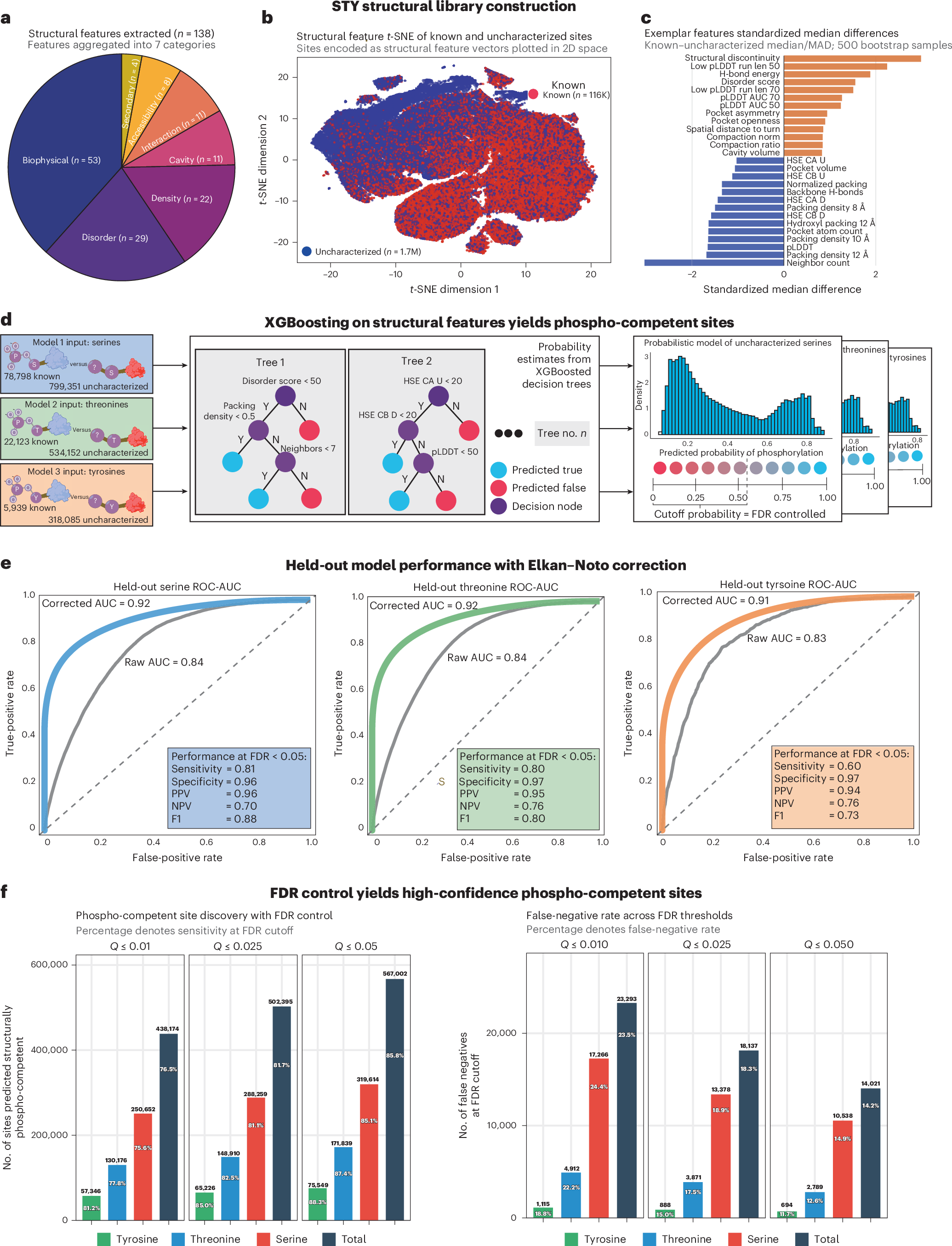
A Harvard Medical School team has published KinoPlex in Nature Biotechnology, an AI-enabled structural atlas that maps the three-dimensional structure and biochemical environment of all 1.8 million sites on human proteins where a kinase might act, and matches those sites to the kinases capable of hitting them [1] [2] [3]. That matters because researchers have fully characterized fewer than 1% of those sites, which is why picking among kinase inhibitors has been closer to informed guessing than to lookup [4].
The biology sets the problem size. There are roughly 500 human kinases, each with different requirements for its binding sites [5]. Earlier work, much of it led by corresponding author Lewis Cantley of HMS and Dana-Farber, characterized the biochemical signatures at those sites to infer which kinase could be a match [6]. KinoPlex is the first approach to also fold in the 3D structure of the region, measuring more than 100 properties around each candidate site [7] [8].
The structural layer is the load-bearing result, and it is a subtractive one. In many cases, according to the team, a site carries the right amino acid sequence but is physically inaccessible to the matching kinase [9]. After filtering for both a recognizable biochemical signature and a compatible 3D shape, roughly 250,000 sites survive [10], about 14% of the 1.8 million [21]. That is still more than an order of magnitude beyond the fewer than 18,000 sites previously characterized in full [22], but these are predictions, not confirmations.
The clinical pitch runs through a scoring framework that converts detected phosphorylation sites into measurements of kinase activity [11]. Tested on leukemia cells, it identified kinase signals associated with the cancer's growth and survival [12]. Across additional cell lines and multiple cancer types, the team says it identified which signaling pathways mattered most to each cell and which kinase inhibitors might therefore work [13]. The addressable drug list is real: around 100 existing kinase-inhibiting treatments, of which more than 90 are FDA-approved, per senior author Steven Gygi [14] [15].
Everything past that point is conditional. The paper's own framing is that the tool could help doctors match patients to drugs if validated in the clinic [14]. Gygi says that by analyzing a patient's mutations and phosphorylation state, the team "might be able to predict which drugs would provide the best therapeutic effect" [17]. Validation is now the work: the researchers are partnering with oncologists at Brigham and Women's Hospital and Massachusetts General Hospital to test KinoPlex on clinical samples from cancer patients [16].
Diagnostics teams should read Gygi's own description of the assay class carefully. He calls it very different from existing diagnostics, "a signature of a process, not just a level of a protein or something similar" [18]. A process signature is a harder analytical validation than a threshold on one analyte, because the input is a phosphoproteomic measurement whose reproducibility across sites and sample handling becomes part of the claim.
What to watch: whether the hospital collaborations report concordance between KinoPlex-called kinase activity and known drivers in the same tumors, and then whether the score ranks drugs in a way that survives blinded or prospective testing. No timeline, endpoint, or sample count has been disclosed for that work [16]. Meanwhile the tool is public, released with help from Cell Signaling Technology [19], and first author David Vanderwall says anyone can start applying it [20]. Cheap for a lab to try is not the same as fit for a clinic.