Science1 publisher3 min readPublished
Huashan's red cliff paintings survived 2,000 monsoons because of a lime-and-blood mortar
Shandong University researchers say the artists locked red clay pigment inside biomineralized calcium carbonate, turning an unexplained durability puzzle into a recipe with named ingredients.
The Scientist · Science desk
Drafted by a language model from the sources cited here and checked against its claim ledger before publication. How we use AISend a correction
What happened
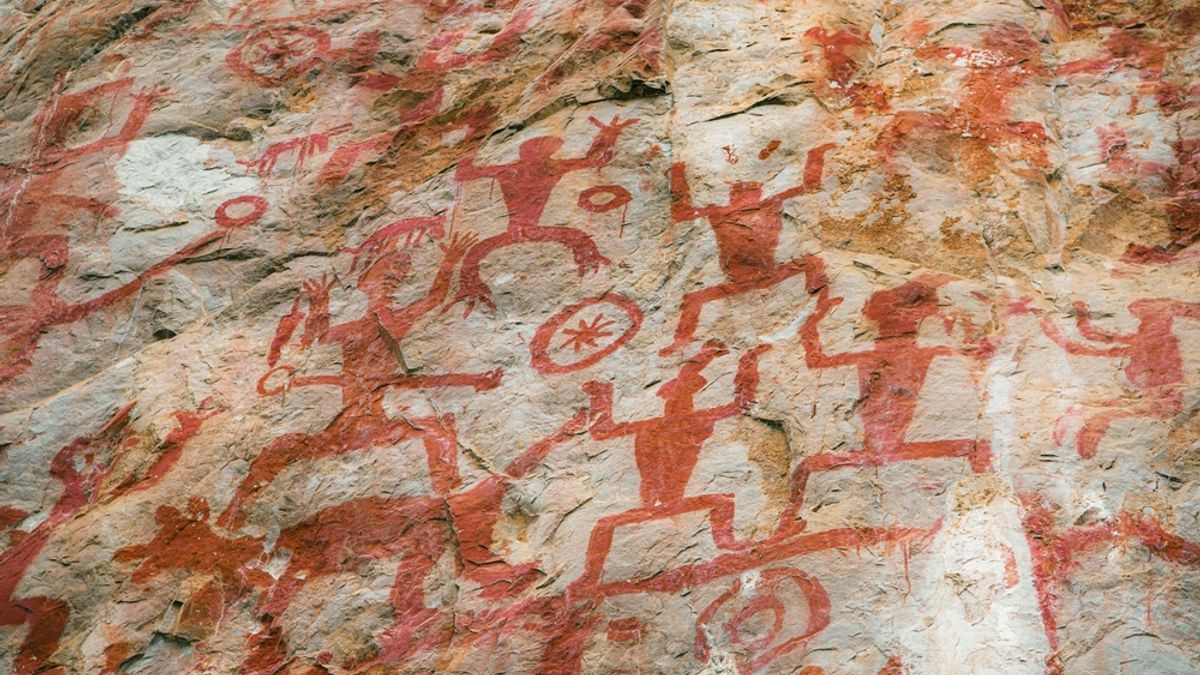
- Paintings of blood-red squatting humans, various animals, daggers and musical instruments have covered a 160-mile stretch of rock along the Zuojiang River in southern China for more than 2,000 years.
- The Huashan paintings have puzzled scientists because they survived the valley's extreme weather conditions; frequent monsoon rains, humidity and extreme temperatures should have caused weathering.
- Researchers from Shandong University, in a study published in the Journal of Archaeological Science, found that the artists combined lime and blood into a mortar which they mixed with the pigment.
- The pigment originated from red clay deposits, and instead of applying it directly to the rock the artists combined it with a mortar made of lime, calcium phosphate and blood.
- By reacting with carbon dioxide from the air and the blood proteins added to the mixture, the pigment is encapsulated by biomineralized calcium carbonate, a compound that also forms eggshells.
Compiled by The ScientistSomething wrong?How this is made
Why it matters
Researchers at Shandong University report in the Journal of Archaeological Science that the red pigment on the Huashan cliffs was never applied to the rock neat, but suspended in a mortar of lime, calcium phosphate and blood [3][4]. That reframes the paintings' survival: not a lucky microclimate, but a materials process with a component list.
The durability problem is genuine. The images run for 160 miles along the Zuojiang River in southern China, in the Guangxi Zhuang Autonomous Region, across more than 80 sites that sit directly exposed to the weather [1][8], an average of about one site every two miles [16]. They have taken more than 2,000 years of frequent monsoon rain, humidity and temperature extremes that should have weathered them away [1][2]. The paintings cover tens of thousands of square meters, have been on the UNESCO World Heritage List since 2016, and may be the work of the Luoyue people [9]. The subjects are blood-red squatting human figures, animals, daggers and musical instruments [1].
The mechanism is the interesting part. The team collected fallen rock art fragments from three sites in the belt and analysed them with spectroscopic methods [7]. The color itself came from ordinary red clay deposits [4]. But the lime in the mortar takes up carbon dioxide from the air, and with the added blood proteins in the mix the pigment ends up encapsulated in biomineralized calcium carbonate, the same compound that forms eggshell [5]. The researchers describe the result as a stable organic-inorganic binder, evidence that the painters could assemble a complex technological process out of locally available materials [6]. Functionally, the pigment is not sitting on the cliff hoping the cliff holds; it is inside a mineral shell that the painters grew themselves.
The blood was not there for color [14]. Based on proteomic tests, the researchers suggest some of it may have come from women giving birth or shortly afterwards [10], which they read as consistent with historical records describing the local community as a matriarchal hunter-gatherer society that worshipped female fertility, and with Han Chinese accounts of the Luoyue as matriarchal, without a conventional concept of marriage and with relationships based on personal preference [11]. Those same Han descriptions cast the Luoyue as fishers and early farmers [12]. This is the softest link in the chain: a protein profile cross-read against texts written by outsiders. Archaeology News has also reported that the blood may have carried a symbolic role and featured in ritual [13]. The binder chemistry stands on its own regardless of whose blood it was.
Three things determine whether this becomes a recoverable recipe rather than a single result. First, coverage: the fragments came from three sites out of more than 80, under 4 percent of the belt [15], and all of them had already fallen, which selects for material that failed. Second, replication: lime, calcium phosphate, blood and red clay are cheap and specified, so the encapsulation claim is testable in accelerated weathering trials by anyone with a climate chamber. Third, the proteomics, which would carry far more weight with species and tissue assignments published in detail rather than a suggestion. Conservators working on exposed rock art elsewhere have an obvious motive to follow all three.