Science1 publisher2 min readPublished
Cataloguing Utrecht's Egyptian manuscripts turned up a pocket Odyssey copied around AD 300
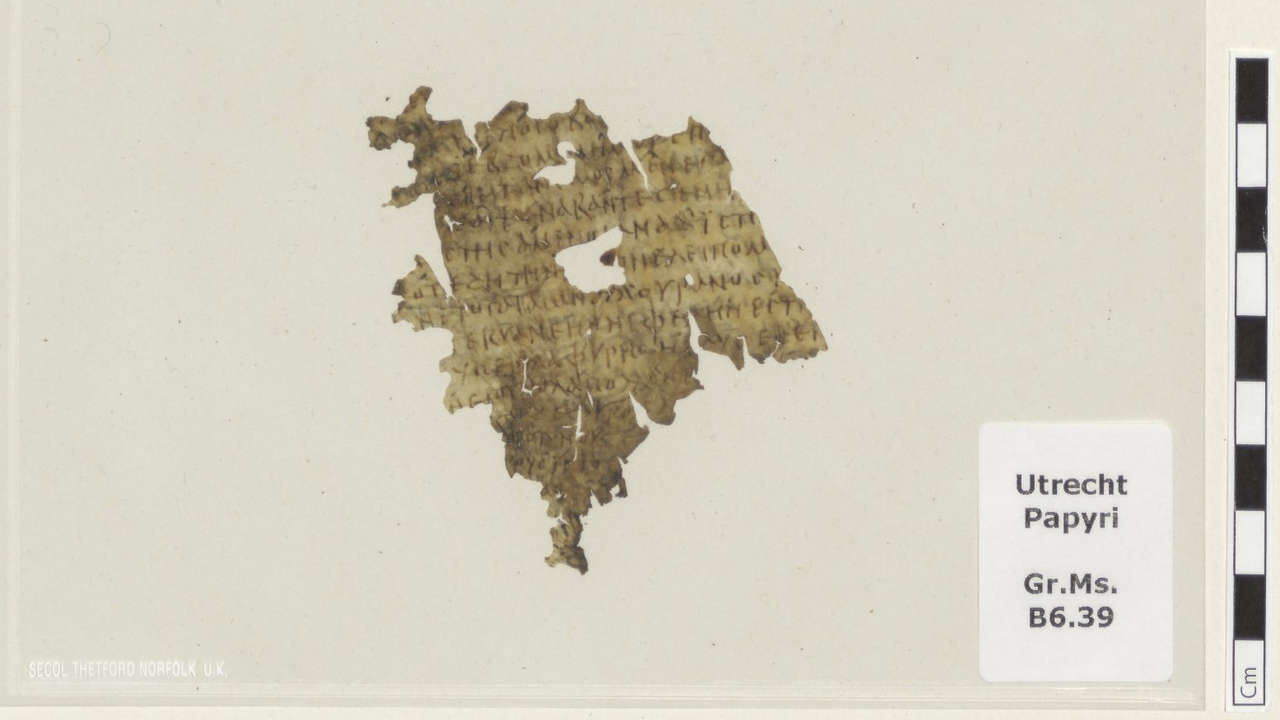
Mark de Kreij spotted verses from Book 12 on a scrap of parchment inside a collection Utrecht's library bought in the mid-20th century. About 30 comparable fragments are known, and his full catalogue is still to come.
The Scientist · Science desk
What happened
- Mark de Kreij identified a torn parchment carrying verses from Book 12 of the Odyssey while studying early Christian manuscripts that Utrecht University library bought in the mid-20th century.
- De Kreij made the identification in 2024, and his full study of the library's Greco-Roman texts from Egypt is due as a book on the collection's Hieratic, Demotic, Greek and Coptic material.
- The university's statement says only about 30 similar fragments have ever been found.
Compiled by The ScientistSomething wrong?How this is made
Why it matters
- decision Curators choosing between new acquisitions, fieldwork and a cataloguing post now have one concrete case in which reading existing stock produced a previously unrecorded literary text.
- constraint With no record of how the leaf entered the collection, it cannot be used as evidence for where pocket Odysseys were made, sold or read.
- capability When the comparison set is about 30 items, a single addition measurably enlarges what textual scholars can check Book 12 against.
The scrap measures 6.6 by 7.7 centimetres, so about 51 square centimetres of parchment [4][14]. A person has to recognise the Greek, and Mark de Kreij, who teaches Greek literature at Radboud University, was working through Utrecht's early Christian manuscripts when he saw lines he knew from Book 12 [2][1][5].
"There are so many boring parts in the Odyssey," de Kreij told RTV Utrecht. "This happens to be a really fun passage." [6]
The verses cover Helios finding out that Odysseus' men have killed and eaten his immortal cattle [5]. Helios asks the gods for vengeance, Zeus destroys the ship, and everyone aboard except Odysseus dies [19]. The copy is late relative to the poem: both Homeric epics were composed in the late eighth or early seventh century BC, and this codex was made around AD 300, roughly a thousand years after [13][3][15].
De Kreij told Dutch News the piece may have survived because it came from the middle of the pocket-size book, where the surrounding pages protected it [9]. Utrecht attributes it to a parchment codex of the third or fourth century AD, probably from the Fayum oasis [7]. One more scrap added to a group of about 30 is close to a 3% increase in the known material of this kind [8][17].
Seventy years separate the purchase from the identification [16]. One fragment from one collection is a single case, and the university's statement does not say how much of the Utrecht holdings remain unidentified, so what other libraries hold unread stays a guess [11].
The other unexpected Homeric fragment this year came out of the ground: in spring, archaeologists in Egypt found papyrus pieces of the Iliad inside a Roman-era mummy [12]. How the Odyssey parchment reached the Egyptian collection in Utrecht is not known [10]. De Kreij's full study of the library's Greco-Roman texts from Egypt is due as a book, "Hieratic, Demotic, Greek, and Coptic Texts in the Utrecht University Collection" [11].
What to watch
- Publication of de Kreij's book on the Utrecht collection, and whether it identifies further Greek literary pieces among the Egyptian texts.
- Any documentation surfacing on how a Fayum Odyssey leaf entered a mid-20th-century purchase of early Christian manuscripts.
- Whether editors working on Book 12 publish readings from the fragment alongside the roughly 30 comparable parchment pieces.