Product1 publisher2 min readPublished
New York buys 17 automated public toilets at roughly $235,000 apiece
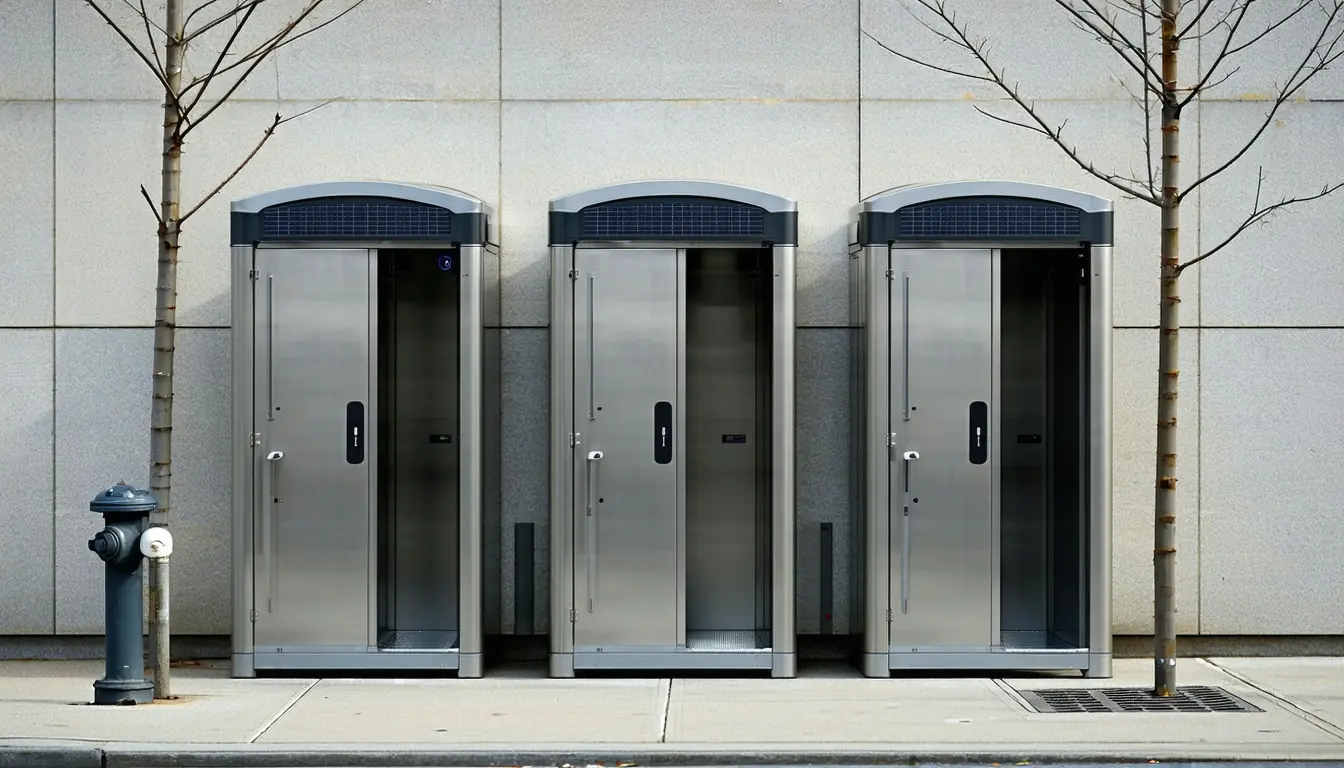
The $4m pilot puts solar-powered units with a ten-minute timer on New York streets. A worker still gets an alert when someone will not leave. Matching Zurich's per-capita rate would take about 5,500 more units.
The Product Desk · Product desk
What happened
- Mamdani announced this week the arrival of the first of 17 solar-powered automated public toilets, ordered earlier this year under a $4m pilot programme.
- Two of the units are already up and running, and Gizmodo reports the remainder are due to arrive soon.
- Each unit ends a session after 10 minutes, with a bilingual message in English and Spanish warning the user that the door is about to open, and then it opens.
- Gizmodo puts the city's existing stock at something like 1,000 public toilets, with the exact count varying by source, or roughly one for every 8,500 residents.
- Among US cities on the same dataset, Salt Lake City leads with 66.6 public toilets per 100,000 residents, ahead of Honolulu at 56.5 and Denver at 49.2.
Compiled by The Product DeskSomething wrong?How this is made
Why it matters
- constraint The addition moves the city's stock by under two per cent, so the pilot cannot change coverage; what it can produce is operating evidence on whether these units hold up without an attendant on site.
- decision Every unit that will not clear generates a dispatch, so a decision to expand past 17 is also a decision to fund and roster the crew that answers those alerts.
- precedent Melbourne's newer units hose down their own interiors after ejecting the user. The next spec argument is how much cleaning labour the hardware is expected to absorb.
- contradiction The per-capita league table New York is being measured against comes from research done for a toilet company, and Gizmodo says little hard academic work exists, so the benchmark is softer than the ranking implies.
The default public bathroom in New York is privately owned. Gizmodo's description of the search is the practical one: if you are out and about and suddenly need facilities, you had better hope there is a Starbucks or a McDonald's nearby [12].
Seventeen units for $4m works out to about $235,000 each [1]. For that, the city gets solar power and a clock. After ten minutes the design stops depending on the user's cooperation. According to Gothamist, quoted by Gizmodo, the door opens, "exposing the user to the public. If someone still refuses to leave the futuristic bathroom, workers ... will get an alert to go check things out in person" [5].
So a person is still on the end of the alert. The hardware handles the ordinary case and hands the hard case to someone who has to travel; Gizmodo does not report how many workers cover the 17 sites. The purchase is described as providing public bathrooms. Each unit delivers a supervised ten-minute slot.
That cap also sets the throughput ceiling: six sessions an hour per unit, 102 an hour across all 17, before any time for the door cycle [6]. If measured usage sits well below that, what limits the service is where the units are.
Gizmodo's per-capita figures imply a city of about 8.5 million residents [3]. Zurich, top of the tourist-city list Gizmodo cites at 76.5 public toilets per 100,000 residents, would translate to roughly 6,500 units in New York, about 5,500 more than the city has now [10][4]. At the pilot's unit price that is around $1.3bn of hardware [5]. New York sits 21st on the same list, behind Lisbon at 52.5 and Sydney at 45.0 [9][10].
Locations were posted to the mayor's Facebook page, with NYRestroom.com carrying the fuller map of the city's public toilets [13]. For now, finding one runs through a social post and a volunteer site.
Before funding unit 18, I would ask for dispatches per unit per week as the count rises. Flat or falling means the hardware is absorbing the labour and the pilot proved its case. Climbing means the city has bought a staffed service with a timer on the front door. It was priced as capital and it gets delivered as payroll.
What to watch
- Where the remaining 15 units are sited, and whether they arrive on the schedule the mayor described.
- Whether a second order follows the pilot, and at what price per unit.
- Whether the city publishes downtime for the two units already in service.