Invest1 distinct publisher3 min readPublished
Large non-residential deals reached HK$22.3 billion in the first half, up 120 per cent, and Colliers says lenders are still selling collateral to raise cash, which makes this year's liquidity its own source of supply.
The Investor · Invest desk

Compiled by The InvestorSomething wrong?How this is made
A lender holding a defaulted loan against a Hong Kong office floor is running a recovery timetable rather than a valuation model, and in any given month those two documents give opposite instructions: the model says wait for rents to turn, the timetable says sell while there are bids. Thomas Chak of Colliers Hong Kong described the second reading without decoration, saying banks continue to release distressed assets and that mortgagee sales remain an important source of transaction activity, both to recover cash and to take advantage of a relatively more liquid market this year [4]. Liquidity, on that account, is the trigger for forced supply rather than the cure for it.
Work the figure backwards. HK$22.3 billion of non-residential transactions above HK$50 million in the first half, up 120 per cent on the same period, implies a base of roughly HK$10.1 billion a year earlier, so about HK$12.2 billion of turnover appeared that was not there twelve months ago [5][2]. Offices took HK$15.1 billion of the total, or 67.7 per cent, leaving something near HK$7.2 billion for retail and everything else [6][1][3]. And because HK$50 million is a floor rather than an average, the entire headline is at most 446 tickets, and realistically far fewer [5], which is a market thin enough that one bank clearing a dozen buildings moves the print. The disclosure does not break out how much of the HK$22.3 billion was creditor-led [5], and that omission is the whole argument: it is the one number that separates buyers returning from lenders leaving.
A mortgagee price is the level at which a creditor stops being exposed, not the level at which an owner with a rent roll would willingly part with it, and once enough of the comparable set is struck that way, every other holder in the city is marking against sellers who were indifferent to price. Chak's forecast is that defaults will not increase noticeably from here and that much of the valuation correction is already reflected in pricing [3]. Both of those can hold without implying that the selling slows.
Take the counter-thesis seriously first: if the priced-in correction is real and the doubling reflects genuine demand, second-half turnover holds and the creditor share of it falls away on its own. The second path runs through funding costs, since analysts still expect highly leveraged owners to struggle to refinance [1], and cheaper rollovers would thin the release pipeline before it reaches the market. My read, or rather the duller version of it, is the third: volumes stay high and pricing stays flat, because a seller who needs cash supplies stock at whatever clears, and a bank that chooses recovery in a liquid year has decided not to wait for a better one. This is probably wrong in one identifiable way. If second-half turnover falls sharply while pricing holds or firms, then the inventory behind the mortgagee lists was smaller than I think, it has been cleared, and the plateau was the end of this story rather than its middle.
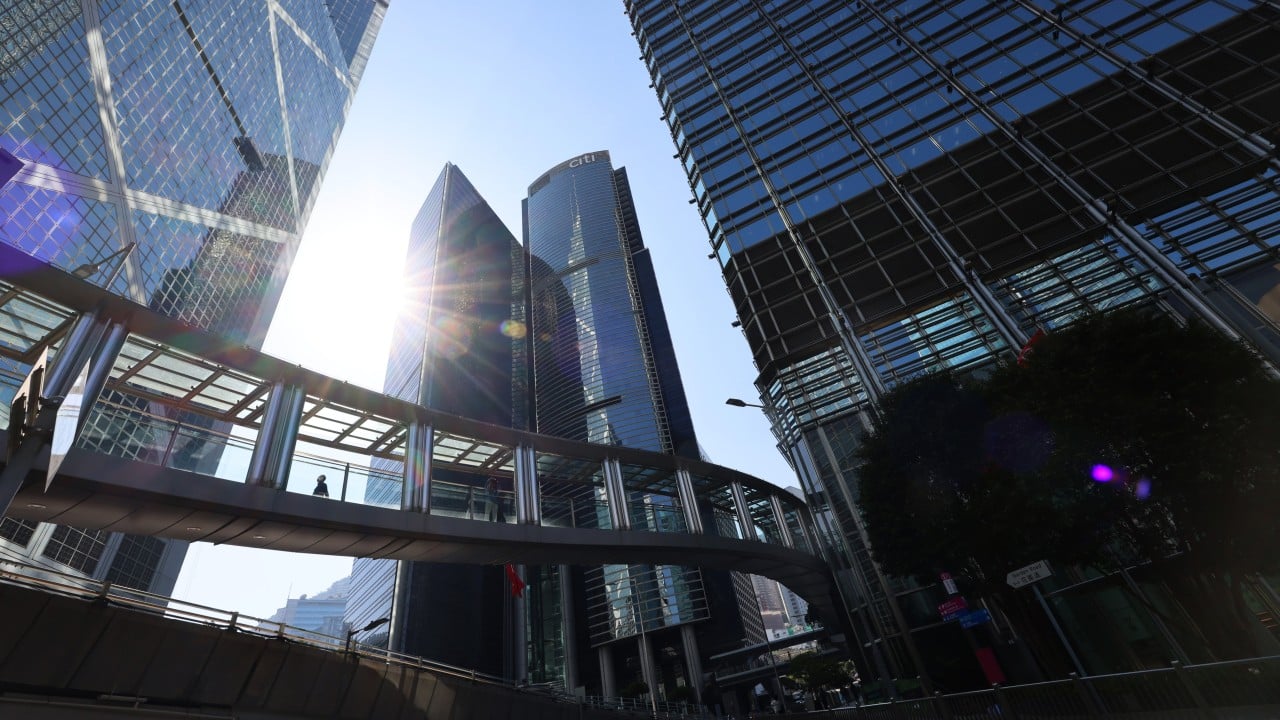
Ranked by verification strength, evidence, and original report placement.
Analysts say financial distress in Hong Kong's commercial property market has moderated but not been completely eliminated, with highly leveraged asset owners still expected to find refinancing their loans a challenge.
Hong Kong's office and retail property segments have been mired in a multi-year slump, with new supply outstripping demand in recent years as consumption slowed and interest rates surged, triggering loan defaults.
Chak said banks continue to release distressed assets, and mortgagee sales remain an important source of transaction activity in order to recover cash and take advantage of the relatively more liquid market this year.
In the first half of the year, Hong Kong saw HK$22.3 billion (US$2.84 billion) worth of non-residential property transactions above HK$50 million, up 120 per cent from the same period last year, according to Savills.
Offices accounted for more than two-thirds of the first-half non-residential total, or HK$15.1 billion, according to Savills.
Offices at HK$15.1 billion represent 67.7 per cent of the HK$22.3 billion first-half total.
Distinct publishers with included, body-backed reporting in this cluster.
scmp.com
1 article · August 29, 2026
Follow any of these and your For You feed starts watching them — no settings page required.
product
Two Chinese booster recoveries, one state and one commercial: reflight is still the untested part1 distinct publisher
invest
SMIC's binding constraint is floor space, and the AI crunch has reached power chips1 distinct publisher
product
A China Coast Guard Academy war game grades its AI on how often the gun comes out1 distinct publisher
product
Southeast Asia's data centre pipeline is 173 announcements chasing 1,435 MW1 distinct publisher
Evidence-backed comparisons of source perspectives and observed adoption signals. Read the methodology
Which Builder, Operator, and Investor concerns the observed source mix emphasized—not a truth score.
Evidence, demonstrated adoption, hype gap, incentives, and confidence are assessed independently, each on its own current evidence. How these are measured.
One outlet, two brokerages
Every figure in this story — the HK$22.3 billion, the 120 per cent, the HK$15.1 billion office share — is Savills' tally, reproduced without a second count, and the entire read on where defaults go next is one Colliers executive speaking. No bank disclosure, no non-performing loan statistic, not a single named mortgagee sale. The arithmetic on the disclosed totals holds; the totals themselves are unaudited by anyone else in our coverage.
Volumes doubled, mix unknown
Deals are the only real-world test here, and they registered: HK$22.3 billion changed hands above the HK$50 million threshold in six months, more than double a year earlier, with lenders themselves supplying part of the inventory. But at that ticket size this is at most a few hundred trades, and nobody says what fraction were forced sales — so the liquidity and the distress cannot be separated from each other.
Percentage outruns the base
A doubling sounds like a turn; from roughly HK$10.1 billion it is a floor being left behind. That gap between the headline percentage and the size of the base is where this reporting stretches. Against it, the South China Morning Post keeps the qualifier in the first line — moderated, not eliminated — and leaves 'defaults won't increase noticeably' visibly attributed to Colliers rather than dressed up as a finding.
Both sources earn on transactions
The two firms carrying this story are paid when buildings change hands. Colliers' capital markets head supplies the view that the correction is in the price and the market is liquid; Savills supplies the volume that appears to prove it. Brokerages do see the tape first, so this is not disqualifying — but no lender, regulator or borrower is here to say whether that collateral is clearing at a price the bank was willing to accept.
Direction firm, level thin
Trust the direction: transactions are up, offices dominate, and lenders are still selling. Trust the level less. One publisher, one named analyst, one data vendor, and a reporting period that closed two months before this appeared — if second-half volumes had gone soft, nothing in this reporting would tell you.