Product1 distinct publisher3 min readPublished
Wired counts five screen-free bands already shipping, with an Apple version reportedly under evaluation. When the hardware cannot show a number, the app is the only place a buyer sees what the money bought.
The Product Desk · Product desk

Compiled by The Product DeskSomething wrong?How this is made
Take the display off a tracker and you remove the only surface where the device can show its work. Everything the buyer sees moves onto a phone, into software the vendor owns and, in Whoop's case, charges $199 a year for [6]. That is a pricing decision wearing industrial design clothes.
Wired's reviewer is unusually honest about his own behaviour with the screens he is describing the end of: over the past few years he has looked at his watches dozens or hundreds of times a day, and checks his sleep score as soon as he wakes up [9]. Set that next to how he describes the new bands, which gather stats day and night so you can view them later in an app, "when you get the time - if you can find the time" [1]. The screen was a distraction, and it was also the thing that made the data unavoidable; subtract it and looking becomes optional.
The arithmetic on the one published price is worth doing. Whoop's $199 a year is about $16.58 a month [1], and $597 across three years [2]. That is what the app alone has to be worth, because nothing on the wrist will remind the buyer why they are paying.
Whoop's current copy offers to help anyone "improve how you sleep, train, and feel - starting day one" [8], which is a time-to-value promise rather than a feature claim, and for a device with no display it is the right one to make. If the first week produces nothing the wearer acted on, there is nothing to look at for the remaining fifty-one. Wired also reads AI as an upsell route for these companies [11], which moves value in the same direction: onto the recurring line. Worth remembering that the app layer did not pay for itself back when it had a screen to live on. By Wired's account, wearable app ecosystems withered, and smartwatches never delivered the life-changing app beyond what people used the first Apple Watch for in 2015 [12].
Who is this for, then. Wired's answer to why now is that many people are sick of attention-hoarding tech [10]. That describes someone who already tracks, already knows their numbers, and wants the nagging to stop. It does not describe the person who needed the nag to start, and there are more of the second kind.
The grid I would use has two axes: whether the buyer can get value without opening the app, and whether you charge once or every month. Screen plus one-time purchase is the tracker business as it used to run. App-only value plus a recurring charge is Whoop, and whatever else you think of it, the model matches the hardware. The two mismatched cells are where teams get hurt. App-only value sold once means funding software forever off a single transaction. Device-only value sold monthly means the buyer works out, somewhere around month four, that the band would keep buzzing for free.
The forcing function underneath it is a sentence, not a metric: what does the customer say in month 13 to justify the renewal. If that sentence names something they did, the app earned the money. If it names something they saw, the display was doing the work, and you took it out.
Ranked by verification strength, evidence, and original report placement.
Wired says AI is a way for these wearable companies to upsell and make money, and attributes the shift to AI on at least three fronts.
Wired describes the new screen-free wearables as gadgets designed to be ignored 99 percent of the time, needing attention only when the battery is low, collecting health stats day and night 'so you can view them later on in an app, when you get the time - if you can find the time.'
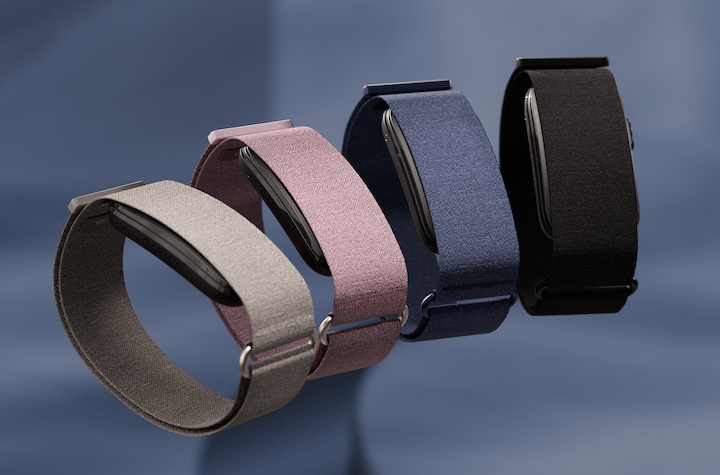
Wired lists the screen-free wearables available today as the Garmin Cirqa, Google Fitbit Air, Polar Loop, Amazfit Helio Strap and the Whoop series, calling Whoop the original pioneer of the category.
Wired frames the interesting question as why the screen-free category is arriving now, in 2026.
Wired describes these devices as a case of design subtraction: much like a normal fitness tracker with heart rate sensor, battery, accelerometer, Bluetooth transmitter and other per-case sensors, but with the display excised.
A Whoop band today is made for just about anyone with the spare cash to pay for its $199 annual subscription, per Wired.
Distinct publishers with included, body-backed reporting in this cluster.
1 article · August 30, 2026
Follow any of these and your For You feed starts watching them — no settings page required.
invest
Apple clears two bad bets off the books a week before Ternus takes over1 distinct publisher
invest
Oura's $3B IPO asks $16B for a business where four fifths of revenue is still hardware1 distinct publisher
product
Samsung's July foundry price rise moves the AI crunch into your bill of materials1 distinct publisher
product
Carrier gatekeeping keeps three of the world's top five phone makers off the US test bench1 distinct publisher
Evidence-backed comparisons of source perspectives and observed adoption signals. Read the methodology
Which Builder, Operator, and Investor concerns the observed source mix emphasized—not a truth score.
Evidence, demonstrated adoption, hype gap, incentives, and confidence are assessed independently, each on its own current evidence. How these are measured.
One byline, one shelf survey
Everything checkable in this story is checkable because a vendor published it: the five-band roster, Whoop's $199, the 2015 and current Whoop self-descriptions. Everything argumentative is one reviewer's judgement — that smartwatch apps never mattered, that buyers are fed up with attention-hoarding tech — offered without a survey, a shipment figure or a churn number. The Apple line is Bloomberg relayed in a clause. The single voice from outside the byline, Counterpoint's Peter Richardson, forecasts AI's maturation rather than measuring this category.
On shelves, uncounted on wrists
Four established brands plus Whoop have hardware in market and Apple is said to be looking, which is genuine supply-side commitment from companies that do not ship casually. What is entirely absent is the demand half: not one unit sold, subscription renewed or band still worn in month three appears anywhere in this reporting. Wired says the category has been 'exploding'; the evidence for the explosion is a list of product names.
Explosion asserted, roster supplied
Wired is the sceptic here rather than the amplifier — it needles Fitbit's chatbot for condescension and admits the reviewer might prefer the unpaid tier — so the overreach is mild and largely linguistic. A category is called exploding and dated to 2026 when its pioneer shipped in 2015, and consumer weariness with attention-grabbing tech is asserted in the first person plural. Our own framing, that removing the screen relocates the value into a rented app, leans on two price points to carry an argument about a whole market.
The missing screen has a price list
The vendor motive is not buried, it is the thesis: Wired states outright that AI is how these companies upsell, and Google's Health Premium at $10 a month is the working proof. Two softer interests deserve naming. The reviewer has a decade of relationships with the brands he assesses and an expertise he calls 'not the norm', which shapes how tolerable he finds a chatbot's explanations. And the one independent analyst quoted sells research into precisely the AI-health expansion he predicts.
Trust the price, not the trend
Split the story in two. Who ships what, what Whoop charges and what Whoop used to call itself would survive any fact-check. Whether buyers are actually moving to screenless bands and staying subscribed — the thing the story is really about — has no second source, no numbers and no timeframe. Treat the thesis as a sharp hypothesis and the price list as fact.