Product1 distinct publisher3 min readPublished
The blog post and Axios interview landed a week before Tesla's Cybercab event, and the same Tuesday morning Waymo added three markets, putting deployment scale behind an argument written for regulators.
The Product Desk · Product desk

Compiled by The Product DeskSomething wrong?How this is made
Srikanth Thirumalai's line to Axios, that physical AI has no click reboot and you deal with the consequences [7], is written for whoever decides what happens after a failure. In practice that is a city permit office and a fleet underwriter, not a rider choosing between apps. The technical content is real, and the post is also now a document Waymo has handed to anyone who later asks why it picked the sensors it picked [1][6].
The most useful number in it is not the mileage counter. Cumulative miles only rise, and 200 million of them [5] describe how much Waymo has driven rather than how much its service gets used. Divide 500,000 paid trips a week by roughly 4,000 vehicles [8] and you get about 125 paid trips per car per week, close to 18 a day [1]. That is a utilization figure, and it is the one that would embarrass Waymo if it sagged while the fleet and the city count grew.
Tesla's headline number sits on a different axis. A recent filing points to more than 125,000 Cybercabs a year [11], roughly 31 times Waymo's entire current fleet in a single production year [2]. The vehicle has no steering wheel and no pedals [11], so there is no partial-credit version to sell while the software matures. Musk's promise of a million robotaxis on the road in 2020 [12] is the useful calibration for which of these two figures is a target and which is a receipt.
The counter-argument deserves to be taken at face value. New Street Research's Pierre Ferragu wrote that Waymo built a driving gas plant that AI at scale makes irrelevant, and called the blog post incumbent rhetoric [9]. Waymo's evidence has a real limit that matches this: 200 million miles of a fused-sensor stack shows that a fused-sensor stack works at this volume [5][8], and it cannot show that a camera-only stack fails. What Waymo can do is make the alternative expensive to defend in front of a regulator, and announcing three more markets the same morning [3] does more of that work than the prose does.
So here is a test that travels to your own vendor evaluations. Ask which published number would have to quietly disappear for the vendor's architecture claim to be abandoned. For Waymo, it is weekly paid trips and the city count; if those keep appearing alongside the sensor argument, the claim is load bearing rather than positioning. For Tesla, the equivalent tell is the safety monitor. Pulling monitors from a majority of trial cars in Texas and Florida [13] is the first move that lets an outsider check the camera-only claim against something, and it happened before the reveal rather than at it.
Ranked by verification strength, evidence, and original report placement.
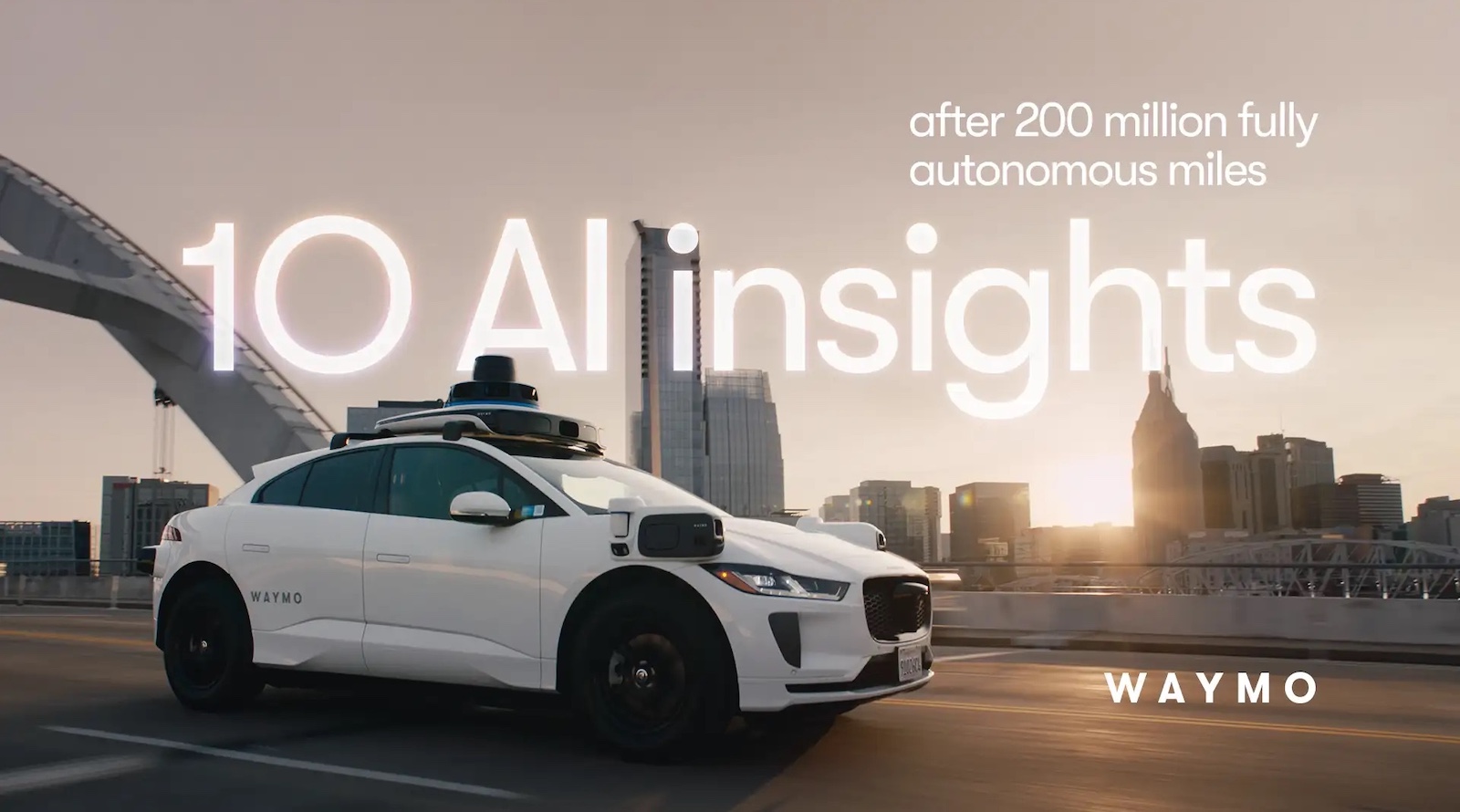
Waymo argued last week that fully autonomous vehicles are not possible without using a mix of sensors, and that "pure end-to-end" AI systems are not safe enough, without naming Tesla.
Waymo made the claims in a company blog post and an interview with Axios.
Waymo announced three new markets on Tuesday morning, extending a robotaxi network already serving customers in more than a dozen US cities.
Tesla is expected to formally introduce its two-seater Cybercab into its own robotaxi fleet at a September 3 event, one week after Waymo's blog post and interview.
Waymo VP Srikanth Thirumalai, who oversees the company's driving software, wrote that "cameras are incredible, but they aren't enough" and that after more than 200 million real-world miles the data is clear that safe, fully autonomous operations at scale require more, with cameras, lidar and radar combining into a redundant world view.
Thirumalai wrote that a pure end-to-end neural architecture that takes in raw pixels and directly outputs steering commands, which is Tesla's approach, will run the risk of "black box failures".
Distinct publishers with included, body-backed reporting in this cluster.
1 article · September 1, 2026
Follow any of these and your For You feed starts watching them — no settings page required.
product
Waymo opens the trunk: a 5nm ASIC, a quadrillion ops, and a supplier list rivals can price3 distinct publishers
product
Waymo puts its 200 million driverless miles up against the Cybercab's cameras1 distinct publisher
invest
Tesla stakes its robotaxi economics on a pod that seats exactly two1 distinct publisher
product
170 rides, 54 cars, no monitor: a hobbyist tracker marks Tesla's Austin handover3 distinct publishers
Evidence-backed comparisons of source perspectives and observed adoption signals. Read the methodology
Which Builder, Operator, and Investor concerns the observed source mix emphasized—not a truth score.
Evidence, demonstrated adoption, hype gap, incentives, and confidence are assessed independently, each on its own current evidence. How these are measured.
On-the-record quotes, self-reported data
The quotes are solid: a named Waymo VP, attributable wording, a company blog and an Axios sit-down. The proof is not. "After more than 200 million real-world miles, the data is clear" is Waymo grading its own homework, and no part of that mileage — intervention rates, failure modes, weather splits — is shown here or checked by anyone outside the company. Tesla, the party being criticised, never speaks.
One side is shipping, the other is registering
Waymo's argument is unusually well-armoured for a philosophical dispute: 4,000 vehicles, 14 cities, half a million paid rides a week, three new markets landing the same morning. That is roughly 125 paid trips per car per week — a working business, not a demo. Tesla's counter-evidence at this moment is DMV paperwork, cars in parking lots, and a production target thirty-odd times its rival's fleet that has yet to become a single revenue mile.
Deployment is real, the verdict is overclaimed
Slightly overstated, and the overstatement is specific. Waymo's fleet numbers hold up; "the data is clear" does not, because the data is not on the table and a decade-old engineering debate is not closed by one company's press cycle. TechCrunch's own unattributed "hundreds of billions" adds to the tilt. Working the other way: the reporting is candid that Waymo's approach costs more and that Tesla's manufacturing scale could undercut it, which keeps this from being a straight puff.
Timed to land a week before a rival's launch
Read the calendar and the whole thing declassifies itself. Waymo published a week before Tesla unveils the Cybercab, dropped three new markets the same Tuesday morning, and had a spokesperson posting John Wick memes through the weekend — this is a launch-eve positioning move addressed at least partly to regulators. The pushback is no cleaner: Pierre Ferragu covers Tesla for New Street Research, so "innovator dilemma 101" arrives with a book behind it.
One newsroom, one interested source
Moderate at best. Everything here comes through TechCrunch, and TechCrunch is largely relaying Waymo. Names, dates, quotes and the September 3 event are the kind of detail that rarely turns out wrong, so the reported facts are reliable. The interpretation — that camera-only autonomy is settled — has no second newsroom, no Tesla reply and no safety regulator behind it, and should be held loosely until one appears.