Product1 publisher3 min readPublished
A laser that cuts ice off nuclear baskets shows where maintenance money actually hides
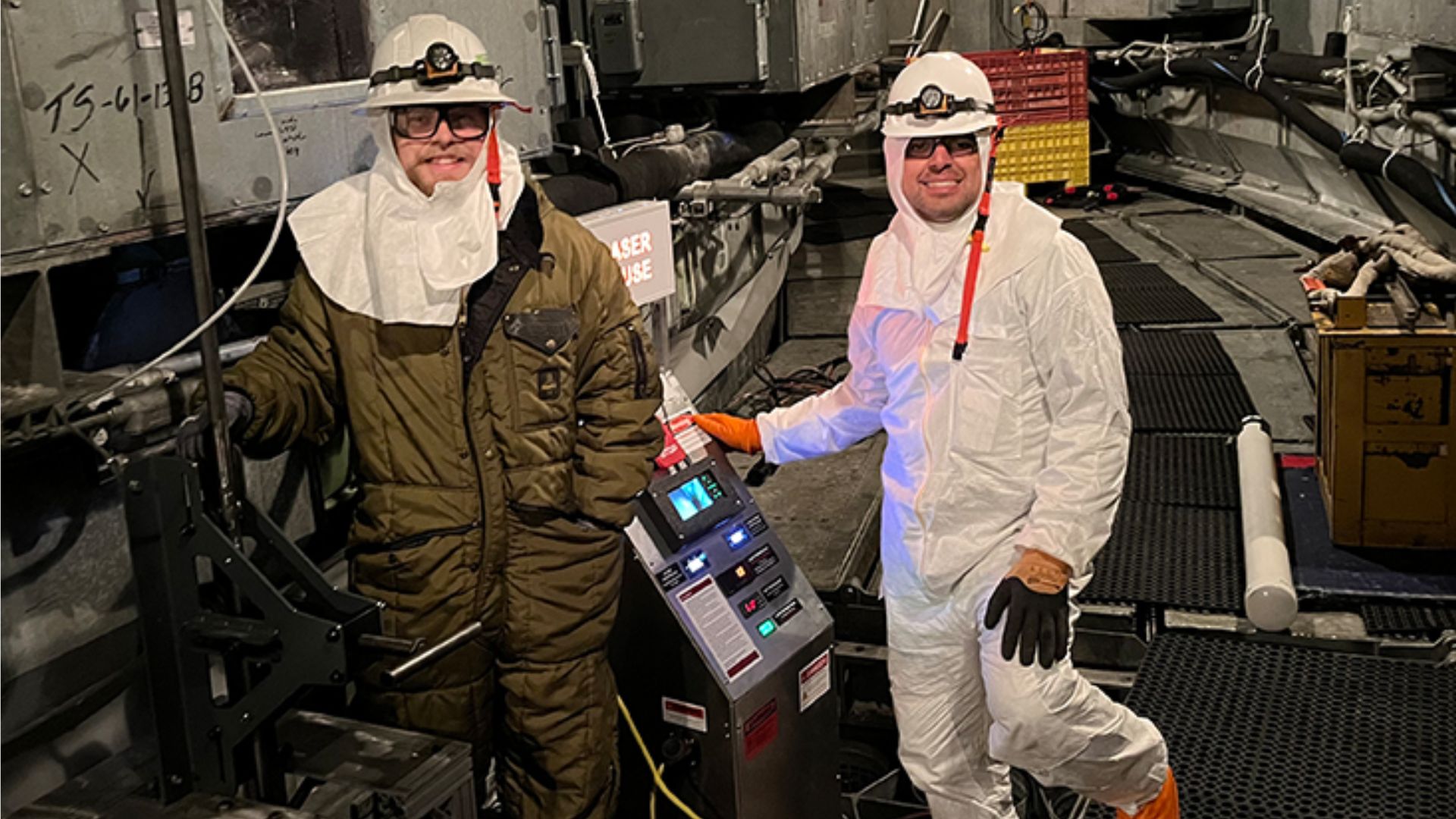
University of South Florida engineers demonstrated a submerged laser de-icer at two TVA nuclear sites. The target was basket-by-basket inspection labor, not generation capacity.
The Product Desk · Product desk
Drafted by a language model from the sources cited here and checked against its claim ledger before publication. How we use AISend a correction
What happened
- Engineers at the University of South Florida developed a laser-based system for a nuclear plant maintenance problem and successfully demonstrated it at two Tennessee Valley Authority nuclear sites.
- The demonstration followed four years of research and testing.
- The system is designed for nuclear plants that use ice condensers as part of their containment safety systems.
- During inspections, workers must lift and weigh thousands of baskets containing borated ice.
- When fresh ice is added to replenish the baskets, neighboring baskets can sometimes freeze together, making it difficult for workers to remove individual baskets for inspection.
Compiled by The Product DeskSomething wrong?How this is made
Why it matters
Engineers at the University of South Florida have demonstrated a laser-based de-icing system at two Tennessee Valley Authority nuclear sites, after four years of research and testing [1][2]. The tool touches nothing that makes electricity; it exists because ice condenser inspections require workers to lift and weigh thousands of baskets of borated ice, and because neighboring baskets freeze together when fresh ice is added to replenish them [3][4][5].
That is the whole business case, and it is worth sitting with. The borated ice absorbs heat and reduces pressure inside the containment building during a severe accident, so the baskets have to be verified individually [6]. Frozen-together baskets cannot be pulled for inspection without a fight, and according to the USF account, TVA asked the team for a way to separate them without damaging the baskets and without extensive manual labor [7]. The savings on offer here are not in a new component or a capacity uprate. They are in the hours a crew spends prying at frozen metal in the dark.
The engineering constraints are the interesting part. The system works more than 40 feet below the surface, fits into narrow spaces between baskets, and uses a precision laser to cut the sheets of ice connecting them [8][9]. It deliberately does not melt the ice through: full melting produces meltwater that can refreeze elsewhere or pool at lower levels, which is to say it converts one maintenance problem into a second one downstream [10]. USF says the laser can remove several feet of ice buildup within minutes [11]. The build spans mechanical and electrical engineering, optics, controls, manufacturing and safety, and contains hundreds of components [12][13]. The team had to make it compact enough for extremely narrow openings, functional in freezing conditions, and compliant with the rules governing work inside nuclear facilities [14].
The part that most tool projects get wrong was handled. The researchers completed radiation worker and laser safety certifications and tested in freezing environments and contamination-controlled areas [15]. They also wrote operating procedures, technical documentation and training materials so plant personnel can run and maintain the equipment without the researchers present [16]. Ahmad Vaselbehagh, the mechanical and aerospace engineering professor who led the work with postdoctoral researcher Ty Hagan, said the hardest requirement was that the system "had to work flawlessly in the hands of the plant's personnel without our presence to guide or support them," and that there is "a huge difference between theoretical work and developing a system that can perform reliably in a real industrial environment" [17][18]. A tool that only works when its inventors are in the room is a demonstration, not a maintenance asset.
What is missing is the number that would let an operator price this. The USF account does not name the two TVA sites and gives no figures for labor hours saved, outage time, cost, or how many baskets sit in a unit [1]. "Less manual effort" is a direction, not a line item [19].
Watch whether TVA extends the tool beyond the two demonstration sites and publishes any outage-duration effect. Watch also whether the design travels: USF suggests it could be relevant to facilities using similar ice condenser systems in countries including Japan and Finland, which is a small enough installed base that any transfer will be a deliberate act rather than a market [20].