Invest1 publisher3 min readPublished
SpaceXAI's 3.3 GWh Memphis figure beats the US battery record by 13 megawatt-hours
A SpaceXAI developer told the TVA board that Colossus 2 holds 3.3 GWh of storage, the Memphis utility's chief executive put it at 2,000 MW behind the meter, and the board approved a direct grid hookup the same day.
The Investor · Invest desk
What happened
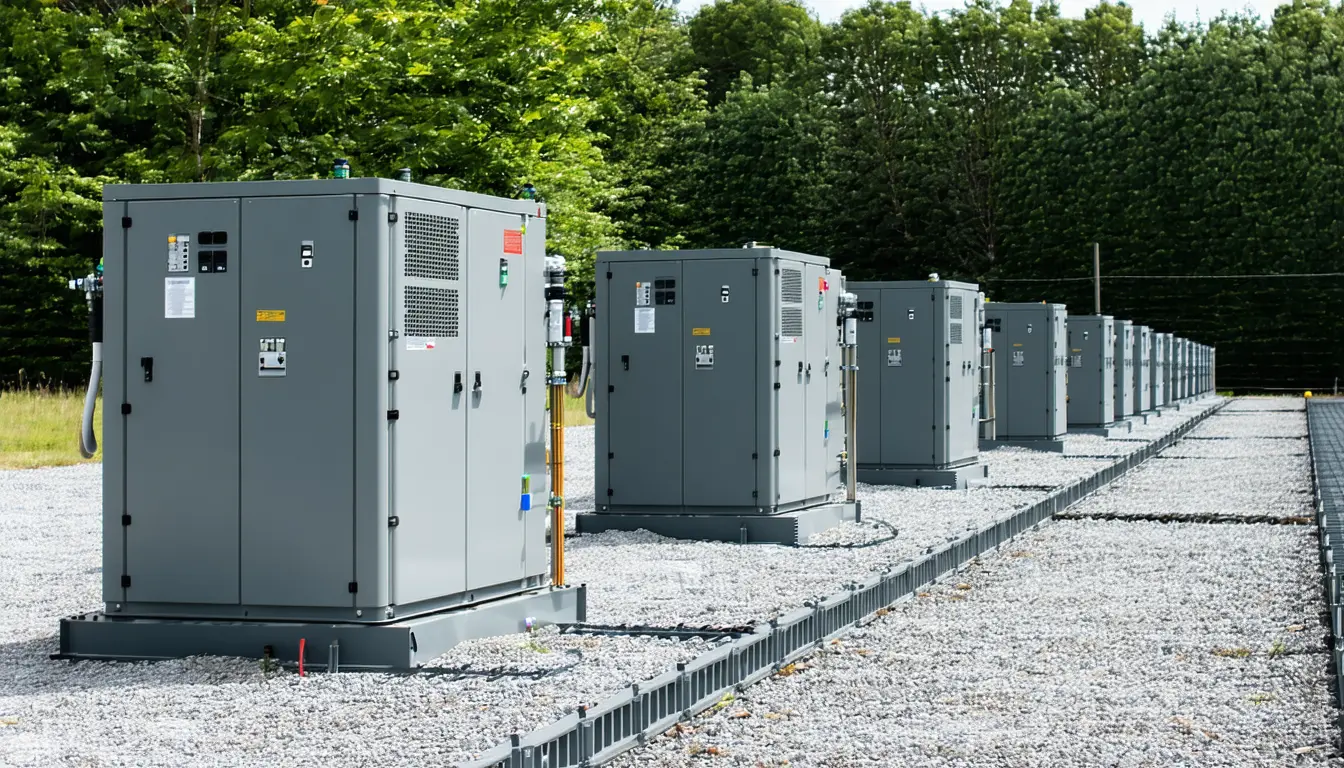
- Canary Media counted 720 Tesla Megapack containers at the Memphis-area Colossus 2 site in satellite imagery dated July 11, putting it at 2.8 GWh and between 720 and 1,400 MW depending on the model.
- SpaceXAI developer Riley Trettel told the Tennessee Valley Authority board on Aug. 20 that the facility holds 3.3 GWh of storage, "enough to power all of Memphis for two hours."
- Trettel said the battery was not yet connected to TVA's grid but could be later this year with board approval, and the board approved a direct hookup for the company later that same day.
- Memphis Light, Gas and Water chief executive Doug McGowan said on Sept. 2 that the site has "2,000 MW of batteries behind the meter" serving as backup when the company has to curtail.
- The largest grid battery known to be operating in the US, at the Edwards & Sanborn solar plant in Kern County, California, has more than 1,066 MW of power and 3,287 MWh of storage.
Compiled by The InvestorSomething wrong?How this is made
Why it matters
- contradiction Behind-the-meter backup and a direct grid connection are governed by different rules, and until one description is confirmed, nobody outside the company can say whether this capacity is available to TVA's system or only to Colossus 2.
- constraint Skipping the utility contracting step means the project never had to price its output, so the entry requirement for anyone copying it is a large captive load and the cash to self-fund the containers.
- exposure With the Memphis utility and TVA both referring size questions to SpaceXAI, and the company not responding, the public sizing of what may be the country's largest battery rests on a satellite count and two spoken remarks.
- precedent Storage developers in the Tennessee Valley learned of this installation at a public board meeting. Anyone planning grid-scale storage in the region now has to assume a competitor's gigawatt-hours can appear without notice.
The record claim comes down to 13 megawatt-hours. Trettel's 3.3 GWh sits against the 3,287 MWh installed at Edwards & Sanborn in Kern County [3][9], a margin of about four tenths of one percent [1]. Canary Media's count of 720 containers at 2.8 GWh implies roughly 3.9 MWh per Megapack [1][2], so the national record changes hands on three or four boxes [3].
Those two figures also date the build. Between the 2.8 GWh visible on July 11 and the 3.3 GWh described on Aug. 20 sits about 500 MWh, or roughly 129 more Megapacks [4], all of them in the ground before the redesigned Megapack 3 entered production at Tesla's Texas factory in early August [13].
McGowan and Trettel describe different assets. McGowan, whose utility supplies the facility [8], said "It's the world's largest supercomputer today, but it's also got the world's largest grid-connected battery system" [6], and then said "I think it's 2,000 MW of batteries behind the meter that they have to help as a backup when they have to curtail" [7]. That 2,000 MW runs 43 percent above the top of Canary Media's estimated range and nearly double Edwards & Sanborn's 1,066 MW [5]. Pair it with 3.3 GWh and the battery empties in an hour and 39 minutes at full output [6].
The purchase record gives an upper bound on cost. Tesla told the SEC in January that xAI bought $430 million of Megapacks last year [11], and after SpaceX acquired xAI in February the combined company bought $405 million more in the first half of this year [12], for $835 million in total [8]. If all of it went to Memphis, 3.3 GWh cost about $253 per kilowatt-hour [9]. Tesla's filing does not break the purchases out by site, so the figure for this site is at or under that.
Storage this large normally takes years, plus community outreach for permits and a utility-led contracting process that guarantees revenue for the finished plant [14]. SpaceXAI went ahead without any announced utility contract, and storage executives in the region heard about the battery for the first time at the August board meeting [14]. A merchant battery needs a price to justify itself. This one needs a data center that keeps computing when TVA asks the site to curtail [7].
If McGowan has it right, the storage never sells into TVA and the board's approval governs what Colossus 2 imports [4][7]. Trettel may have been describing a plan and not a finished install, in which case the 2.8 GWh counted in July leaves Memphis second to Kern County [1][9]. And should the 2,000 MW figure hold, the site can discharge nearly twice as hard as the current record holder [5]. I'd weight the first reading, because the missing contract is what makes this pace possible [14], and a published TVA agreement paying SpaceXAI for capacity or energy would break it. This is one company's conduct, and the same company had 69 mobile gas generators running at Colossus 2 without air permits as of July [15].
What to watch
- Post-August satellite imagery of the Southaven site, which would show whether Megapack 3 units have gone in since the 720 counted on July 11.
- Whether MLGW or TVA puts an official capacity figure on the installation after both referred size questions to SpaceXAI.
- Whether other data center developers come to the TVA board asking for direct hookups on the same terms.