Leadership2 publishers3 min readPublished
US ban on $1 billion of Canadian goods adds another round to the trade war
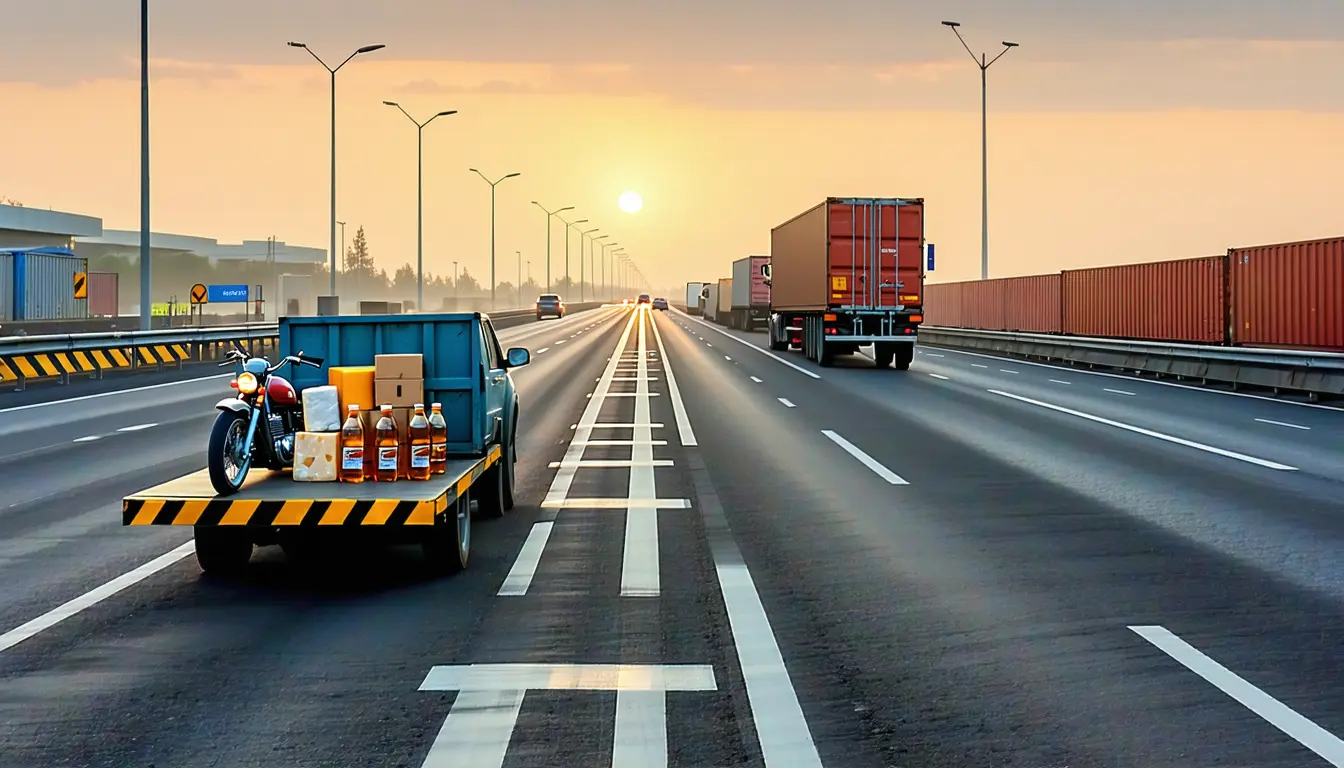
President Trump's ban on nearly $1 billion of Canadian alcohol, dairy and motorcycle imports took effect Tuesday, a sliver of $880 billion in two-way trade. Many of the goods were already priced out by tariffs, so it matters as the latest round of retaliation.
The Board Room · Leadership desk
What happened
- By the American Action Forum's count, 87% of the banned value is alcoholic beverages, a category that includes beer, liquor, sparkling wine, brandy and sake.
- Some dairy products are also barred, including whey, in a sector where Canada has long shielded its farmers with steep tariffs on imports above a quota.
- Quebec's BRP said its three-wheel Can-Am Spyder and Canyon motorcycles are excluded but expects little effect until next year, since this season's output has mostly shipped.
- Prime Minister Mark Carney took office last year promising to stand up to Trump, and China is the only other country that has retaliated against his tariffs.
Compiled by The Board RoomSomething wrong?How this is made
Why it matters
- constraint For listed goods the 50% tariff had not fully priced out, the ban removes the option of paying the duty. An importer still absorbing it now needs a non-Canadian source.
- precedent Washington answered an ally's retaliation by switching from a tariff to a prohibition, so any further Canadian response would meet a government that has already shown it will use bans.
- exposure USMCA renewal, the basis for most goods crossing North American borders duty free, is now at risk, leaving supply chains priced on that treatment exposed to a dispute over dairy, autos and liquor.
- decision Seasonal manufacturers such as BRP will first run into the ban in next year's production run and the sourcing and allocation choices they make for it.
Measured in dollars, the list barely registers. Jacob Jensen, director of trade policy at the American Action Forum, puts it at $967 million of Canadian imports on 2025 numbers [8]. That is about 0.11 percent of the $880 billion in annual two-way trade [1]. Patrick Childress, a Holland & Knight partner and former US trade official, noted that the banned products were already paying Trump's tariffs [6]. "For a lot of these goods, the 50% was already acting as a de facto ban by making importation from Canada into the United States uneconomical," he said [7].
On cost, Childress is right. The makeup of the list says more about where the dispute is heading. About $841 million of it is alcohol [2]. The US targeted those drinks because some Canadian provinces had pulled US liquor from store shelves in response to Trump [9].
Each step in the dispute has answered the one before. Over the summer Trump used a Great Depression law to put 50% tariffs on about $20 billion of Canadian goods, charging that Canada discriminates against US dairy, auto and alcohol producers [3]. Canada matched dollar for dollar with tariffs of 15%, 25% or 50% [4]. The ban is Trump's penalty for that retaliation [5]. "This marks yet another escalation in the trade war that may result in further retaliation on the Canadian side," Jensen said [13].
The case for a settlement also comes from Jensen. He expects Canadian exporters and US importers "impacted by these bans will be highly motivated" to push officials on both sides toward a "resolution of this whole ordeal" [14]. That is a forecast about lobbying, and Carney's own words point the other way. "There is now a price to be paid for access to the United States market," he said earlier this month [18]. Last week he said talks with India are making "good progress," with both sides aiming to finish by the G20 summit in mid-December [19]. Earlier this year Canada let a limited number of Chinese electric vehicles in at a sharply reduced tariff, and in exchange China lowered its tariffs on Canadian canola [20].
The ban itself changes little this week that the tariff had not already changed [7], and the larger exposure plays out over the decade. The US took more than 70% of Canadian exports last year, and Carney wants to double Canada's non-US trade over the next ten years [17]. I'd expect a government building other markets to feel less pressure to settle on Washington's terms. For a team whose supply crosses this border, the trade-off is between paying now to qualify second sources and waiting for the resolution that affected firms will lobby for. In my view the evidence favors paying now, because every measure in this dispute so far has drawn a response [4][5].
What to watch
- Any federal or provincial Canadian countermeasure to the ban, the further retaliation Jensen said may follow.
- BRP's shipment plans for next season, the first point where the ban shows up in a named company's output.