Product1 publisher3 min readPublished
The Army starts paying for autonomous resupply: inside the Stratom-led TALUS award
A five-company consortium will build a modular logistics platform against Project Sustainment requirements. The award turns a stated need into a buying channel, though no value was disclosed.
The Product Desk · Product desk
Drafted by a language model from the sources cited here and checked against its claim ledger before publication. How we use AISend a correction
What happened
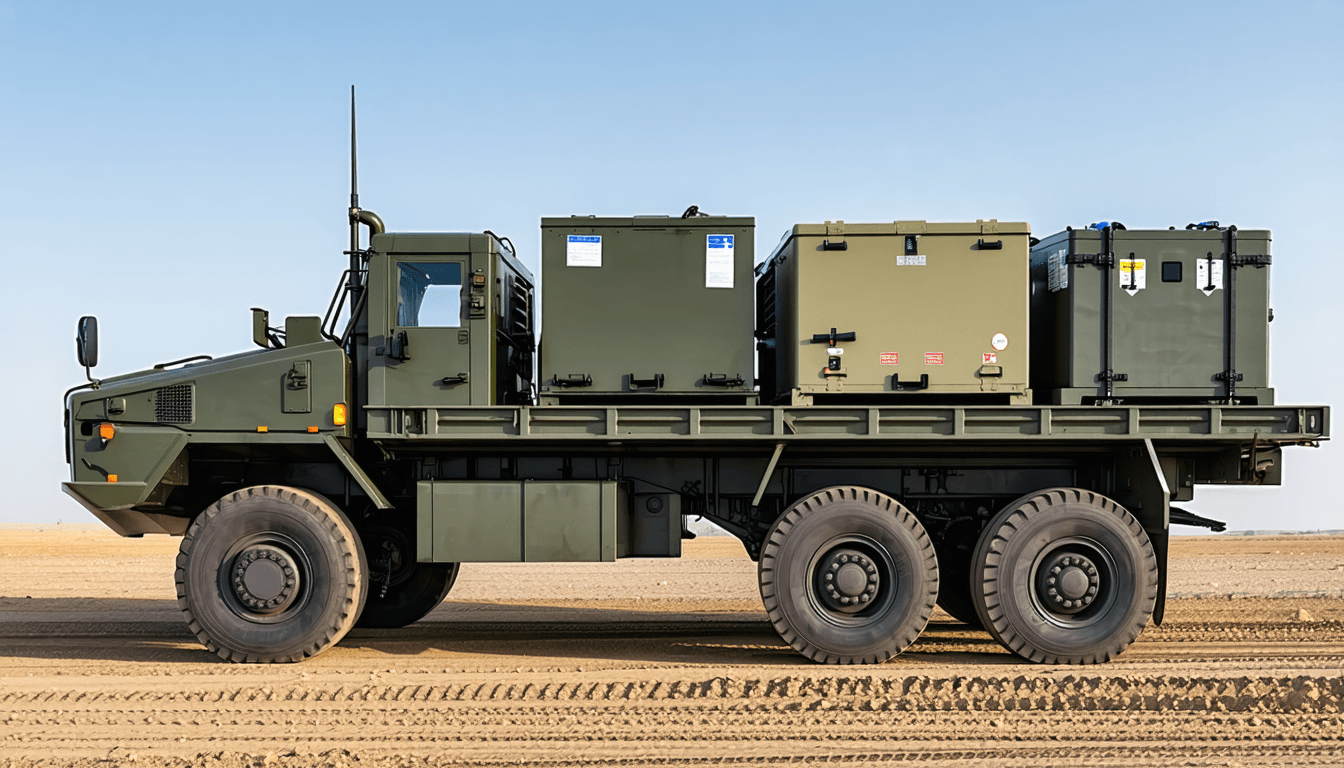
- A consortium of defense tech companies led by Stratom secured a contract from the US Army to develop the Tactical Autonomous Logistics Utility System (TALUS), an autonomous logistics platform designed to deliver supplies to units operating in dispersed, high-risk environments.
- The system is being designed as a modular distribution solution capable of supporting military operations where traditional supply chains may be vulnerable or difficult to maintain.
- According to Stratom president and CEO Mark Gordon, the contract marks the first public unveiling of TALUS.
- Gordon explained that the platform represents the team's response to the Army's Project Sustainment requirements and combines a wide range of complementary technologies into a single capability.
- Stratom says future Army units are expected to operate across increasingly dispersed and contested battlefields, creating a need for autonomous logistics systems that can continue functioning even when conditions are degraded.
Compiled by The Product DeskSomething wrong?How this is made
Why it matters
A consortium led by Stratom has won a US Army contract to develop the Tactical Autonomous Logistics Utility System, or TALUS, an autonomous platform meant to move supplies to units operating in dispersed, high-risk environments [1]. Stratom president and CEO Mark Gordon says the contract is also the first public unveiling of TALUS, which means the program went from unannounced to funded without an intervening publicity phase [3].
That sequencing is the interesting part. Gordon describes the platform as the team's answer to the Army's Project Sustainment requirements, combining several complementary technologies into one capability [4]. Requirements documents generate a lot of vendor slideware; this one has now produced an award, which makes it a channel that suppliers can price against rather than a concept to comment on.
The stated job is threefold: autonomously transport supplies, generate and distribute operational energy, and carry assorted mission payloads [7]. Stratom frames it as a modular distribution solution for conditions in which conventional supply chains are vulnerable or hard to sustain [2], with the practical benefit being fewer soldiers exposed during resupply while equipment, supplies and power keep reaching distributed forces [6]. The company's premise is that future Army units will be spread across contested ground and will need logistics that still work when conditions are degraded [5].
The team structure tells you what the Army is actually buying. Five companies hold named roles [17]: Stratom owns overall integration and robotic logistics [9], ND Defense supplies military vehicle platforms and scalable manufacturing [10], Forterra brings what the release calls government-validated autonomy [11], GS Engineering does model-based systems engineering and test [12], and Waltonen Engineering handles hardware design, fabrication and integration [13]. That is an integration contract with a production argument attached, not an autonomy science project. Gordon puts it directly: the Army "needs more than another autonomous vehicle," it needs an integrated capability that can move quickly toward fielding [8]. Forterra's vice president of defense, Pat Acox, describes AutoDrive plus the team's mobility and engineering work as a foundation for autonomous distribution [14], and ND Defense's Timothy George frames the vehicle base and production capacity as a path from integration through operational evaluation to future fielding [15]. The collective pitch is a ready-made system assembled from established defense and commercial technology [16].
Read the fielding language as ambition, not schedule. The announcement as reported carries no contract value, no award date, no quantity, no contract vehicle and no evaluation milestones [18]. "Future fielding" [15] is a supplier's stated direction, and an integration award is a long way from a program of record.
Three things to watch. First, whether a dollar figure and a period of performance surface, because the gap between a study-scale integration effort and a prototype fleet is the whole story. Second, which ND Defense platform TALUS is built on, since a proven vehicle foundation [10] only supports a production claim if the Army already sustains that chassis. Third, how the operational energy function [7] is tested, because generating and distributing power in the field is a different validation problem from driving without a crew, and vendors tend to bundle the two into a single capability claim.