Product1 publisher3 min readPublished
Marine Corps adds command-and-control work to REGENT's Seaglider program with $5 million
REGENT Craft won another $5 million from the Marine Corps Warfighting Lab, bringing its Seaglider deal to $19.25 million. Part of the new phase pays to fit the electric craft into how Marines command operations, while its advertised top speed is still a design target.
The Product Desk · Product desk
Drafted by a language model from the sources cited here and checked against its claim ledger before publication. How we use AISend a correction
What happened
- A $4.75 million Phase I/II base contract was used to validate that the Seaglider was technically feasible.
- Phase III added $9.5 million and pushed the program into full-scale prototype demonstrations.
- Phase IV carries six deliverables aimed at demonstrating the full-scale prototype in operationally relevant environments.
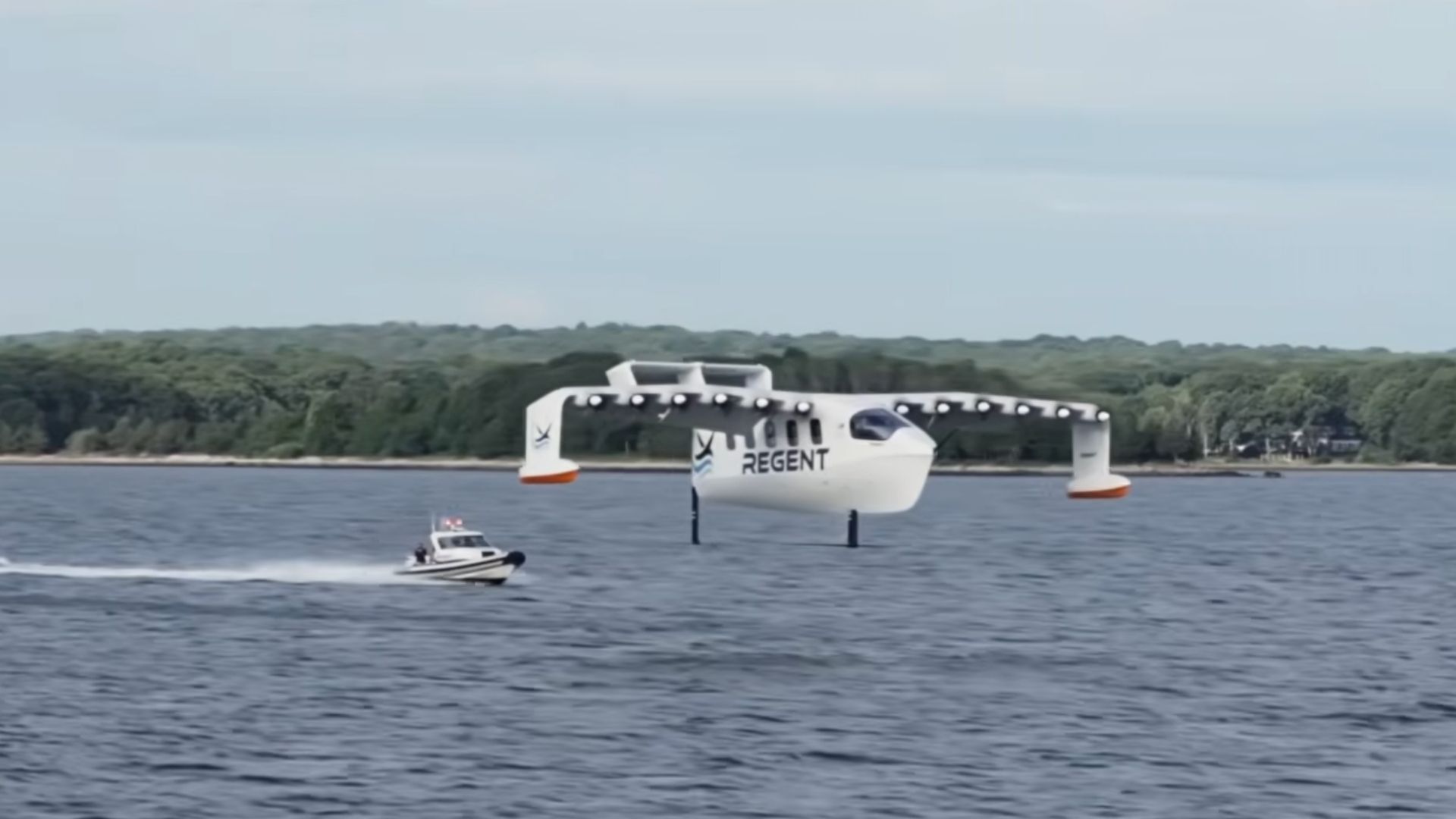
- The award followed the Viceroy prototype's September 2 flight in Narragansett Bay, Rhode Island, a milestone in its test campaign.
- REGENT pitches Seagliders as transport for contested logistics, moving personnel and equipment into and out of conflict zones.
Compiled by The Product DeskSomething wrong?How this is made
Why it matters
- decision Tasking and tracking work is money the Marine Corps recovers only if it operates the craft, so this award moves the program closer to a fielding decision than the earlier phases did.
- constraint Mission planners cannot yet build routes around 180 mph and 180 miles, because those are design targets the September flight did not report.
- contradiction REGENT's CEO calls Seagliders a capability Marines can integrate now, while Becky Russo describes Marines putting the craft through its paces as something still to come.
Before a Marine unit can rely on a new vehicle, somebody in an operations center has to be able to give it a job and keep track of it among everything else on the water. Phase IV of the Warfighting Lab's Seaglider work addresses that. Alongside capability demonstrations, it funds command-and-control work on how the craft would be tasked, tracked and coordinated within defense operations [7].
The reported phase amounts sum exactly to the $19.25 million total [1]. Phase IV is about half the size of Phase III [3] and about 26 percent of the money committed so far [2].
"What started as a feasibility question has become a real operational program, and that trajectory says a lot about where this technology is headed," said Billy Thalheimer, REGENT's co-founder and CEO [8]. He called Seagliders "a capability the Marines can start integrating now into the force imminently" [9].
Becky Russo, Director, Defense Mission Integration, described what the phase is for. "This next phase of our MCWL partnership is about putting the technology in the hands of the warfighter so they can fully realize the advantages Seagliders bring to the forward-operating areas," she said [13]. She put the Marines' own trials in the future tense. "We look forward to demonstrating this technology to the Marines so they can put it through its paces and ensure it's designed to meet their mission needs," Russo said [14].
The figures the Marines would be testing are still targets. The Viceroy is designed to fly at up to 180 mph on routes of up to 180 miles, and Interesting Engineering, which reported the award, notes these are planned specifications, not results from the September 2 flight [10][4]. The other selling points are REGENT's own descriptions. The company says the craft flies within one wingspan of the water, a position it calls below radar and above high-range sonar [11]. It also says fewer parts lower operating and maintenance costs compared with legacy aviation and maritime platforms [12].
I think the command-and-control line is the best evidence in the package that the Marines expect to operate the craft. A demonstration can be run for a vendor's benefit. Tasking and tracking work only pays off if the craft ends up in the Marines' own operating picture. Still, the announcement does not mention any purchase of craft, and Phase IV keeps paying for demonstrations alongside the integration work [1].
Two tests sort a staged program. The first is whether the people who will use the thing have run it against the numbers it was sold on. The second is whether the buyer has paid to fit it into its own systems. On the current record, Seaglider meets the second test but not the first. The integration money has come ahead of the evidence. The Marines are funding tasking and tracking work [7], while the speed and range figures remain design targets [10] and Russo describes Marine testing as still to come [14].
What to watch
- Marine-run test results for the Viceroy measured against its 180 mph and 180-mile design figures.
- Whether a fifth phase or a procurement award follows Phase IV, and whether it buys craft or more demonstrations.
- Delivery of the Phase IV command-and-control work, and whether it connects Seagliders to systems Marines already use to task and track assets.