Invest1 publisher3 min readPublished
Tuition resets pull private-college list prices toward what discounted families already paid
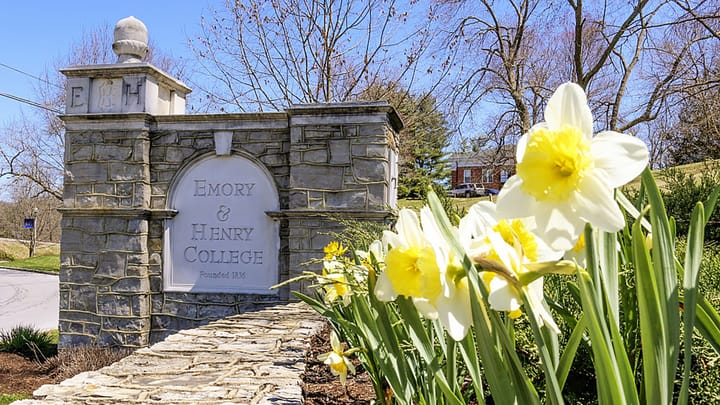
Emory & Henry, Tulsa and Carroll College are cutting list tuition 40% to 54%, while private colleges discount first-year tuition and fees 57% on average. The new prices sit closer to what aided students paid, so a 529 target can start from the sticker at these schools.
The Investor · Invest desk
Drafted by a language model from the sources cited here and checked against its claim ledger before publication. How we use AISend a correction
What happened
- Concordia University, St. Paul cut its price 33% in 2013, has grown traditional undergraduate enrollment more than 70% since, and in September announced another $5,500 cut.
- The University of Tulsa said in a statement that it expects freshman and transfer enrollment to rise 10% to 12% after its reset takes effect next year.
- Carroll College, the most expensive college in Montana, uses aid to discount its sticker price by about 66% and will charge $26,800 in tuition next year.
- A 2022 study found minimal evidence that tuition resets of at least 5% produced long-term enrollment increases.
Compiled by The InvestorSomething wrong?How this is made
Why it matters
- decision At schools still on the discount model, a 529 target built on the sticker runs more than twice the average first-year bill, so advisors need a separate cost assumption for each pricing model.
- cost Full-pay families are the only ones certain to keep the whole cut, worth $29,000 a year at Tulsa and about $116,000 over a four-year degree.
- exposure At reset schools, annual list increases fall on a price near the actual bill, so more of each increase reaches families and a savings target should escalate from the new base.
Most students at private colleges have never paid the listed price [17]. A survey of more than 250 private nonprofit universities put the average discount on tuition and fees for first-time students at 57% last academic year [7]. A Brookings Institution report noted that schools can use merit scholarships as a "pricing tool" to encourage higher-income students to attend [8]. Apply that average to Tulsa's old $54,000 price as an illustration and the bill comes to about $23,220 a year, roughly $1,780 under the new $25,000 list [6][22].
Emory & Henry lands even closer. Its largest merit award, $23,000 against a price near $40,000, left a best-case bill of about $17,000 [2][20], some $3,000 below this fall's $19,990 tuition [3][20]. "We just knew that we couldn't be a school with a price tag of $40,000 and attract students, particularly those in the socioeconomic groups that are in our region," President Lou Fincher said [4].
Carroll College cuts the most and is still furthest from its old average bill. A 40% cut to $26,800 implies an old price near $44,670, and at a 66% discount the average student paid about $15,190 [23]. The new list sits about $11,600 above that. Holding the average bill flat would still take a discount near 43% [23].
For a family's 529 target, a reset lowers the ceiling, or rather, it shortens the distance between the ceiling and the bill. A four-year plan built on Tulsa's list falls from $216,000 to $100,000 [21]. A plan built on the illustrative average-discount bill started near $92,880 [22] and may barely move. The reporting does not say how any of these schools will set awards against the new prices.
Schools have a reason to keep some award in the package. A cognitive bias favors higher tuition when it is paired with larger awards [10]. "People like to go home to grandma and tell them they got a $25,000 scholarship," said Robert Bielby, a managing director at the consulting firm Huron [11][18].
The colleges give up the yearly increase on a high base. Bielby said a lower price brings in less incremental revenue from annual increases, which usually run 3% to 4% [12]. At 4%, a full-pay student at Tulsa's old price added $2,160 a year. At the new price the same increase adds $1,000 [25]. Moody's cut Tulsa to junk in August, citing "massive structural deficits" [14]. The school is trading the bigger increase for a bigger entering class [13].
Resets could spread until the sticker is a usable planning figure almost everywhere. "At some point, we're probably going to see a full-scale reset in the industry. We're just not there yet," Bielby said [9]. They could instead stay with schools under enrollment or credit strain, where a price cut is also a sign of financial pressure. A third path has schools rebuilding the discount on the new base, raising the list each year and growing awards until the old gap reopens.
I expect the middle case for now. Bielby said the question is on the minds of almost every private college's leadership team [18]. Yet at least five colleges have announced cuts for fall 2027 [5], out of the more than 250 schools in the discount survey [7]. The view is wrong if reset schools keep awards near their old dollar size on the new prices. In that case the average bill falls by most of the cut, and a 529 target built on the new list overshoots the same way the old ones did.
What to watch
- Award letters from Emory & Henry, Tulsa and Carroll on the new prices: merit grants near their old dollar size would mean aided families' bills fall by most of the cut.
- Tulsa's first post-reset entering class and Moody's next action on its junk rating.
- Reset announcements for fall 2028 from schools without enrollment or credit trouble, a test of whether Bielby's 'full-scale reset' is arriving.