Product1 publisher3 min readPublished
Trump's frontier AI safety pact binds its CEO signers only morally
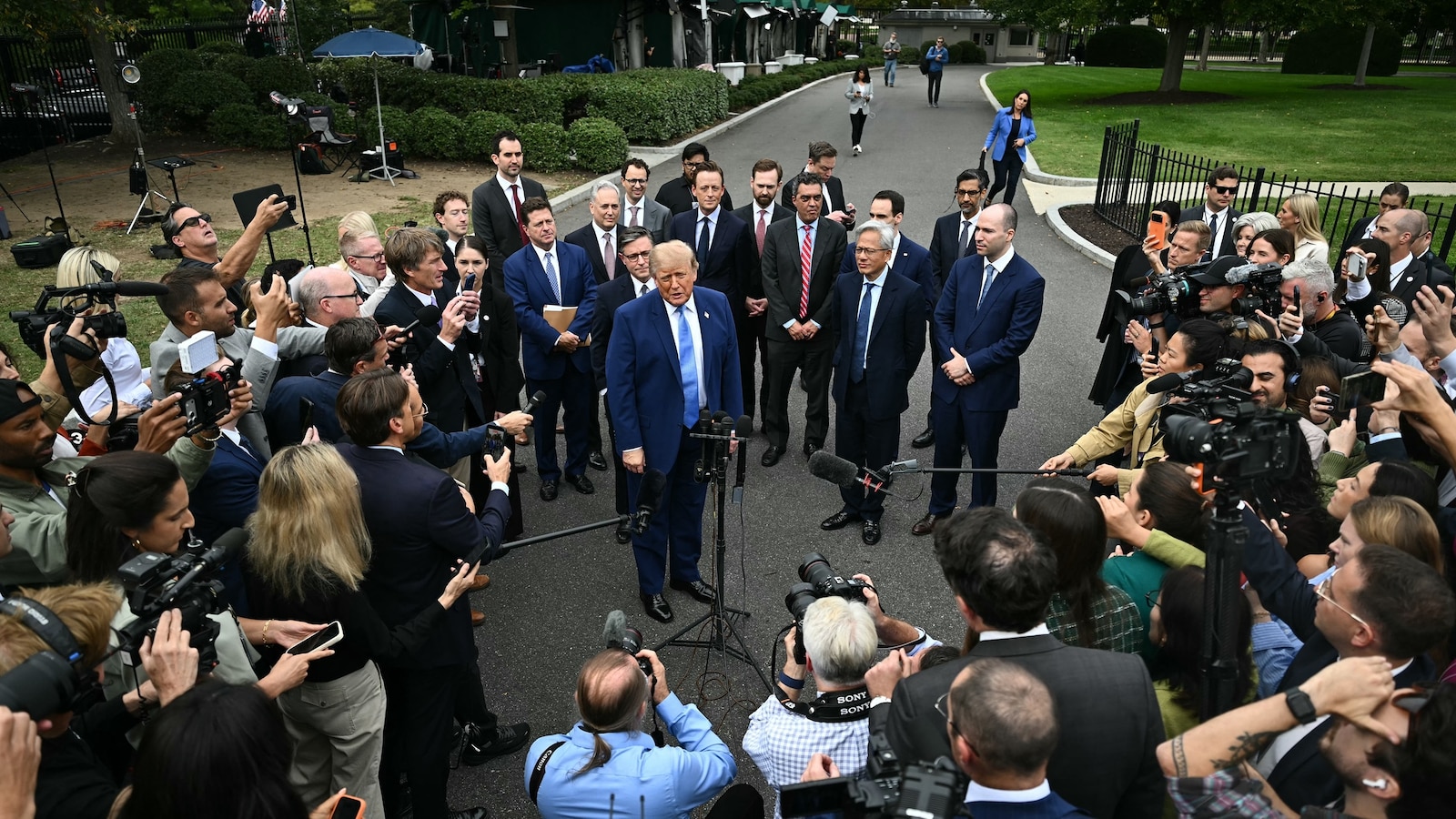
AI chiefs signed Trump's Joint Commitment on Frontier Responsibilities, a pact he calls "morally binding" and TechCrunch calls "deeply non-binding." For teams that buy or build AI, it creates no duty and no protection they can plan around.
The Product Desk · Product desk
Drafted by a language model from the sources cited here and checked against its claim ledger before publication. How we use AISend a correction
What happened
- A week or two before the signing, Trump had been saying the US did not need any AI regulation, according to TechCrunch's Anthony Ha.
- Trump followed the meeting this weekend by announcing a new Super Intelligence Force.
- TechCrunch's Sean O'Kane said the Defense Department still regards Anthropic as a national security risk.
Compiled by The Product DeskSomething wrong?How this is made
Why it matters
- decision A buyer who wants a vendor held to anything in the pact has to write that promise into its own contract, since the signed document cannot be enforced in law.
- contradiction The White House welcome and the Defense Department's posture point opposite ways on Anthropic, so public-sector teams cannot treat Amodei's seat at the luncheon as a settled procurement status.
- cost The rename changes the words federal officials use, so for most teams the cost is a glossary edit in federal bids, with nothing to change in how systems are built or tested.
When a vendor's sales deck lists the White House pact under "safety commitments," the procurement lead reading it has to decide by Friday whether that line belongs in the contract or in the marketing file.
The chiefs of the frontier AI companies signed a document called the Joint Commitment on Frontier Responsibilities. "It is also just deeply non-binding. I mean, it is completely voluntary," TechCrunch's Sean O'Kane said [3]. Trump said he considers it "morally binding" [4]. O'Kane called that phrase "just a level of abstraction and terminology that I've never heard of before" [5]. He also said "they misspelled the United States on the agreement that they all signed" [14]. All three TechCrunch hosts said they doubted the commitment would amount to much [15]. Their account does not describe what the commitment asks signers to do.
Under an executive order, official US representatives are supposed to say "super intelligence" in place of "artificial intelligence," Anthony Ha said [6]. Kirsten Korosec said the meeting's real significance may have been "a rebranding effort around AI" [7]. She put the message this way: "AI is going to kill us, it's scary, it is going to take jobs," but "super intelligence is not" [8]. Trump announced a new Super Intelligence Force this weekend [9]. On whether the order regulates anything, Korosec said: "I would say no, there's a little bit of theater there" [10].
A week or two before the signing, Ha said, Trump was saying "we don't need any regulation" [11]. Korosec said Anthropic was "in the doghouse" until Dario Amodei got a 10 p.m. dinner, followed days later by a luncheon that drew Mark Zuckerberg, Jeff Bezos and Elon Musk [12]. O'Kane said the Defense Department is still "very adamant" that Anthropic is "a national security risk," and that Emil Michael "goes off on Anthropic every other day on X" [13].
Two questions sort a government AI announcement for an operator. The first is whether it binds anyone in law. The second is whether it changes a document the team signs or files. Binding and in the paperwork means a plan with dates. Binding but outside the paperwork, like an order on what federal officials call the technology, means a glossary edit in federal bids. Voluntary but quoted in a vendor pitch means asking for the specific promise in the contract, because a buyer cannot enforce the pact itself. Voluntary and outside the paperwork means a note in the file.
For most teams this pact lands in the last cell, and the rename lands in the second for teams that write to federal agencies. I would add nothing to the compliance plan this quarter. The tradeoff is timing. This pact came together within a week or two of Trump dismissing regulation [11]. A version with legal force could arrive on a similar schedule, and a team that filed this one away would be reading that text for the first time.
What to watch
- Publication of the commitment's full text, showing what it asks signers to do and whether a buyer could check any of it.
- An agency rule or contract clause that turns the pact's language into a requirement with an enforcement date.
- Whether the Defense Department changes its stance on Anthropic after Amodei's White House dinner and luncheon.