Leadership1 distinct publisher2 min readPublished
OpenMind's readiness index prices the counterfactual at $85,000 a unit. An FCC rule barring foreign-made robots from US authorization turns that arithmetic into a budget line.
The Board Room · Leadership desk

Compiled by The Board RoomSomething wrong?How this is made
Break the $85,000 down and it has a shape [1]. Actuators are 40% to 60% of a humanoid's bill of materials [11], which on a $46,000 build is $18,400 to $27,600 [4]. Semiconductors are about 10%, roughly $4,600, and the report says most of those are mature 200mm and 28-to-90nm parts almost nobody is short of [12][5]. The scarce items sit further down the list: strain-wave and cycloidal reducers, planetary roller screws, frameless torque motors, precision bearings and rare-earth magnets [13]. So the increment is not buying chips. It is buying gearing and magnets, and it works out to 1.85 times the entire cost of the robot as it is built today [3].
That is why the US position reads worse the closer you look at it. America tops the index on compute at 91.6 and human capital at 78.7, and scores 48.5 on materials and supply chain, fifth overall, against China's 95 [8]. The headline gap between China at 82.9 and the US at 69.0 is 13.9 points; on the materials line it is 46.5 [7]. Jan Liphardt, OpenMind's founder and a Stanford bioengineering professor [3], told the Humanoid Daily podcast that the assumption that the best models win physical AI is, as far as his team can tell, not true [17].
The regulatory half of this is where the price tag stops being hypothetical. Forbes reports that the FCC has added foreign-produced advanced robotic devices to its Covered List, covering sidewalk delivery bots, inspection quadrupeds, humanoids and essentially any ground-mobile machine over two kilograms with sensors, autonomy and a real network connection, so foreign-made units can no longer be authorized for the US market [9]. IDC's read, per the same piece, is that adoption speed takes a serious hit if the rules stay [10]. But the rule as described reaches finished machines, not the reducers inside them, and that distinction is exactly where the $85,000 lives. A robot assembled in the US from Chinese subassemblies and a robot with no Chinese content in it are two different price points, and the source does not say which one the Commission is requiring. Anyone building a 2027 budget is budgeting inside that ambiguity.
Liphardt's summary of the task is that the entire US robotics industry now has to work out how to make advanced robots in the US [14]. The one asset the country clearly leads does not appear on a bill of materials at all. Model quality has no line item, and Liphardt argues the edge erodes anyway as China open sources advanced physical AI models [15]. Better software does not lower the price of a strain-wave reducer.
Ranked by verification strength, evidence, and original report placement.
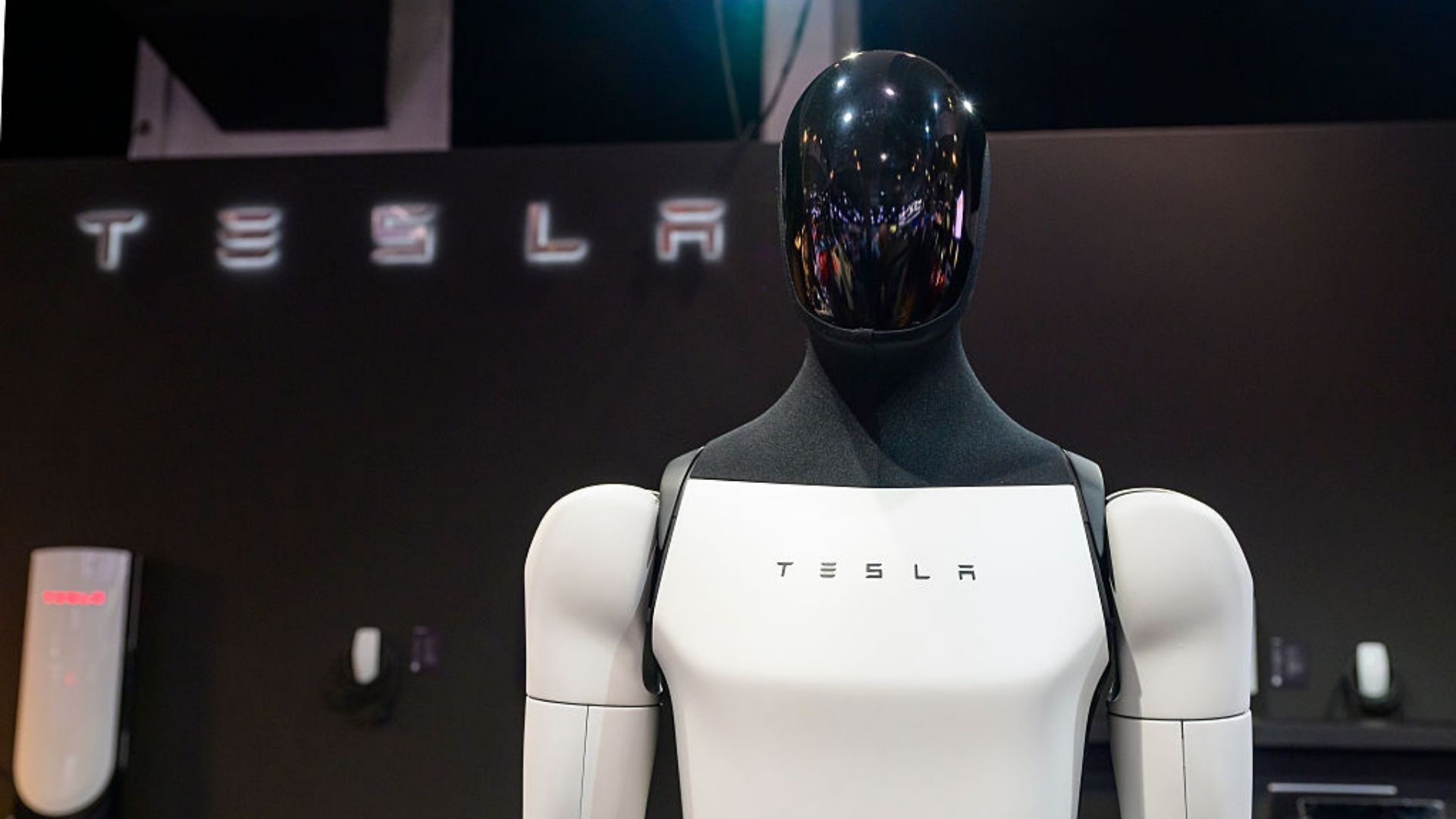
A humanoid robot that costs about $46,000 to build today would cost roughly $131,000 if Chinese suppliers were taken out of the bill of materials, according to a report from OpenMind.
Liphardt said: "It's not very useful for the US to have robots that cost 3x more than anywhere else. That immediately puts us at a disadvantage."
The US leads the index on compute at 91.6 and human capital at 78.7, but scores 48.5 on materials and supply chain, fifth overall, against China's 95.
Actuators are 40% to 60% of a humanoid's bill of materials.
Semiconductors are about 10% of a humanoid's bill of materials, and most are mature 200mm and 28-to-90nm parts almost nobody is short of.
The scarce parts are strain-wave and cycloidal reducers, planetary roller screws, frameless torque motors, precision bearings and rare-earth magnets.
Follow any of these and your For You feed starts watching them — no settings page required.
Evidence-backed comparisons of source perspectives and observed adoption signals. Read the methodology
Which Builder, Operator, and Investor concerns the observed source mix emphasized—not a truth score.
Evidence, demonstrated adoption, hype gap, incentives, and confidence are assessed independently, each on its own current evidence. How these are measured.
Single-outlet relay of an unpublished vendor report
Every quantitative claim traces to one Forbes article summarising an OpenMind report whose methodology, weightings and underlying data are not published or linked. Cost figures, index scores and BOM shares are internally consistent where they can be checked arithmetically, which supports moderate credit, but the article contradicts its own table on China's margin, the FCC rule is described without primary documentation, and the IDC forecast is an unsourced paraphrase. No independent corroboration exists inside the cluster.
Report-stage, with one live policy action
Adoption signals are thin and mostly upstream of deployment: an index publication, a reported regulatory listing with unstated effective date, and one vendor's disclosure of in-house actuator manufacturing. There are no shipment counts, procurement decisions, price changes or third-party uptake of the index in the cluster, so measured adoption stays low; the FCC action and 1X integration keep it above zero.
Moderately overstated
The framing runs somewhat ahead of the evidence. The '3x' cost multiple is rounded up from the report's own 2.85x, the claimed dominance of China's lead over the field is contradicted by the article's table, and a sweeping regulatory consequence is asserted without primary documentation or dates. The underlying supply-chain concentration facts are specific and plausible, which keeps the gap moderate rather than severe.
Vendor-authored index amplified through the author's own channel
OpenMind sells a hardware-agnostic robot software layer and authored the competitiveness index that frames its CEO as the expert diagnosing US weakness in hardware rather than software — a framing that favours a software-layer vendor. The reporting channel adds incentive: the quotes come from the author's own Humanoid Daily podcast, and no conflict disclosure accompanies the report's claims. These are visible structural incentives, not evidence of inaccuracy.
Low-to-moderate
Direction of travel — US cost and supply-chain exposure concentrated in precision mechanics and magnets — is coherent and internally arithmetically checkable, but the whole cluster is one outlet relaying one interested party, with an unverified regulatory centrepiece, an internal contradiction and no independent corroboration. Confidence is sufficient to treat the story as a lead requiring verification, not as settled fact.
leadership
A 2.85x bill of materials: what the FCC's robot ban does to an automation budget1 distinct publisher
build
The FCC closed the border on imported robots, so RoboStore is becoming a factory1 distinct publisher
build
The FCC read HOVERAir's Versa by what it was built to do, not how it was boxed2 distinct publishers
product
Banned, in stock, four-day shipping: DJI's blocked cameras arrive from Oregon1 distinct publisher
Distinct publishers with included, body-backed reporting in this cluster.
forbes.com
1 article · August 26, 2026