Leadership1 publisher3 min readPublished Updated
ChemSec finds nearly all of the ten biggest PFAS makers expanding on AI demand
Forever chemicals cool immersion tanks and appear in as many as 1,000 steps of chip fabrication, and the capacity being built to serve AI demand is arriving while Europe, the UK and some US states are still drafting restrictions.
The Board Room · Leadership desk
What happened
- ChemSec, the Swedish chemicals watchdog, surveyed the ten biggest PFAS manufacturers and found nearly all planning to increase production, at sites in Europe, Asia and North America.
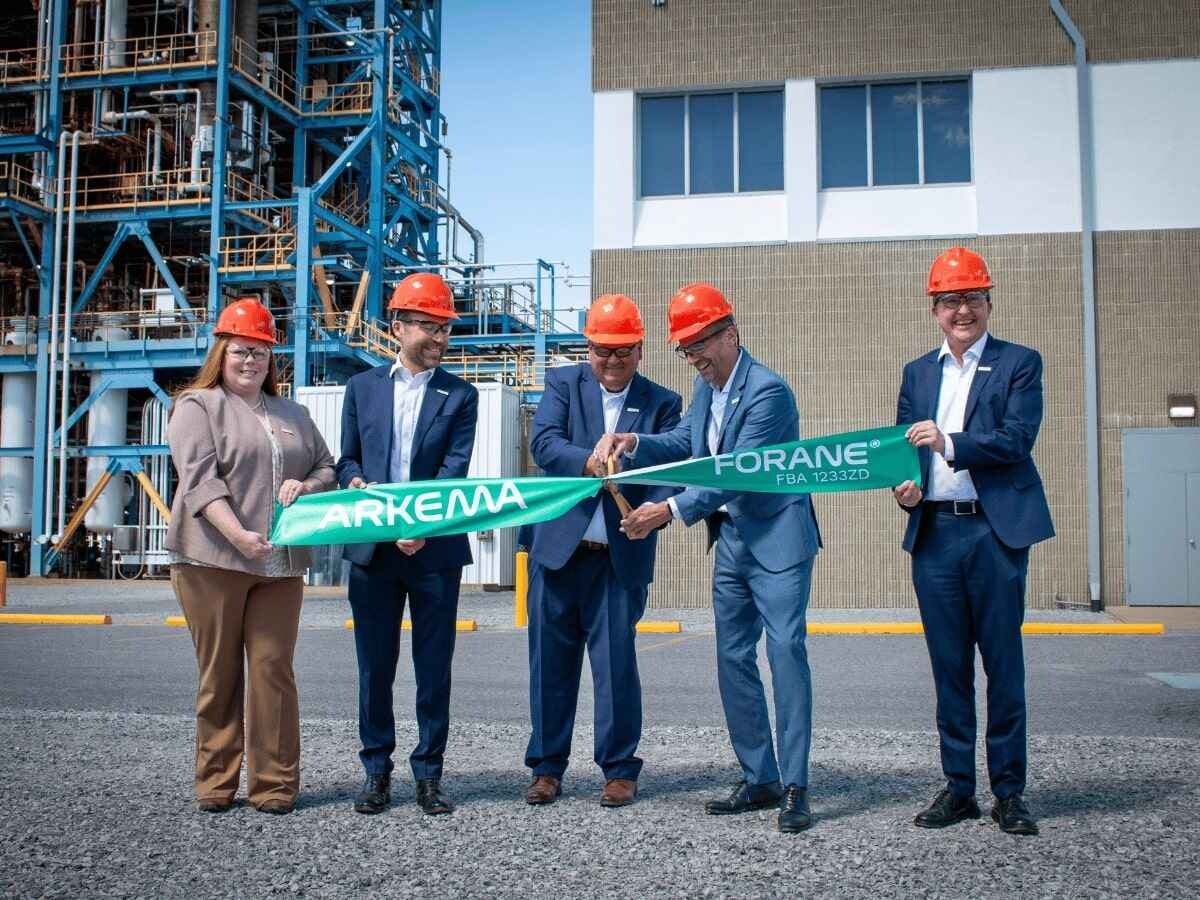
- Arkema is building a $60m production unit in Kentucky that it says will let it follow the rapid expansion of datacentre cooling needs.
- Archroma, which is switching to marketing PFAS-free alternatives, and BASF, which says it will leave PFAS production by 2028, were the only clear exceptions.
Compiled by The Board RoomSomething wrong?How this is made
Why it matters
- constraint A two-phase immersion design ties an operator to a fluid whose legal availability is being decided in Europe, the UK and some US states, so a substitution project arrives with the purchase and without a date attached to it.
- decision BASF's 2028 exit is the one fixed date in the supply picture, so anyone specifying PFAS coolant this year is choosing whether requalification work falls before or after it.
- exposure The sums actually paid have landed on producers, while a purchaser's exposure exists so far as an analyst warning about remediation and litigation. A general counsel has to price that difference.
- contradiction The same immersion product is sold as an efficiency gain on energy and water and named by critics as an understated toxicity risk. Vendor claims are a poor basis for a buyer's environmental case.
Two-phase immersion cooling depends on a property of the fluid. Servers sit in a pool of PFAS with a low boiling point. As the hardware heats, the fluid boils and takes the heat away as vapour, which rises to a water-cooled condensing coil, cools back to liquid and re-enters the cycle [12].
The chemicals have been linked to cancer and do not degrade in nature [15]. The restrictions that would reach them are still being written: the Guardian describes the moves in Europe, the UK and parts of the US as nascent, and reports opponents' warning that the new production risks undermining them [3]. For a buyer signing a cooling contract this quarter, what can be evidenced now is supply continuity. Archroma has switched to marketing PFAS-free alternatives and BASF has said it will exit PFAS production by 2028 [11].
The only sum paid so far has come from a producer. Chemours is expanding to meet demand from "advanced datacenters and AI hardware" and says its "innovative liquid cooling solutions" lower the energy, water, space, maintenance and investment costs of datacentres [7]. It was recently ordered to pay $450m to settle a lawsuit over PFAS discharges [8]. Arkema's new Kentucky unit costs $60m [6]. The settlement is about seven and a half times that capital cost [2]. Chemours has been criticised for downplaying the chemicals' toxicity and climate impact [9].
ChemSec's survey covered the ten biggest manufacturers [1], and the Guardian names twelve companies, ten with expansion plans and two moving away, a count the article does not reconcile [1]. "These companies' expansion plans show that unless governments and regulators insist on a rapid phaseout, we will face a new tidal wave of forever chemicals," said Anne-Sofie Bäckar, the executive director of ChemSec [4].
AI is not the only demand line, though many producers frame their investments around the "AI revolution" and the role of PFAS in chipmaking and next-generation cooling [2]. They also cited PFAS coatings and binders for lithium-ion batteries in EVs, laptops and phones [17]. Gujarat Fluorochemicals' chief executive, Bir Kapoor, recently listed batteries with datacentres, semiconductors and green hydrogen as "sunrise sectors". "There is a tremendous growth opportunity there," he said [18]. Daikin said it was launching a "datacentre hub" to meet demand and promised to "maintain and expand our top share in the industry by expanding sales of existing fluorine products and introducing new products" [5]. A buyer that changes coolant subtracts one demand line from a producer whose growth list has four items on it [3].
None of this changes an order placed this year: the fluid is available, and the plants are being built while the restrictions are still nascent [1][3]. Danske Bank told investors that in microchips these chemicals "are not merely peripheral additives; they are essential ingredients integrated into as many as 1,000 distinct steps at the nanometric level" [13]. Analysts also warned that PFAS were "the hidden risk of the AI boom" with "escalating potential for multibillion-euro remediation and litigation liabilities" [14]. A chemistry sitting in a thousand process steps does not come out inside one procurement cycle. BASF has given itself until 2028 [11].
What to watch
- Whether the restriction proposals in the EU and UK cover immersion cooling fluids and semiconductor process uses, and on what timetable.
- Whether any of the ten expanding producers follows BASF with a dated exit from PFAS production.
- Whether PFAS litigation moves from discharge claims against producers to claims involving purchasers and users.