Product1 publisher2 min readPublished
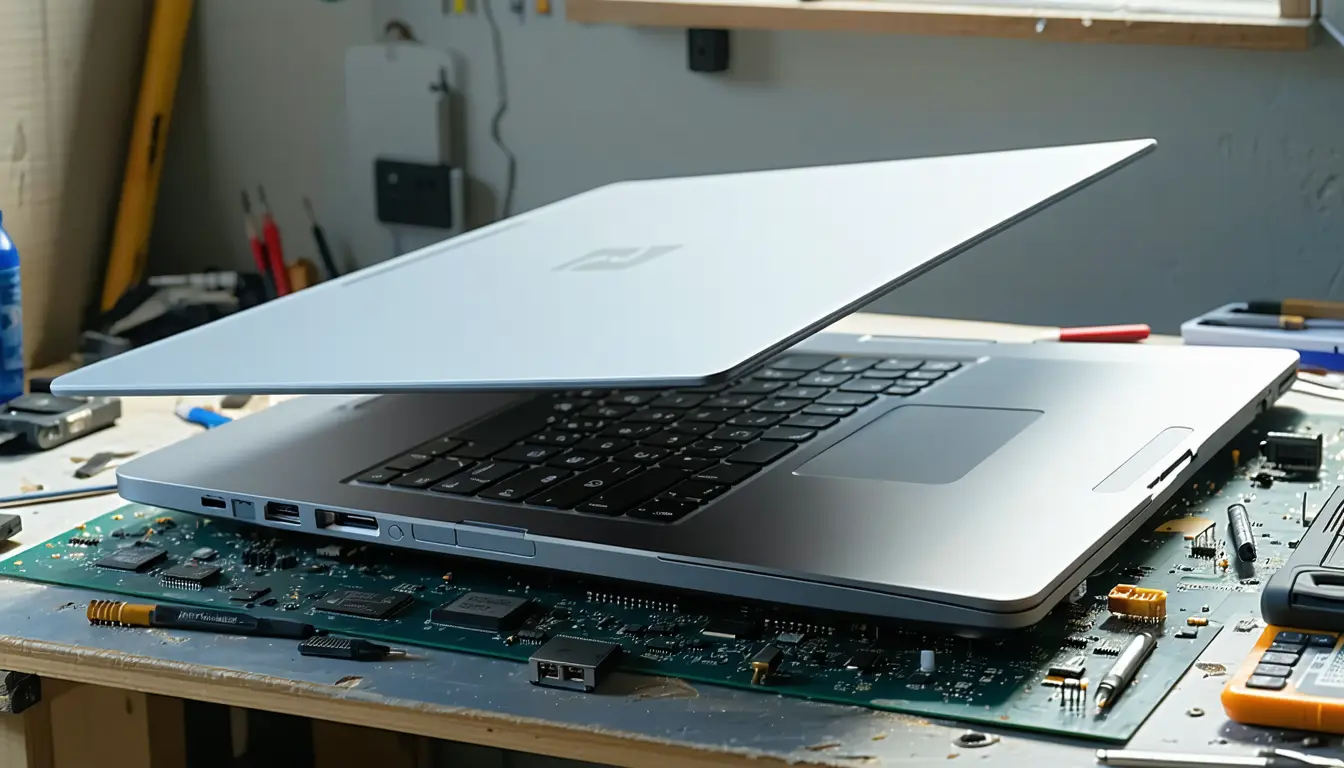
A swelling laptop battery pushes the trackpad up out of the deck
The pack in a MacBook or a Surface laptop sits directly under the trackpad, so a cell that starts producing gas lifts the glass. Engadget's advice is to power the machine down and get it to a repair shop.
The Product Desk · Product desk
What happened
- Engadget says an overcharged or physically damaged lithium-ion cell can produce harmful gases, at which point the battery swells and pushes against the components around it.
- In laptops the battery usually sits underneath the trackpad, and Engadget says Surface laptops and MacBooks are no exception, so a swelling pack pushes the trackpad out of the deck.
- Engadget's advice is to stop using the machine immediately, turn it off, unplug it and take it to a repair shop, because one wrong move with a swollen battery could cause a fire.
- Engadget says the battery can be replaced easily in most cases and the trackpad snaps back into place once the new one is installed.
- Apple has already launched replacement programs for MacBooks with swollen batteries, according to Engadget.
Compiled by The Product DeskSomething wrong?How this is made
Why it matters
- decision Warranty status decides who pays, so the first move on each affected serial is a coverage lookup.
- exposure The pulled machines are the fire exposure while they wait for a repair slot, and they usually wait in the same room as the people who pulled them.
- constraint A help desk cannot close this from the ticket text, because a loose screw or a drop lifts a trackpad too, so someone has to put hands on the machine.
- cost Downtime starts at inspection. The repair invoice will not show the days the user lost.
The ticket arrives looking cosmetic. The trackpad no longer sits flat against the deck, and in the worst version the glass over it has cracked [1]. Engadget says a trackpad that pops out is usually a sign the battery underneath is near the end of its life [5]. The piece does not include failure rates or any count of affected machines, and nothing in it supports writing off the laptop.
Engadget is writing for one person with one laptop, and its instruction is to take it to a repair shop. For a fleet, that translates into a depot ticket, a courier and a loaner.
Per unit, the money is small. Apple charges $149 to $249 to replace a MacBook battery depending on the model, and the price may be higher if the swollen pack damaged the trackpad [11]. Ten out-of-warranty machines therefore cost between $1,490 and $2,490 before any trackpad work [14]. The top of that band sits about 67 percent above the bottom, so the model mix in the swollen pile drives the total as much as the count does [15].
Whether any of this reaches the user depends on spare stock. If the help desk cannot honour a stop-use rule the same day, the user works around it, with the swollen machine plugged in on a desk and the deadline unchanged. The spare pool has the same problem in slower motion: loaners sitting in a cupboard do not get inspected. Engadget's advice for a stored laptop is to keep it at about 50 percent charge, away from extreme temperatures and direct sunlight, on original certified chargers, and to turn it on every three months to check it [13].
Two facts sort the queue on Monday, and neither needs a diagnostic tool: whether the deck or the trackpad is deformed, and whether the serial is still covered. Deformed and covered goes to the maker. Deformed and out of coverage gets a few hundred dollars and a loaner. Flat deck with a trackpad complaint goes on a bench, because Engadget notes a loose internal screw or an impact can lift a trackpad too [8].
What to watch
- An Apple replacement program covering a model your fleet runs. Coverage like that moves the repair bill off your budget.
- Any change to Apple's $149 to $249 band, or a published surcharge when swelling has damaged the trackpad.
- A maker starting to treat swelling as accidental damage.