Product1 publisher3 min readPublished
Clean Core's thorium fuel clears 60 GWd/MTU, then buys an audit. The audit is the news.
ANEEL passed burnups above 60 GWd/MTU at Idaho National Laboratory. Hiring Kinectrics to review the design, safety case and regulatory readiness is a move aimed at utilities.
The Product Desk · Product desk
Drafted by a language model from the sources cited here and checked against its claim ledger before publication. How we use AISend a correction
What happened
- Clean Core Thorium Energy has selected Kinectrics to independently review its ANEEL nuclear fuel qualification program, bringing the thorium-based fuel closer to a demonstration in an existing CANDU reactor.
- The Kinectrics review will examine the fuel's design, manufacturing process, safety case and regulatory readiness.
- The review is intended to give utilities and other nuclear stakeholders an independent assessment before the fuel moves toward commercial demonstration irradiation.
- The fuel has undergone accelerated irradiation testing at Idaho National Laboratory's Advanced Test Reactor, reaching burnups above 60 GWd/MTU.
- ANEEL combines thorium with enriched uranium and is designed to work with existing water-cooled reactors.
Compiled by The Product DeskSomething wrong?How this is made
Why it matters
Clean Core Thorium Energy has selected Kinectrics to independently review the qualification programme for its ANEEL fuel, a thorium-plus-enriched-uranium design intended for existing water-cooled reactors [1][5]. The review follows accelerated irradiation testing at Idaho National Laboratory's Advanced Test Reactor that took the fuel past 60 GWd/MTU [4], and the ordering of those two events is the useful signal: a third-party audit is what you commission when the next conversation is with someone who owns a reactor.
The scope reads like a procurement checklist rather than a research question. Kinectrics will examine the fuel's design, manufacturing process, safety case and regulatory readiness [2]. CCTE says the intent is to give utilities and other nuclear stakeholders an independent assessment before the fuel moves toward commercial demonstration irradiation [3]. Milan Shah, CCTE's COO, described Kinectrics as one of the most trusted independent evaluators in the industry and said the evaluation provides validation as the company progresses toward regulatory approval and future deployment [9]. Strip the adjectives and the function is clear: someone other than the vendor signs the homework.
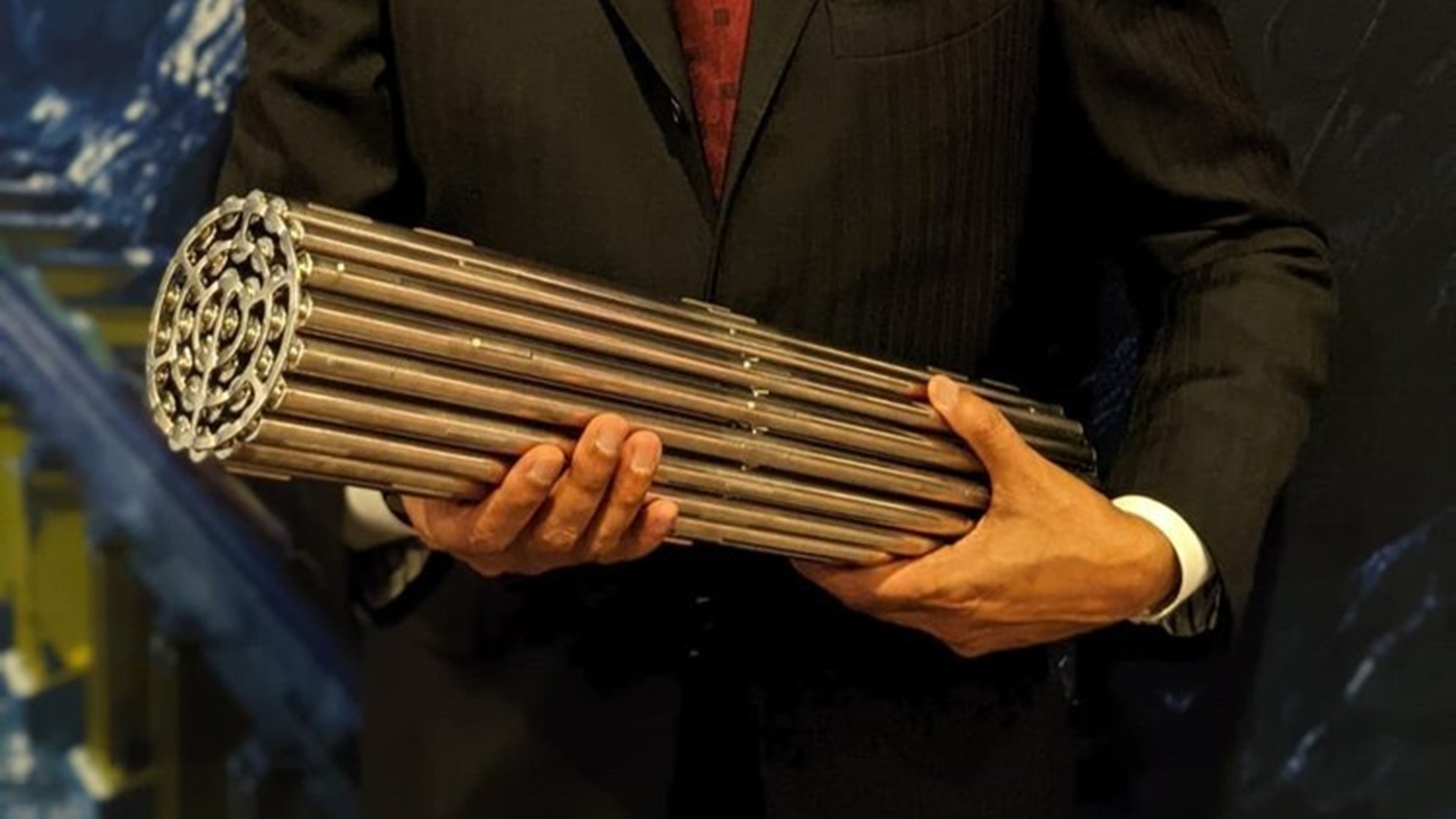
The industrial base behind the fuel is now named and conventional. BWXT Canada is working on the CANDU fuel bundle hardware, and Canadian Nuclear Laboratories is fabricating full-scale, reactor-ready ANEEL bundles [7]. Counting the test reactor and the reviewer, that puts four organisations outside CCTE inside the chain [12]. For a fuel vendor, that matters more than any single irradiation number, because a utility is buying a supply chain, not a concept.
The commercial claim underneath all of it is compatibility. CCTE says the design could introduce thorium-based fuel into existing CANDU reactors without major reactor modifications, which distinguishes it from approaches that require an entirely new reactor system before the fuel can be deployed [8]. The company has done engineering work on performance, safety characteristics and compatibility across reactor types, and positions the platform for pressurised heavy water reactors, Generation IV designs and light water reactors [11]. The fuel is offered with both low-enriched and high-assay low-enriched uranium variants [10]. The asserted benefits, per the company, are better fuel utilisation, smaller volumes of long-lived spent fuel, and improved safety and proliferation-resistance characteristics [6].
Two cautions are visible in the material itself. The irradiation was accelerated, and the source's own framing is that such testing matters because fuel must show it can withstand reactor conditions over extended periods [15]; compressed exposure in a test reactor is evidence for a commercial demonstration, not a substitute for one. And CCTE's position is that the irradiation results and manufacturing work establish the foundation for a commercial reactor demonstration [14], which is a statement about readiness to start, not about having started. The announcement names no host utility, no schedule, and no completion date for the Kinectrics review [13].
Watch for whether a specific CANDU unit and operator are named, since a demonstration without a host is a plan. Watch whether the Kinectrics findings are published or held for private circulation to prospective buyers, which will tell you how confident the programme is. And watch whether CNL's full-scale bundle fabrication [7] produces delivered bundles rather than pellets.