Invest1 publisher3 min readPublished
Iran's rial loses 12% against the dollar in 27 days as Tehran narrows talks to Hormuz
Iran's rial fell past 2.5 million to the dollar on Tuesday, 27 days after a record 2.2 million, losing at least 12% of its dollar value. Each week the Hormuz talks stall now costs Tehran through its exchange rate and Washington through gasoline prices.
The Investor · Invest desk
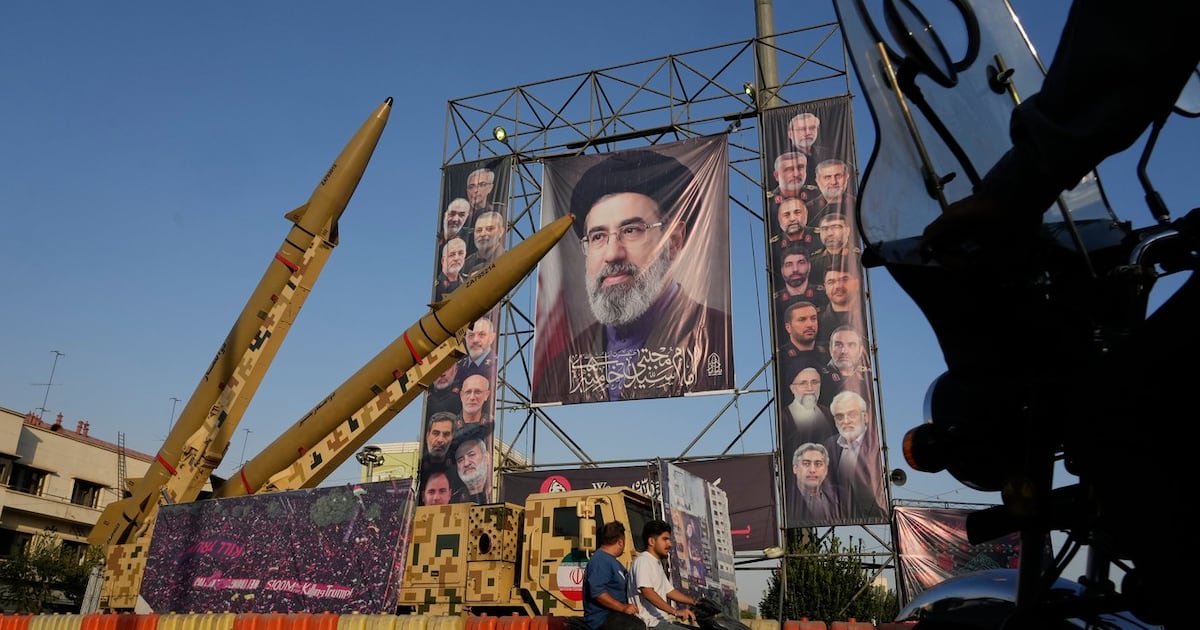
What happened
- Foreign Minister Abbas Araghchi said indirect talks with Washington on reopening the Strait of Hormuz have become "more serious" after he met Pakistani and Qatari mediators.
- Earlier this week Trump turned down Iran's offer to reopen the strait within seven days if the US lifted its port blockade, freed frozen assets and waived oil sanctions.
- US officials have confirmed to the Associated Press that mediators are working with both governments on a deal to end the fighting and open the strait.
- Revolutionary Guard spokesman Gen. Hossein Mohebbi urged Americans to take to the streets against the war, weeks before the US midterm elections.
- Trump, who first predicted the war would last a matter of weeks, now says it will likely end after the November elections.
Compiled by The InvestorSomething wrong?How this is made
Why it matters
- decision Washington has already refused the seven-day package. It can close a deal now only if Tehran accepts less cash relief, or by giving up part of what it just turned down.
- constraint If Trump's post-election forecast holds, Iranian oil stays blockaded for at least the 35 days to Nov. 3, and the rial takes the cost of each of those days.
- contradiction Rubio says the squeeze on oil money is working and the Guard says the pressure has failed. The two readings imply opposite timelines for when the strait reopens.
A dollar that bought 2.2 million rials on Sept. 2 bought more than 2.5 million on Tuesday [1][2]. So the dollar now buys at least 13.6% more rials [1]. Anyone holding rials lost at least 12% of their dollar value in those 27 days, about 0.47% a day compounded [2][3]. The rate is the one traders in Tehran quote [1], and the currency has set new lows again and again since the war began in February [3]. Fortune blames the freefall on the US naval blockade on Iranian oil and the sanctions added since the war started [4].
The seven-day offer Trump turned down [9] asked for three things that would each put cash in Tehran's hands. In return Iran offered one thing it controls, the strait. Since then Araghchi has talked about less. He told Iranian media on Monday that the "current focus is solely on the Strait of Hormuz" [6]. He also described a relay with no date attached: "They are set to raise the matter with the American side once more, after which the final U.S. response will be conveyed to us," he said [7].
I think the currency and the shorter agenda are connected. A government whose money loses close to half a percent of its dollar value every day has reason to ask for less. Fortune reports the two facts side by side but does not link them, and nothing in the report shows Iran has dropped any condition from the rejected offer [9]. The Revolutionary Guard reads the situation the other way. Its spokesman, Gen. Hossein Mohebbi, said Washington "has no choice but to acknowledge defeat and leave the region" [11]. "This is how the war will end," he said [12]. The Guard is betting on the American calendar. Gasoline prices driven up by the conflict loom large in the Nov. 3 election [13], and Trump's own forecast puts the end of the war after that vote [14].
Look at what Washington declined to buy. By refusing the offer [9] it kept Iranian oil off the market and accepted higher gasoline prices going into the election [13]. Rubio made the case in cash terms: "when you're denying them money through oil sales and sanctions, you're not just punishing them," he said [16].
The first possible outcome is that the relay returns a US answer Tehran accepts for less than it asked [7][9]. In the second, Washington waits past Nov. 3 [14]. At September's pace, a dollar would then fetch about 2.95 million rials by election day [5]. In the third, Tehran holds out on the Guard's bet that gasoline prices move Washington first [11][13]. I lean toward the first, because Tehran's cost compounds daily through the exchange rate while Washington's falls on one date [3][13]. That view is wrong if Tehran's reply to the relay again demands blockade relief, frozen assets and oil waivers together.
Fortune's report does not include crude prices or Iranian export volumes. The case that Hormuz is the main variable for oil rests on the strait being the war's chokepoint [17] and on the gasoline prices the conflict has already pushed up in the US [13].
What to watch
- Whether the US response Qatar is carrying reaches Tehran before or after the Nov. 3 vote.
- How long the rial takes to set its next record past 2.5 million to the dollar. A gap shorter than 27 days would mean the slide is speeding up.
- Any partial US offer on the port blockade or frozen assets, which would show Washington moving first.