Science1 publisher3 min readPublished
A coveted Asgard archaeon rode 2,500 kilometres to Texas in the back of an SUV
Asgard archaea have been known since 2015 from DNA in North Atlantic sediment, and only six stable cultures have reached the literature. Growing them takes years, so one unpublished culture travelled from Montana to Texas by car.
The Scientist · Science desk
What happened
- Emily Aguilar-Pine drove 2,500 kilometres over two days in June, from Bozeman, Montana, to Austin, Texas, with one of microbiology's most coveted organisms in the back of her mother's SUV.
- Asgard archaea, named after the realm of the Norse gods, were discovered in 2015 from DNA in sediments taken from the bottom of the North Atlantic.
- Hundreds of Asgard species have since been identified from environmental DNA, but the cells are so scarce in samples that isolating them for study has been difficult.
Compiled by The ScientistSomething wrong?How this is made
Why it matters
- capability Cell shape and behaviour become things a researcher can watch, so claims about how internal compartments and endosymbiosis worked can be tested against living cells.
- constraint Six cultures against hundreds of sequenced species means every general statement about Asgard cell biology rests on a tiny denominator, and whether one strain from one estuary speaks for the group is an open question.
- decision A laboratory that wants to work on these organisms has to budget for in-person training and years of coaxing growth before the first experiment runs.
- precedent With the two-domain tree already settled by sequence, the open questions move from which genomes exist to what the cells do, and new Asgard work will be held to that.
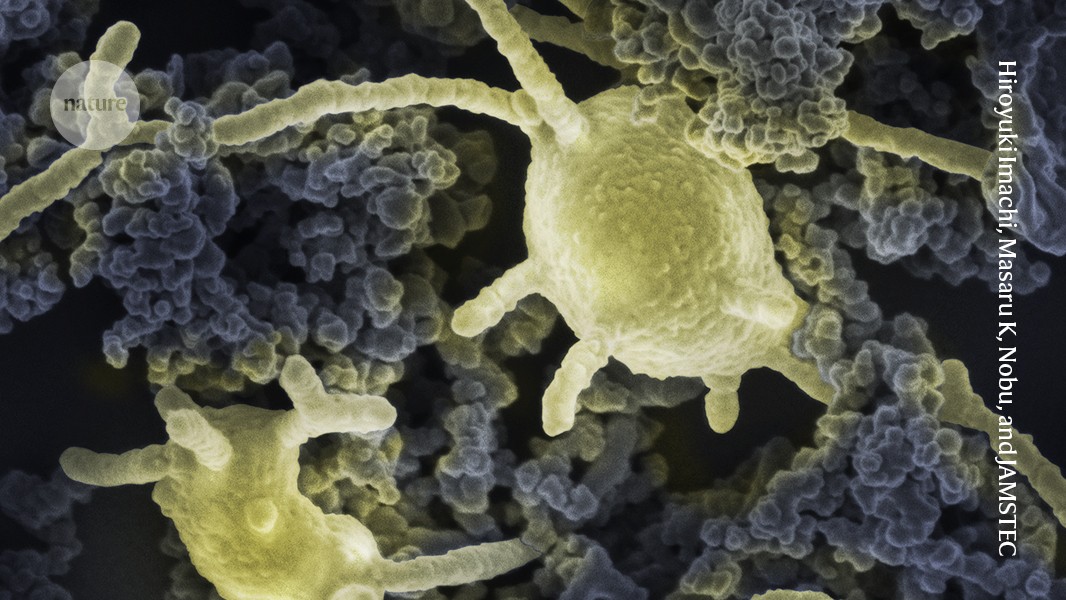
What is known about Asgard archaea has come mostly from their DNA, assembled out of environmental sequencing [19]. The cultures established since 2020 hold enough Asgard cells to be seen under a microscope [9]. Nature reports that researchers are now studying their shapes, features and behaviours, and turning up clues about what made the transition to complex life possible [16].
The count is small. Two cultures were reported in 2020 and 2022, and four more have been announced since the start of 2025 [10]. That makes six in the literature [21]. Set against the hundreds of Asgard species named from environmental DNA [8], six comes to about 3% of the described diversity at best, reading "hundreds" as 200 [22]. Five years separated the 2015 discovery of Asgard DNA in North Atlantic sediment from the first culture [5] [24]. The emerging cell biology of a group that genome analysis places on the ancestral line of all eukaryotes [6] therefore rests on a handful of lineages. One of them is an unpublished strain from an estuarine environment in Oregon, in Paul Carini's laboratory at the University of Arizona in Tucson [15].
Growing them is slow and unreliable; the cells are fickle, and researchers often work for several years to get them to proliferate [13]. Emily Aguilar-Pine learnt the care routine for the culture, nicknamed Skadi after its provisional name Skadiarchaeum cthulhuensis [3]. She learnt it in person from Stavros Trimmer, a PhD student at Montana State University in Bozeman, before taking samples back to the University of Texas at Austin [12]. The bottle held about 30 millilitres of what looked like clear liquid, inside protective packaging labelled "hopes and dreams" [2]. "It was with me at all times," Aguilar-Pine told Nature [4].
"Asgard are by far the coolest thing to happen to microbiology in the last 30 to 40 years," said Carini [14].
Sequence already answered the phylogenetic question. The two-domain picture, in which eukaryotes are a branch of archaea and everything else is bacteria, came out of genome analysis, and most researchers who study the issue now hold it [7]. The event the field wants to explain is dated to roughly two billion years ago. An ancient host archaeon, now recognized as an Asgard, engulfed a free-living bacterium. That bacterium eventually evolved into the mitochondrion, at a time when oxygen was building up in the oceans and the atmosphere [17] [18]. Skadi is alive now. Whatever it does under a microscope is evidence about its own lineage in the present. Connecting that to the ancient host cell is an inference from a living relative, not an observation of the engulfment. The Nature account sets out that endosymbiotic story and does not enumerate rival models of eukaryogenesis or say which of them a culture could distinguish [23].
Skadi remains unpublished [11].
What to watch
- A formal description of Skadiarchaeum cthulhuensis entering the literature, with growth rates and images.
- A second independent culture of the same lineage, so morphology claims have a replicate.
- A published husbandry protocol that another laboratory can reproduce from the page, without in-person training on the original culture.