Leadership1 publisher3 min readPublished
Longmont dropped Flock and kept the cameras: vendor churn is not surveillance policy
At least 56 municipalities cut Flock Safety contracts this year. Axon has already replaced it in at least seven, which tells you where the real control point sits.
The Board Room · Leadership desk
Drafted by a language model from the sources cited here and checked against its claim ledger before publication. How we use AISend a correction
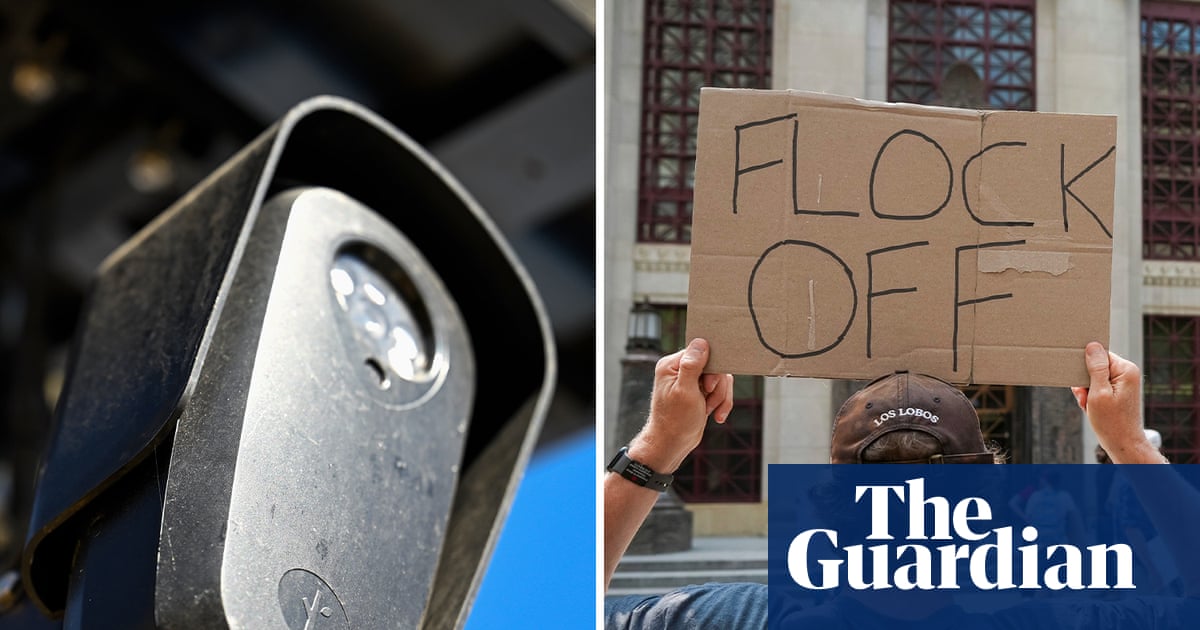
What happened
- In December, the Longmont, Colorado city council decided to let a contract with Flock Safety lapse, which Colorado activists expected to celebrate as a victory against mass surveillance.
- Months after the Flock contract lapsed, Longmont lawmakers voted to approve a new vendor to install automated license plate readers on the city's streets.
- Flock Safety has more than 120,000 cameras set up on roads across the US that scan license plates billions of times every month.
- Privacy advocates say Flock has created a dragnet because the queries do not require a warrant and the cameras routinely capture details about cars driven by people who are not suspected of crimes.
- Local law-enforcement agencies say they rely on ALPRs to solve crimes, and officers can search the data, even outside their state, to help find stolen vehicles and missing people.
Compiled by The Board RoomSomething wrong?How this is made
Why it matters
In December, Longmont, Colorado let its contract with Flock Safety lapse, and local activists treated it as a win against mass surveillance [s1c1]. Months later the same city council voted to put automated license plate readers back on the same streets, this time from Axon [s1c2][s1c9].
The market explains why. Flock alone operates more than 120,000 cameras on US roads, scanning plates billions of times a month [s1c3]. At least 56 municipalities have deactivated, cancelled or rejected Flock contracts this year, according to the advocacy group DeFlock [s1c6]. Axon, a $48bn law enforcement technology company, has replaced Flock in at least seven municipalities across five states [s1c10][s1c11]. Roughly one in eight of the cancellations has already converted into a competitor's install base, on the loosest reading of two "at least" figures [s1d1]. Chad Marlow, senior policy counsel at the ACLU, told the Guardian that Axon has been "lurking in the shadows, waiting for Flock to fail and then rushing in" [s1c12]. Axon's president Josh Isner told investors in February that some customers arriving from other vendors cited his company's "track record on privacy and ethics" as a deciding factor [s1c13].
So the cancellation produced a supplier change, not a capability change. What Longmont did add is more interesting than the vendor swap: when the council voted unanimously in March to proceed with Axon, it attached requirements on data protection and transparency plus an evaluation after one year [s1c9]. Police justified the switch on governance grounds, saying Flock's policies were more likely to result in data being shared widely with other government agencies, which Longmont's assistant chief of police Phil Piotrowski called "the exact opposite approach" from Axon [s1c14]. Competitive pressure did move Flock, which last week announced updated auditing, retention and sharing policies, and a way for local police to block outside agencies from immigration-related searches, though many critics consider the changes inadequate [s1c7][s1c15]. Flock did not comment by the Guardian's press time [s1c8].
None of that is the same as ending the watching. Privacy advocates note that plate queries do not require a warrant and that the cameras routinely capture cars driven by people not suspected of anything [s1c4], while police point to solved crimes, stolen vehicles and missing people, and can search records held out of state [s1c5]. In cities that formally exited Flock, surveillance persists anyway: another camera company steps in, or private businesses leave their own cameras up, indifferent to municipal contracts [s1c17]. Sometimes Flock has been slow to remove hardware, and several cities have resorted to putting trash bags over cameras [s1c18].
The operator lesson generalises past policing. A procurement decision is visible, votable and satisfying; it is also the weakest lever available when the supplied capability is commoditised. Longmont's exit also deepened an incumbent bundle, since Axon already provided the department with Tasers, body cameras and its digital evidence repository [s1c16] - the sort of relationship that makes the next review harder, not easier.
Watch three things: whether the unfinalised Axon contract's retention and sharing terms are binding or discretionary [s1c9], what Longmont's one-year evaluation actually measures [s1c9], and whether Flock's new controls ship as defaults or as options a department can decline [s1c7].