Loading today’s stories
Leadership1 distinct publisher3 min readUpdated
The Arday case: a Cambridge hire made on a story nobody checked
A professorship marketed on a life story, then a plagiarism allegation, a resignation, and a death nine days later. The verification nobody did was the cheapest duty of care available.
The Board Room · Leadership desk
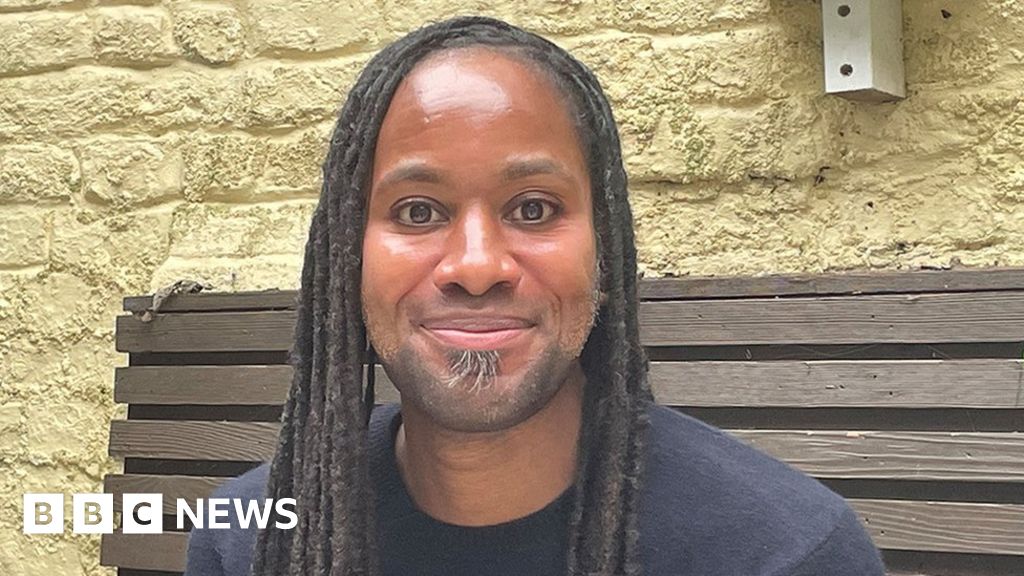
What happened
- In March 2023 Jason Arday became a professor of sociology of education at the University of Cambridge.
- At 37, Arday was the youngest Black person ever appointed to a professorship in Cambridge's history.
- Arday claimed that autism left him unable to speak until he was 11 and unable to read or write until he was 18.
- Arday received a PhD from Liverpool John Moores University and rose through the ranks of British higher education.
- Soon after starting at Cambridge, Arday was accused of plagiarizing portions of his 2015 doctoral thesis.
Compiled by The Board RoomSomething wrong?How this is made
Why it matters
Verification is cheap at the point of hire and close to impossible afterwards. Tyler Austin Harper, writing in the Atlantic and speaking to Vox's Today, Explained, lists among Arday's claims that he ran 600 miles in six days, which Harper notes is 50 miles short of a world record [9][11]. That works out to an average of 100 miles a day, six days running [17], against an implied record of roughly 650 miles [18]. Testing that claim required arithmetic, not an archive.
Harper's argument is that people at Cambridge overlooked flaws that should have been obvious because they wanted the appointment badly [12]. He pairs two counterfactuals: that a white academic would not have drawn this level of scrutiny, and that a white academic making the same implausible claims would not have been hired [14]. Read as a hiring proposition rather than a moral one, that says the biography was carrying weight the scholarly record was supposed to carry. The label Harper describes, youngest Black professor in an 800-year institution [15], is consistent with the fact Cambridge could state plainly: at 37 he was the youngest Black person ever appointed to a professorship there [2].
The governance question is what the institution owed him once the story it had amplified came under inspection. The plagiarism allegation concerning his 2015 doctoral thesis arrived soon after he took up the post [5]. British outlets then went through the rest of the personal account and found more questionable claims [6]. What exists in the public record of this excerpt is Arday's own statement, that the scrutiny and personal attacks had taken a profound toll on him and his family [7], and then his death nine days later [8]. No institutional process sits between those two events in the account Vox published [20].
That asymmetry is the transferable part. An employer that takes an employee's personal narrative into its own reputational accounts has adopted the narrative, and cannot later treat its collapse as the employee's private difficulty. The upside was institutional. The exposure, when it came, was individual.
Harper is careful not to make this a story with one defendant. He says blame is not a finite resource and distributes it across conservatives, institutions and Arday himself [21], describes Arday as a serial fabulist and arguably a con artist [10], and objects to commentary that treats him as having no agency [16]. He also argues that the British press turbocharged an academic scandal that, by the standards of academic scandals, had no business becoming international news [13][19].
Both halves of that can hold. A hiring committee that had done the arithmetic on the 600 miles would have produced a smaller problem for everyone, including the candidate. The check skipped at appointment is the same check that would have kept the man out of the coverage that followed. Diligence and duty of care are not separate functions here; the first is the cheapest form of the second.
Loading topic controls
Loading related stories