Science1 distinct publisher3 min readPublished
A Northwestern-led team in Nature Metabolism places metformin's main action on mitochondrial complex I in intestinal cells, using mice given a substitute enzyme that does the same job but ignores the drug.
The Scientist · Science desk

Compiled by The ScientistSomething wrong?How this is made
The energetic accounting is what makes a gut mechanism plausible at all. A mitochondrion pulls roughly 30 molecules of ATP out of one glucose molecule, while glycolysis, the fallback line a cell runs when its mitochondria are blocked, yields two [13]. Hold a cell's ATP output constant and that is about a fifteenfold increase in glucose burned per unit of energy produced [16]. The authors' argument is that intestinal cells with inhibited complex I do exactly that, hoarding and consuming glucose on the cheap pathway, and that the sink is big enough to register as lower blood sugar [20]. Glucose piling up inside treated wild-type intestinal cells is the visible signature of that trade [14].
The genetic design deserves more attention than the percentage it produced. Deleting complex I would remove the enzyme and the drug target in one move, and any metabolic wreckage that followed would be hard to read. Instead the team installed a second enzyme in the intestine that performs a similar function and is not inhibited by metformin [10], which leaves the function intact and removes only the drug's purchase on it. That is why the blood-sugar result is informative about site of action rather than about how badly a cell needs complex I [12].
Necessary is not sufficient, and acute is not chronic. Chandel's claim, as reported by Live Science, is scoped to metformin's acute effects [12], and an acute experiment does not retire the slower hypotheses, including last year's animal work proposing that the drug shunts glucose from blood into the intestinal lumen for gut bacteria to break down [7]. Nor does it close the books arithmetically: if the bypass removes 80% of the effect, then about a fifth of the acute glucose drop still comes from somewhere the model does not name [17]. Most of the mechanistic evidence here comes from male mice [15], which is the ordinary limit on this kind of work and the one most likely to matter clinically.
The human contribution is an association, not a causal test. Comparing blood metabolites between people taking metformin and people unexposed to it, citrulline fell furthest after a dose [8], and because that metabolite is made almost exclusively by mitochondria in intestinal cells [9], it functions as a pointer to tissue rather than proof of pathway. The causal step is entirely in the mice.
Set against thirty-odd years of clinical use since metformin reached patients in the 1990s [4] and a literature Chandel describes as annually overturning itself [3], this is a real narrowing. Vázquez Carrera, who was not involved, told Live Science the drug acts in several organs on different aspects of metabolism, which is why one mechanism has been hard to isolate [5], and that the liver version of the complex I story failed because hepatic drug concentrations are too low to act [6]. My reading: for acute glycaemia, treat metformin as a locally acting drug on the intestinal epithelium, and treat any systemic complex I story as owing a concentration measurement in the tissue it claims. That view holds as long as the citrulline signal in people tracks target engagement the way the mouse experiments imply.
Ranked by verification strength, evidence, and original report placement.
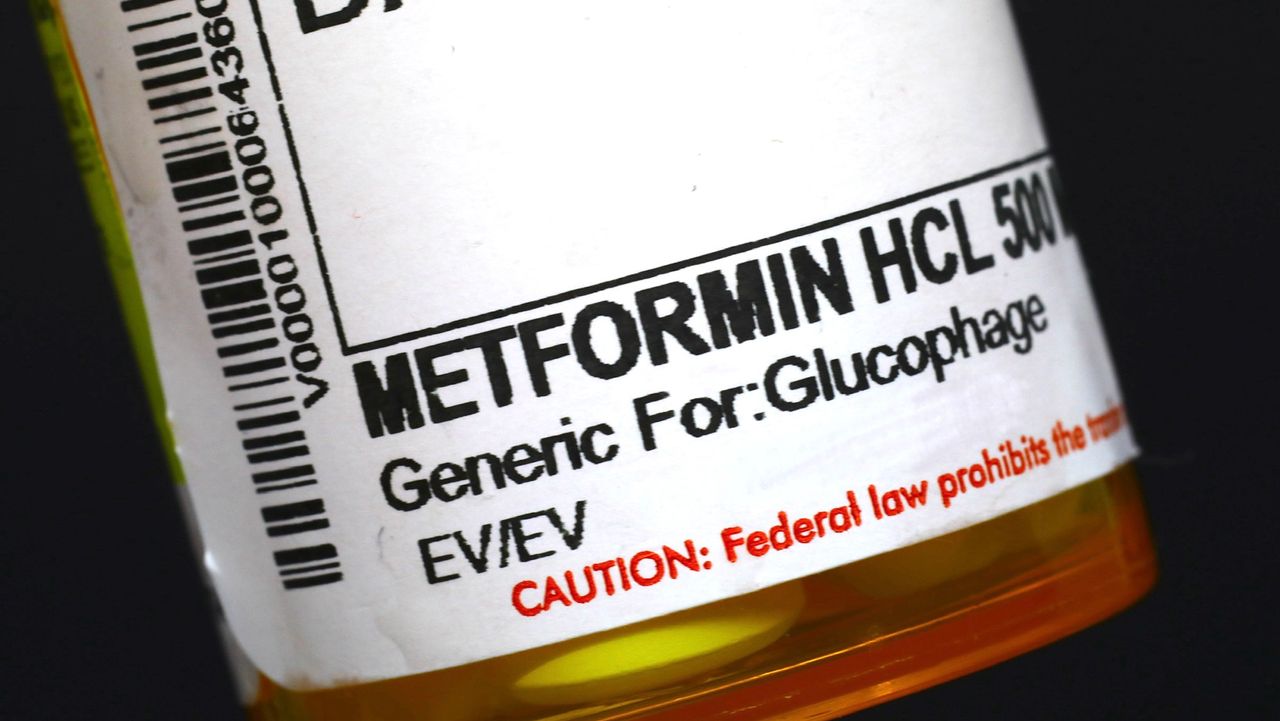
A study published in May in Nature Metabolism found that metformin works by targeting mitochondrial complex I not in the liver but in the intestines, where the drug builds up to higher concentrations.
Study co-author Navdeep Chandel is a biochemist at Northwestern University.
Metformin forces gut cells to absorb and burn extra glucose, achieving this by interfering with the mitochondria of gut cells.
Chandel said: "Every year there's a new mechanism for metformin that says last year's mechanism was wrong."
Metformin is used primarily in type 2 diabetes and was first used in patients in the 1990s, but scientists have been unsure how it works.
Manuel Vazquez Carrera, a pharmacology researcher at the Sant Joan de Deu Research Institute who was not involved with the study, said metformin has a complex mechanism of action, with effects in several organs and on different aspects of metabolism, making a single explanatory mechanism difficult to identify.
Distinct publishers with included, body-backed reporting in this cluster.
Follow any of these and your For You feed starts watching them — no settings page required.
science
Feeds are triaging patients by engagement, and the proposed defence is literacy, not moderation1 distinct publisher
science
Ancient DNA keeps changing the sex of the richest graves. The backlog is the story1 distinct publisher
science
IBM's bottleneck was cold volume, and its answer is an 8-foot box you can bolt to another one1 distinct publisher
science
Why GIP agonists and antagonists both cut weight: two brain regions, not one contradiction1 distinct publisher
Evidence-backed comparisons of source perspectives and observed adoption signals. Read the methodology
Which Builder, Operator, and Investor concerns the observed source mix emphasized—not a truth score.
Evidence, demonstrated adoption, hype gap, incentives, and confidence are assessed independently, each on its own current evidence. How these are measured.
Legible experimental chain, one retelling
For consumer science writing the evidentiary spine is unusually visible: a human metabolite signal that names its own tissue of origin, a genetic bypass that predicts the loss of drug effect, a glucose-accumulation readout that agrees, and a DOI pointing at the peer-reviewed paper. What keeps it out of the high band is that every piece reaches the reader through one retelling, the decisive quantity is spoken rather than quoted from the paper, and the animals are mostly male.
No practice signal to measure
Metformin's existing use is taken as background and nothing in this reporting shows anyone acting on the finding — no trial, guideline revision, diagnostic built on the citrulline marker, or company response appears. The authors' stated next step is more research on the liver and microbiome. We are not going to convert a drug's decades-old popularity into uptake of a three-month-old mechanism.
Headline settles what the body leaves open
The headline says scientists 'just figured out' the mechanism. The body says 80% of the acute effect, largely in male mice, with the liver and gut microbiome explicitly deferred to future work — and quotes the study's own co-author observing that metformin mechanisms get overturned every year. The overstatement is real but self-limiting: the correction is printed a few paragraphs below the claim it undercuts.
The pivotal number is the author's own
The single figure the story turns on — 80% — comes from a co-author describing his own paper to a reporter, and the phrase 'main mechanism' is his too. Against that, the one outside voice is genuinely outside and is allowed to push back twice. No funding source, patent, or conflict disclosure appears anywhere, and with metformin off patent there is no obvious commercial sponsor to look for, which limits the pressure rather than resolving the silence.
Single teller, single paper
Our reading depends entirely on Live Science having transcribed accurately a study we can only see through it; no independent replication or second account is available to triangulate. A small provenance wrinkle sharpens the caution — the text dates publication to May while the reference line carries a 2026 citation — and the correspondence between the human citrulline signal and the mouse bypass result is what keeps confidence at the middle rather than below it.