Security1 publisher3 min readPublished
NPS Bought Flock. Internal Paper Says License Plate Reader; Public Statement Says Traffic Counts
Rangers are objecting to plate readers at Yosemite and elsewhere, and an internal Park Service letter describes Verkada cameras filling the license plate gap where Flock is absent.
The Watch · Security desk
Drafted by a language model from the sources cited here and checked against its claim ledger before publication. How we use AISend a correction
What happened
- The National Park Service, the agency tasked with managing U.S. national parks and monuments, has purchased Flock cameras and had them installed at parks including in Yosemite.
- Current and former NPS rangers are unhappy about the Flock cameras; 404 Media granted the ranger sources anonymity because they were not permitted to speak to the press.
- Flock cameras constantly scan the license plate, color, model, make and other identifying features of every vehicle that drives past, creating a timestamped record of where a vehicle was at a particular time, and by extension a person.
- Flock data is available to Flock's law enforcement customers and is usually queried by police without a warrant.
- Many Flock cameras are part of a national network that other law enforcement officials can query; for example, a cop in Texas might query the network to look for a specific vehicle and search cameras across the country.
Compiled by The WatchSomething wrong?How this is made
Why it matters
The National Park Service has purchased Flock cameras and had them installed at parks including Yosemite, and current and former rangers are objecting to it, according to 404 Media [1][2]. That combination is what makes this a procurement-governance problem and not only a privacy one: the loudest internal critics are the employees who staff the gates, and the agency's public description of the hardware is narrower than an internal letter describing the same category of equipment [11][9][14].
Flock cameras continuously scan the license plate, color, make and model of passing vehicles and build a timestamped record of where a vehicle, and by extension a person, was at a given moment [3]. That data is available to Flock's law enforcement customers and is usually queried without a warrant [4]. Many cameras sit in a national network, so a police officer in Texas can search for a vehicle across cameras nationwide [5]. Reporting on officers abusing that access to stalk people with no investigative purpose, and on local police running lookups for ICE, is what has turned Flock into a live municipal fight [6].
The park locations were surfaced from outside. WBTW News 13 reported earlier this month that Flock cameras are installed inside Yosemite, citing data from DeFlock, an open source map of automatic license plate reader locations [7]. The same data shows a Flock camera on a road toward the Golden Gate National Recreation Area [8].
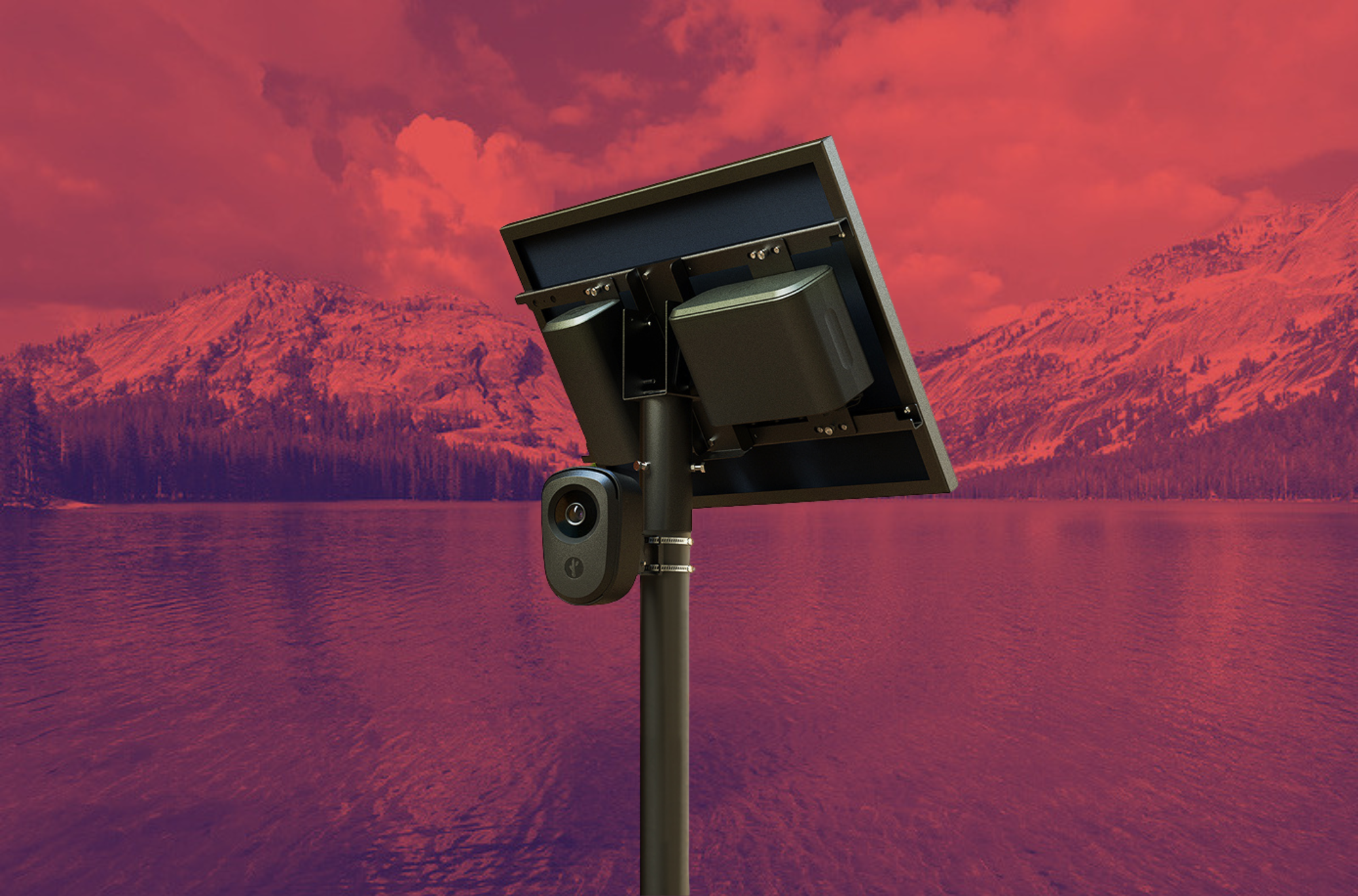
The internal document is more specific than anything NPS has said publicly. A letter from Michael Donato, acting deputy superintendent of National Capital Parks - East, to the Washington Support Office Visitor and Resource Protection Program says NPS also plans to install cameras from Verkada, a company with a history of abusing its own products and whose cameras sometimes carry facial detection capabilities [9]. The letter, which 404 Media viewed, states: "Some parks have USPP [United States Park Police] Flock cameras for license plate recognition, but for parks that don't, the Verkada cameras will provide LPR" [10].
NPS told 404 Media that Yosemite uses a traffic-monitoring system to measure vehicle counts, travel times and entrance-station wait times, and that the cameras "are not connected to law enforcement or DMV databases" [11]. Read against the letter, that statement covers one system at one park and does not address the Park Police Flock cameras or the planned Verkada LPR rollout described internally [14]. Two units of the same agency are therefore buying plate readers on different rationales, with no single accountable owner visible in the material.
The rangers, granted anonymity because they were not permitted to speak to the press, framed it as consent rather than capability [2]. One said Flock "protects property, not people or parks" and called the surveillance "a disrespectful invasion of privacy" [12]. Another pointed at Yosemite's attempt last year to backdate a rule change on hanging flags from El Capitan, and asked what that kind of malfeasance looks like combined with the ability to track any visitor anywhere in the country [13]. The same ranger said they feared a visitor being pulled over and held at gunpoint because a plate reader misread a plate [13].
Watch whether NPS reconciles the traffic-monitoring characterization with the Park Police deployments, whether the Verkada purchase proceeds and with facial detection enabled or disabled, and whether retention and query rules are published before more cameras appear on DeFlock's map. Also watch whether ranger objections ever surface through an official channel instead of anonymous quotes.