Science1 publisher2 min readPublished
Glacier shrinkage is loosening mountain slopes far beyond the Himalayas, researchers tell Live Science
Two glacier researchers say the loss of ice and permafrost is destabilising slopes well outside High Mountain Asia, and the Peruvian Andes carry the same failure mode that killed thousands there in the 1960s.
The Scientist · Science desk
What happened
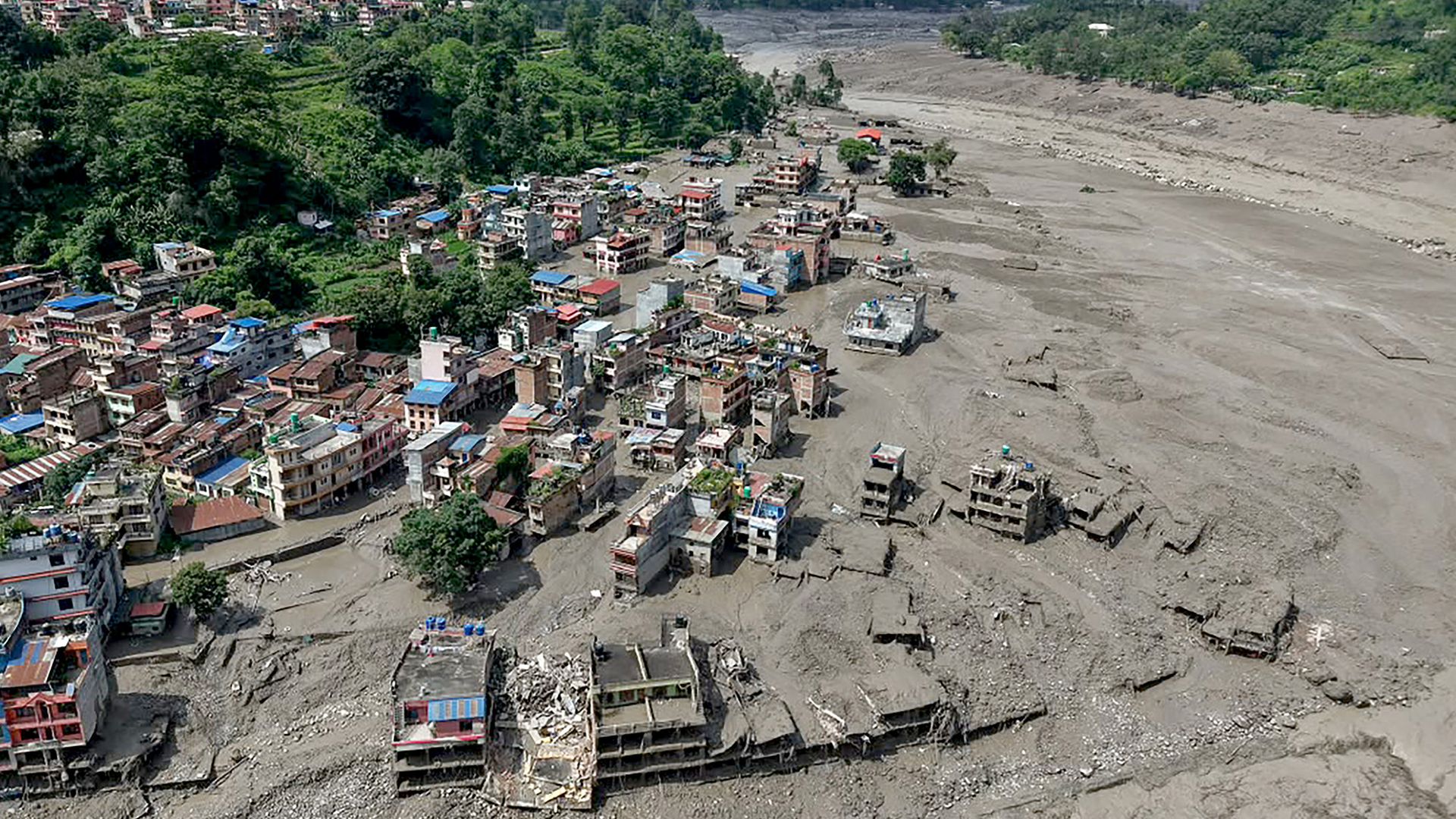
- The Nepal-Tibet flood of Aug. 26 had killed at least 1,400 people as of Sept. 16, and more than 6,000 people were still missing.
- The Stimson Center reports that a large mass of bedrock and glacial ice detached from the mountainside, accelerated to 150 metres per second and fell 2,000 metres straight into the Lhende River in Tibet.
- The flood caused damage more than 100 kilometres from its source, while the 2025 Birch glacier collapse that destroyed the Swiss village of Blatten travelled 4.2 kilometres.
- Peru holds 68% of the planet's tropical glaciers, and its Cordillera Blanca is considered a particular hazard because its glacial lakes are expanding rapidly as the ice melts.
Compiled by The ScientistSomething wrong?How this is made
Why it matters
- constraint The best-known exposure figure for High Mountain Asia counts people below lake dams; no comparable count exists for people under slopes that can detach.
- capability A useful warning for this hazard has to be triggered at the detachment itself, because the descent speeds recorded in Tibet leave downstream communities minutes.
- precedent Huascaran shows a slope can fail catastrophically twice within a decade. Sites that have already failed are candidates for instrumentation even where no lake has formed.
- decision Every large dam being sited in the seismically active Himalayas and Tibetan Plateau assumes the slope above it holds for the life of the structure.
"Slope failure from glacier shrinkage is occurring everywhere," Mark Carey, a professor of environmental studies and geography who directs The Glacier Lab at the University of Oregon, said in an email to Live Science [2]. The reason is mechanical. "Permafrost and glacier cover help stabilize mountain slopes," he said. "They hold the rock in place." [14] Bethan Davies, a professor of glaciology at Newcastle University, told Live Science that meltwater seeping into a glacier's bed can act as a lubricant and help the ice slide [15]. The Himalayas are warming at twice the global average rate. That warming thins ice cover and adds meltwater [13]. They also sit in one of the most seismically active places on Earth, where tremors weaken glaciers and can set off avalanches, outburst floods or collapse [12].
The 150 metres per second that the Stimson Center recorded on the Tibetan descent works out to about 540 km/h [22]. The rock, ice and water that raced downstream eroded the riverbanks and gathered more debris and water on the way [4]. Steep slopes there funnel material into narrow valleys, and that geometry is how a flood travels far enough to reach the valleys where most people live [16]. Carey said the disaster "was so profound because of the scale of the landslide, the quantity of water in the flood, the speed of the flood, and the number of people, communities, public works/infrastructure in the flood path" [5]. "There was also little warning," he said [6].
The exposure figure usually quoted for the region describes a different failure. A 2023 Nature study found more than 9 million people in High Mountain Asia at risk from glacial outbursts, meaning a lake that bursts through or overtops its dam and drains rapidly [7]. That area takes in parts of China, Afghanistan, Nepal, India, Pakistan, Bhutan, Kazakhstan, Uzbekistan, Kyrgyzstan and Tajikistan [8]. The Aug. 26 event started on a slope. Davies added that the region's large population is what makes its geographic hazards so dangerous [25].
Carey's example from outside Asia is a single Peruvian slope. "In Peru in 1970, 6,000 people died when an earthquake shook loose part of the glacier and rock on Mount Huascarán," he said [19]. "The same slope had failed in 1962, causing a massive rock-ice landslide that buried the community of Ranrahirca, killing about 2,000 people in an event similar to the one recently in Nepal-China" [20]. Two failures eight years apart on one mountainside, about 8,000 dead [24].
What to watch
- Updated figures on the more than 6,000 people still missing after the Aug. 26 flood.
- Any published exposure count that maps populations living below unstable slopes, not only below glacial lakes.
- Instrumentation or early-warning work on the rapidly expanding glacial lakes of Peru's Cordillera Blanca.