Product1 distinct publisher3 min readPublished
The tool is free and needs no log-in, which makes a pre-prompt scrub adoptable in seconds and impossible to evidence, so the real decision is where the step sits in the workflow rather than whether you announce it.
The Product Desk · Product desk

Compiled by The Product DeskSomething wrong?How this is made
The person pasting page 79 of an insurance contract into a chatbot is not defying anybody's policy. The roundup republished by Fast Company names that exact moment as the use case: you want an assistant to comb complex fine print because you are not a lawyer [6]. What teams tell themselves is that the memo covers this. What people do is paste the whole document and hope.
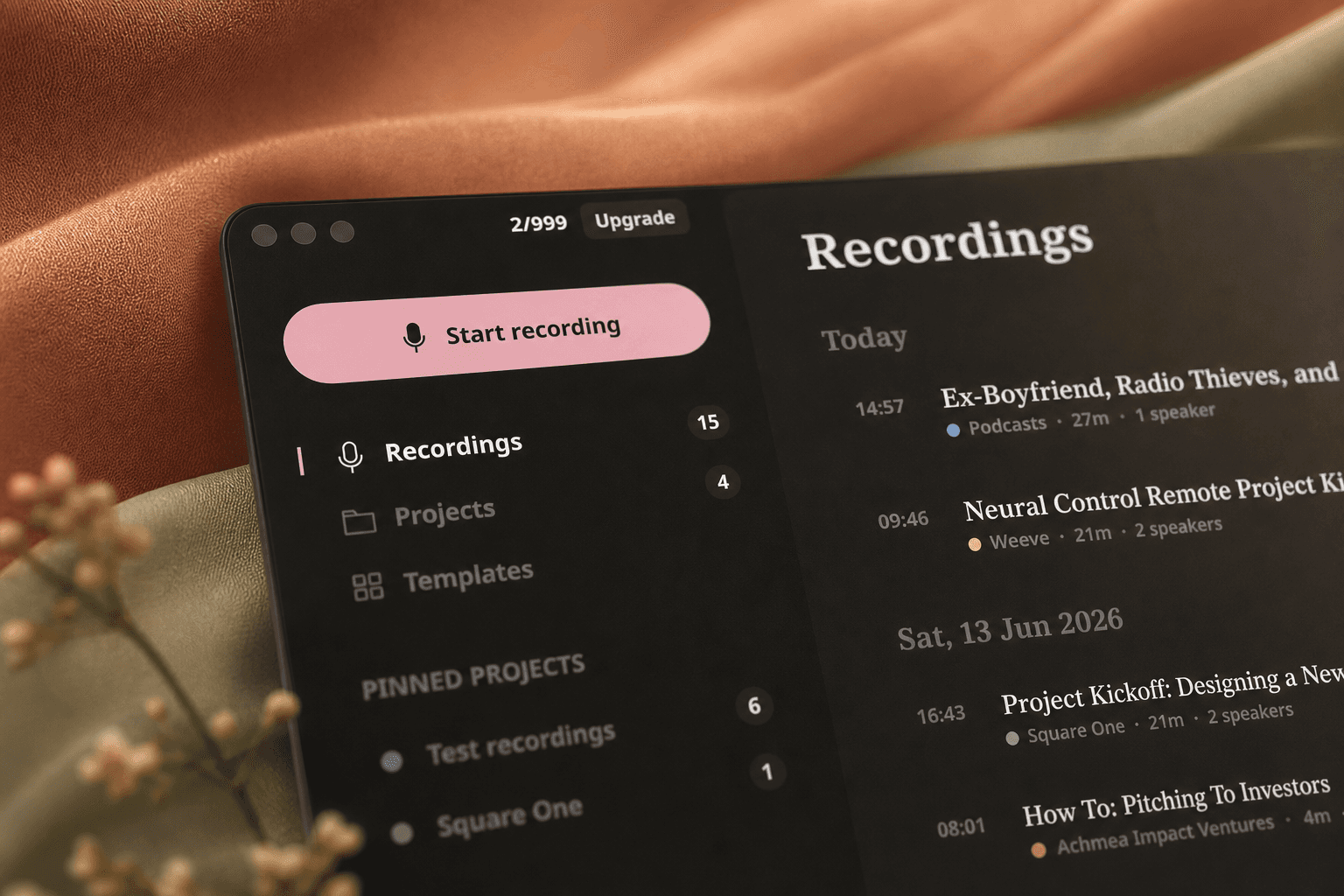
Weeve takes out names, addresses, company details and other identifying elements [1]. What it leaves is the substance, which for contract review is the point, because the question is usually about the clause and not the counterparty. For an HR complaint or a support transcript, identifiers are the smaller half of the problem, and the scrubber hands back a file that still says what happened to whom. There is also a cost on the return leg: once the model answers about Party A, somebody has to map placeholders back to real names, by hand, in a browser tab.
Being free and requiring no log-in [2] is what makes the step adoptable and also what makes it unprovable. No console exists, and no record that the scrub ran. So the honest home for it is the runbook next to the tab where the paste happens, not a policy PDF. Set that against the other control the same roundup mentions, which is switching off training in the chatbot's own settings [4]. That one you can check by looking at someone's screen, and it holds on the day they forget. Scrubbing earns its keep where the vendor's terms cannot be read at all: by the Cybernews analysis the roundup cites, 315 of the 500 top AI companies assessed, or 63 percent, do not disclose whether they train on user data [15][16].
For material that should not leave the machine, the local transcription options run offline [10][11], with the caveat that local models eat disk space and want at least 8GB of RAM, so a 2018 laptop may struggle [12]. Price that before standardising. Weeve's unlimited note taker is 120 euros a year, about $140 [9], while MacWhisper's premium lifetime license is 64 euros, about $75 [10], which puts the subscription at roughly 1.9 times the lifetime license in year one [17]. Basalt, which actually destroys redacted PDF text rather than drawing a box over surviving words, is $29 for a lifetime license covering up to three Macs [14], under $10 a machine [18].
Sort each recurring paste on two axes: whether the sensitive part is the identity or the substance, and whether the answer comes back into a system of record or gets read once and closed. Identity plus read-once is the Weeve case, and it is a real one. Identity plus system of record means somebody owns the re-identification step, and that is where the errors will land. Substance, either axis, means keep the file on the laptop or use an account with a contract behind it. Proton's AI Paper Trail sits outside that grid [13]; it reports what already went out, which is the question asked after an incident rather than before one.
Ranked by verification strength, evidence, and original report placement.
MacWhisper is a free private transcription option that works offline on live meetings, YouTube videos and audio or video files; a lifetime license with all premium features costs 64 euros (about $75) and can be used on multiple computers.
Vibe is free, offline, runs on Windows or Mac, supports nearly 100 languages, and can transcribe videos from a pasted YouTube, Facebook or LinkedIn URL.
Basalt securely redacts PDFs by destroying the redacted words or images rather than covering text that survives underneath, has 17 other PDF features, works offline, and costs $29 for a lifetime license for up to three Macs after a free 24-hour trial.
Weeve is free and takes seconds, with no download or log-in required.
Weeve is a Dutch startup.
On a free AI plan, what you feed a chatbot might later be used to train its model; users can opt out of training by adjusting their settings.
Distinct publishers with included, body-backed reporting in this cluster.
1 article · August 29, 2026
Follow any of these and your For You feed starts watching them — no settings page required.
product
Proton's Yen stops refusing AI and ships Lumo, moving the privacy fight to terms1 distinct publisher
product
Two years of jobs data invert the AI risk rankings: clerks shrink, managers grow1 distinct publisher
product
Eight smartwatches reach their support cutoffs in one four-month window, and the hardware is fine1 distinct publisher
product
Samsung's Fold8 moves the foldable compromise, it does not remove it1 distinct publisher
Evidence-backed comparisons of source perspectives and observed adoption signals. Read the methodology
Which Builder, Operator, and Investor concerns the observed source mix emphasized—not a truth score.
Evidence, demonstrated adoption, hype gap, incentives, and confidence are assessed independently, each on its own current evidence. How these are measured.
One newsletter, unevenly tested
Everything runs through a single pipe: a Wonder Tools post republished by Fast Company. That pipe is not uniformly thin — the author has used MacWhisper for years and paid to upgrade it, and he ran his own exported chat memory through Proton's Lumo Paper Trail and reports what he found. But Weeve, the tool in the headline, gets no such treatment. What the scrubber catches, what it leaves behind, and where your pasted contract sits while it works are all unstated, and no second outlet or vendor statement exists here to fill the gap.
Prices, not users
We can quote what every one of these tools costs and not one number about anybody using them. No downloads, no install base, no named company that put a redaction step in front of its chatbot policy. Weeve's own design guarantees the silence: a tool with no log-in generates no user count to disclose. Cybernews's 63% measures what vendors decline to say about training, which sizes the worry but tells us nothing about uptake of the fix.
One verb doing too much work
The pitch is admirably small — free, seconds, no download — and small pitches rarely overreach. The overreach is a single verb. 'Removes' is asked to license a behaviour change: it is now safe to paste the contract. Nobody in this reporting checked the residue, and the same absence of friction that makes the step adoptable in seconds makes it unprovable afterwards. Basalt's destroyed-text claim carries the same shape of promise with the same missing test.
Recommendations are the product
Wonder Tools sells discovery, and Fast Company gets the piece by republishing it with permission; no affiliate arrangement or sponsorship is disclosed on either side, and none of the vendors is named as a partner. The pressure is subtler. Every privacy property that matters here — nothing leaves your computer, redactions destroyed, prompts not stored — is vendor marketing restated by a writer whose currency is enthusiasm. Cybernews gains from having its ranking quoted, and Proton and DuckDuckGo collect the closing endorsement.
Firm on prices, soft on safety
Take the euro figures, the RAM floor and which app runs on Windows as reliable; they are checkable in an afternoon and consistent with the author's evident hands-on use. Withhold trust exactly where a decision lives — whether the scrub is complete enough to change what you are permitted to paste. That question has one unverified source, and no way to settle it from what has been published.