Invest1 publisher3 min readPublished
Tether says it is not building a chain, which tells you where its money is going instead
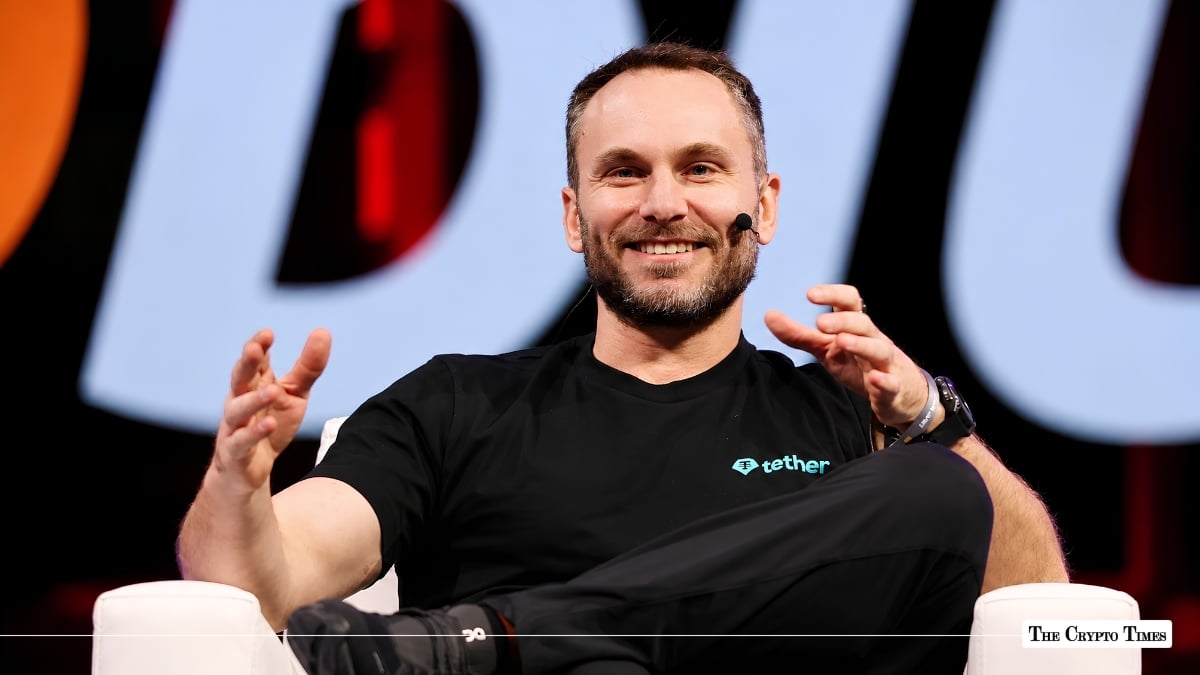
Paolo Ardoino's August 15 denial followed a report placing Tether in a $1bn "stablechain" race with Stripe and Circle. The line he drew was between funding chains and running one.
The Investor · Invest desk
Drafted by a language model from the sources cited here and checked against its claim ledger before publication. How we use AISend a correction
What happened
- Tether CEO Paolo Ardoino issued an emphatic denial on August 15 that Tether is building a blockchain.
- A CoinMarketCap report published the previous day (August 14) named Stripe and Circle alongside Tether as participants in a 'stablechain' push, describing a group of firms allegedly raising over $1 billion to build dedicated dollar-focused blockchains.
- Ardoino stated plainly that Tether is 'NOT building any blockchain', drawing a sharp line between investing in projects and constructing proprietary infrastructure.
- Tether reportedly backs two competing blockchain projects, Plasma and Stable, and Ardoino framed these relationships as financial support and collaboration rather than evidence of Tether building its own chain.
- Tether describes itself as 'agnostic' with respect to transport layers, meaning it will operate across multiple existing blockchain networks for distributing USDT rather than locking itself into a single proprietary network.
Compiled by The InvestorSomething wrong?How this is made
Why it matters
Tether chief executive Paolo Ardoino said on August 15 that his company is "NOT building any blockchain," a day after a CoinMarketCap report grouped Tether with Stripe and Circle in a push by firms said to be raising more than $1 billion to build dedicated dollar-focused chains [1][2][3]. That matters less as a correction than as a statement of position: Tether is happy to be a funder of settlement infrastructure and unwilling to be an operator of it.
The denial is narrower than it first sounds. According to the report as relayed by Crypto Briefing, Tether backs two competing blockchain projects, Plasma and Stable, and Ardoino characterised those relationships as financial support and collaboration rather than evidence of proprietary construction [4]. So the sentence being rejected is "Tether is building a chain," not "Tether is paying for chains to exist" [13]. Backing two rivals at once is the tell. That is a portfolio, not a roadmap [14].
The reasoning Ardoino gave rests on Tether's description of itself as "agnostic" about transport layers, meaning it distributes USDT across multiple existing networks rather than committing to one it owns [5]. USDT already runs on major public chains including Ethereum and Tron [6]. Crypto Briefing argues that multi-chain reach is arguably Tether's strongest competitive advantage, and that owning a network would force the company to attract validators, court developers, build tooling and persuade a fragmented market to adopt another chain, all while maintaining the multi-chain presence that makes USDT useful [11][7]. Staying neutral, on that reading, lets Tether follow whichever new network gains traction rather than being tied to one ecosystem's outcome [12].
The counter-case belongs to the other two names in the report. Circle, the issuer of USDC, has been more openly exploring infrastructure plays, and Stripe's interest in stablecoins is well documented [8]. The argument there, as Crypto Briefing frames it, is that if stablecoins are going to process trillions in value, the rails should be purpose-built rather than borrowed [9]. That is a bet on capturing the transaction layer as well as the float. Tether's stance concedes the transaction layer and keeps optionality over where volume settles.
Two things the source material does not establish are worth flagging. It does not say how much of the reported $1 billion, if any, is Tether capital, and it does not disclose the size or terms of Tether's positions in Plasma or Stable [15]. Ardoino has run Tether as CEO since December 2023 while also serving as chief technology officer at Bitfinex [10], so the denial carries weight on intent but says nothing about the balance sheet behind it.
Watch whether USDT is live on Plasma or Stable at launch, and on what terms, since that is where the agnostic position gets tested. Watch also whether Circle or Stripe confirm the fundraising figure attributed to them, which so far rests on a single report [2].