Product1 publisher3 min readPublished
Sonic Fire Tech raised $15M to outrun a three-year code clock
The acoustics make the demo. The product decision is whether $15 million lasts through an NFPA approval process that normally takes about three years.
The Product Desk · Product desk
Drafted by a language model from the sources cited here and checked against its claim ledger before publication. How we use AISend a correction
What happened
- Sonic Fire Tech announced Monday that it raised a $15 million round led by the O.H.I.O. Fund, with participation from Khosla Ventures.
- The startup previously raised a $3.5 million seed round in October.
- The new funding will help the Ohio-based startup hire more employees and run the battery of tests needed to earn approval from the National Fire Protection Association, which writes model codes adopted by fire departments around the country.
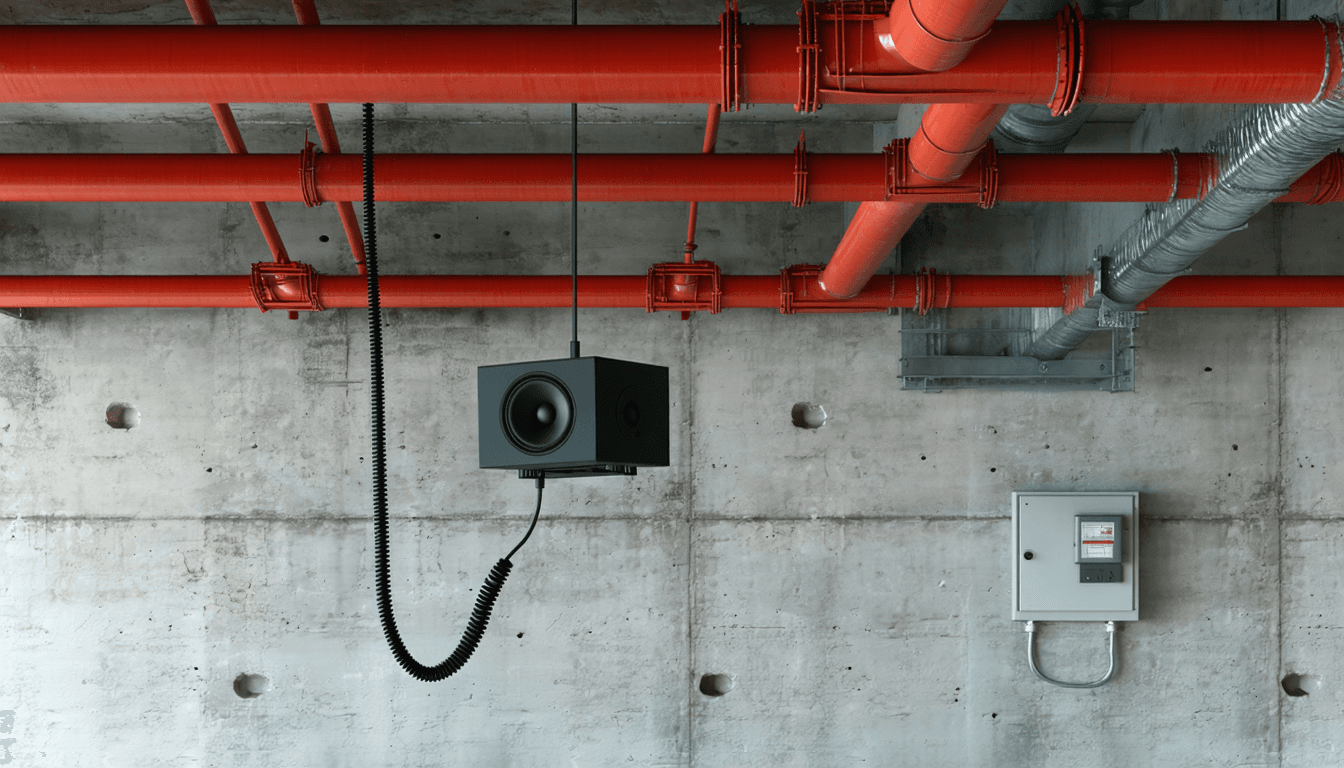
- Sonic Fire Tech's acoustic system uses a sound generator to pump inaudible sound through PVC pipes in the ceiling; when sensors detect a fire, the generator kicks in and infrasonic waves around 20 Hz bombard the flames.
- COO Remington Bixby Hotchkis said: "We are the only technology that creates its own suppressant without collateral damage. False alarms are less of a concern for us... We deploy within seconds."
Compiled by The Product DeskSomething wrong?How this is made
Why it matters
Sonic Fire Tech said Monday it raised $15 million led by the O.H.I.O. Fund, with Khosla Ventures participating, following a $3.5 million seed in October [1][2]. The money is going to headcount and to the battery of tests needed for approval from the National Fire Protection Association, the body that writes the model codes fire departments across the country adopt [3]. That last clause is the actual product.
Acoustic suppression is a legible pitch: a sound generator pushes inaudible sound through PVC pipes in the ceiling, sensors detect a fire, and infrasonic waves at around 20 Hz hit the flames [4]. COO Remington Bixby Hotchkis says the company is the only technology that creates its own suppressant without collateral damage, that false alarms are less of a concern as a result, and that the system deploys within seconds [5]. None of that matters commercially until it appears in code. NFPA approval typically takes about three years [6].
Co-founder and CEO Geoff Bruder told TechCrunch he expects the company's process to be significantly shorter [7]. His stated reason is procedural rather than acoustic: lab tests require hours of preparation, and because the system leaves no mess, there is no cleanup between runs [8]. That is an argument about test throughput, not about how fast a standards committee moves, and the source contains no revised timeline in months or years to check it against [9]. Against a three-year default, $18.5 million raised to date is the operating question [10].
The demand math is more interesting than the physics. About 500 jurisdictions currently mandate interior fire protection systems [11]. Bruder says half of home fires start in the kitchen, and that the sprinklers being installed now cannot handle grease or electrical fires there [12]. Hotchkis says commercial kitchens can face months of cleanup and restoration after a fire, and that roughly 75% of them do not reopen [13]. That is the number a broker understands, and the company is in talks with insurers about whether the system qualifies for premium discounts, which it expects would speed adoption [14].
Insurance is the second clock, and it does not run on a code cycle. An underwriter can price a risk reduction without waiting for model language; a plans examiner cannot approve an installation that no standard describes. A company holding both cards would sell into new construction and retrofits for commercial interiors, kitchens and homes, which is the stated plan [15].
The caveats are stated plainly, which is worth noting. On lithium-ion fires, Bruder says the few tests run so far do not extinguish the fire but contain it, with the aim of keeping the outer casing from igniting and limiting cell-to-cell spread [16]. And the exterior wildfire system has moved more slowly because the company is waiting for time at a suitable testing lab [17]. That is the certification constraint showing up as a scheduling problem, which is what capacity limits usually look like before they look like delays.
Three things to watch. Whether an insurer publishes a discount before any code language exists, since that would reorder the go-to-market entirely. Whether the company ever puts a date on "significantly shorter" [7]. And whether lab access, not lab results, becomes the binding constraint, as it already has on the wildfire product [17].