Science1 publisher2 min readPublished
Scarce bedding raises dopamine-neuron activity in rat mothers around harmful pup care
UT Dallas researchers found rat mothers given less nesting bedding had raised dopamine-neuron activity before and during harmful behaviour toward pups. That complicates the view that adversity simply turns these cells down, since their response depended on what the mother was doing.
The Scientist · Science desk
Drafted by a language model from the sources cited here and checked against its claim ledger before publication. How we use AISend a correction
What happened
- The recorded cells are dopamine neurons in the ventral tegmental area, a population activated by pup interactions and tied to motivation as well as maternal care.
- When separated from their pups, mothers short on bedding showed less activity in these neurons than mothers given enough.
- Both groups responded alike to a food reward, and the team takes that as evidence the change is specific to caregiving.
- The researchers had predicted the neurons would change while mothers were giving adequate care, and that change did not appear.
- Next, the team plans to use machine learning to identify behaviours that predict abuse toward pups.
Compiled by The ScientistSomething wrong?How this is made
Why it matters
- contradiction Accounts in which hardship simply dampens these dopamine cells now have to explain a rise tied to insensitive care in the same mothers whose activity fell when apart from their pups.
- decision Any test of approved treatments has to record activity while mothers are with their pups, because a general reward assay would show no group difference to correct.
- capability A neural signal that climbs just before insensitive behaviour gives the planned abuse-prediction work a candidate early marker to check behavioural predictors against.
The food test is the most useful control in the design. Because this neuron population is involved in general motivation [3], a mother worn down by scarcity might simply have shown weaker responses to everything. Equal responses to a food reward [8] argue against that reading for these animals. Caregiving is left as the setting where the groups diverged.
Within caregiving, the change ran in two directions. Activity rose before and during harmful behaviour toward pups [4] and fell when the pups were taken away [5]. A model in which adversity lowers activity in these cells across the board predicts the fall and not the rise. The paper's title names both variables, caregiving quality and pup proximity [2]. "Stress and adversity are thought to turn down activity in these cells, but this finding suggests it's not that simple. Context matters; how these neurons respond depends on what the mom is doing," said Millie Rincón-Cortés, who led the work at the University of Texas at Dallas [9] [1].
The surprise was in where the signal showed up. "Contrary to our prediction, there was only increased activity right before and during insensitive behavior," Rincón-Cortés said, adding: "it seems to be a maladaptive brain signature" [7].
The study does not show whether the neurons cause the harm. Activity that climbs just before insensitive behaviour fits a population that helps produce it. It fits just as well a population that reflects the mother's state a moment before she acts. According to the authors, the work shows how scarcity shapes this population's activity to hinder caregiving [11]. The authors' phrasing is causal; the results as described establish only timing. The phys.org summary does not report how many mothers were recorded, how large the changes were, or any experiment that silenced or drove the neurons.
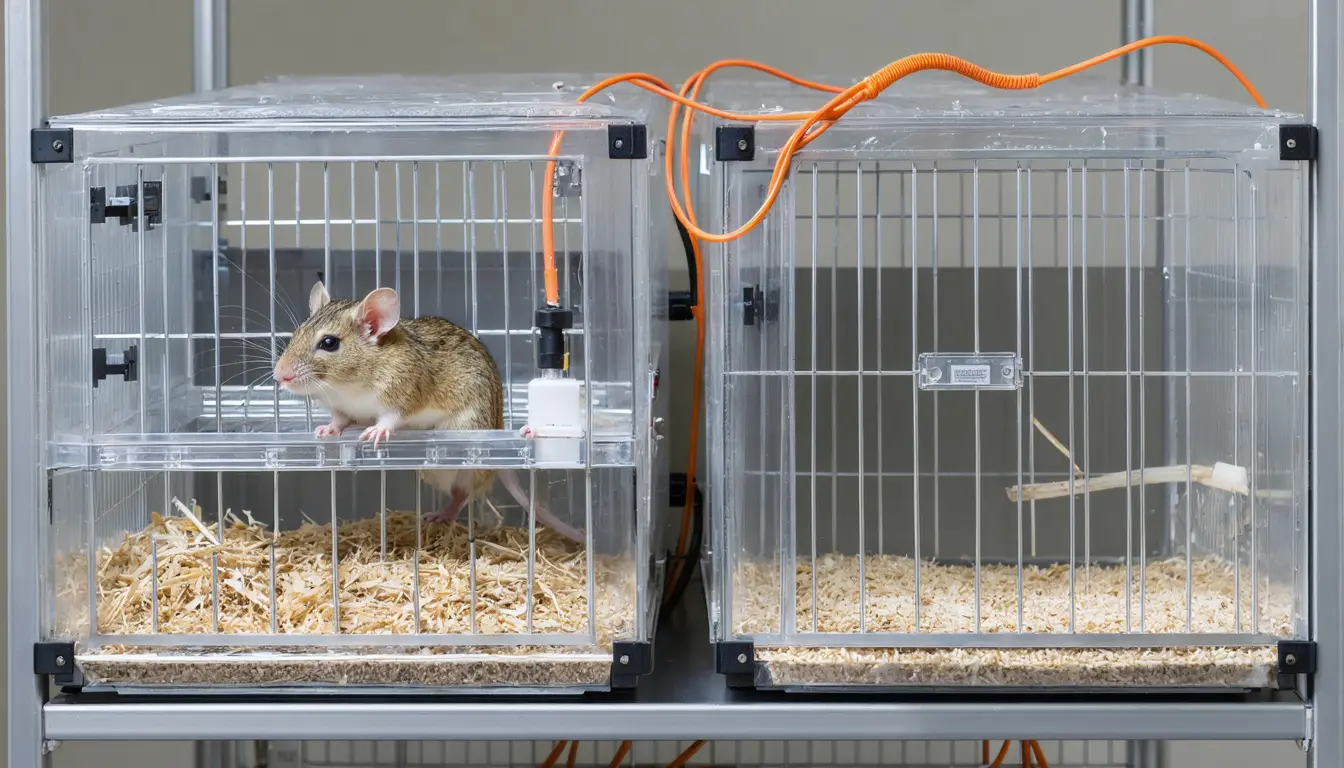
The release frames the study with human mothers, for whom a lack of resources causes stress that can hinder caregiving and lead to postpartum depression [10]. The animals here were rat mothers given less bedding to build nests [4]. Whether human mothers carry an equivalent signal is outside what this experiment measured.
What to watch
- Animal numbers and effect sizes in the full JNeurosci paper, which set how much weight the three-condition pattern can carry.
- An experiment that silences or drives these ventral tegmental area neurons during caregiving, which would test whether the signal causes insensitive behaviour.
- Whether the same pattern appears under forms of postpartum scarcity other than reduced nest bedding.