Science1 publisher3 min readPublished
Children and adults paid a sticker to keep a puzzle shape out of the shredder
Four studies by Fan Yang and Yilin Liu, published in Psychological Science, find that whether a creation is kept or destroyed changes what children and adults will do to make it, and that fun only partly makes up the difference.
The Scientist · Science desk
What happened
- Fan Yang and Yilin Liu ran four studies with children aged 4 to 9 and adults to test whether even minimal significance changes what people bother to do.
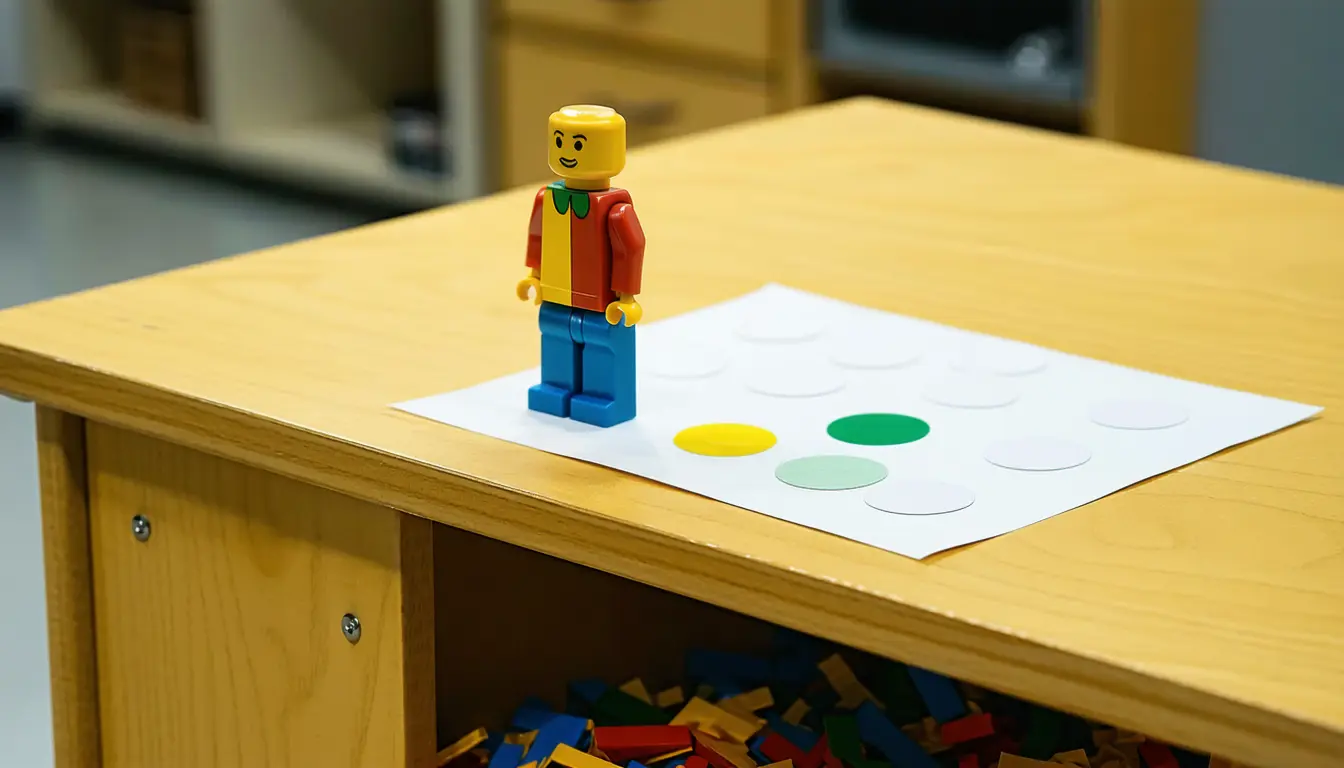
- Participants built shapes from puzzle pieces that would either be kept in a box or shredded, and both children and adults preferred to play the game when the shapes were saved.
- Adults and older children who were told their creations would be trashed did not bother making shapes at all.
- Both age groups gave up a sticker to play when shapes were saved, and were less willing to pay when they had only watched someone else build the shape.
Compiled by The ScientistSomething wrong?How this is made
Why it matters
- capability Keeping an output instead of discarding it costs close to nothing to change, so the significance variable can be manipulated on real tasks without redesigning the work.
- constraint The price of entry in these experiments was one sticker in a single session, and the write-up carries no effect sizes, so anyone scaling this to salaried effort is extending well past what was measured.
- decision When a task cannot be made pleasant, Liu's question about where the output goes is the other option available, and the fun condition suggests the two are not interchangeable.
- precedent A preference visible in four-year-olds makes small everyday activities a legitimate place to study meaning, which the career-and-life-as-a-whole literature had left alone.
The useful condition is the one where the participant built nothing. Watch someone else assemble a shape, then decide whether to spend a sticker on keeping it, and willingness to pay drops [8]. A general dislike of seeing objects destroyed would not behave that way. "It has to be something they personally create for them to really care about it," Yang said. "It's not just a basic preference for seeing things remain intact." [9][10]
The manipulation is small by construction. The pieces, the task and the shape are the same in both conditions, and the only difference is where the finished object goes: a box or a shredder [4].
The final study crossed that fate with the reason for playing. Some participants were told the point was to have fun, the way it is with a sandcastle [11]. Both children and adults made more art under that framing [12]. It did not rescue the shredder condition, where enjoyment alone did not fully compensate for the absent significance [13]. Yang said enjoyment and significance do compensate for each other a little, but that they work more by jointly affecting behavior. "One is about the fate of the outcome, the other is about the process. We as humans probably care about both." [14][15]
The phys.org write-up of the Psychological Science paper does not report sample sizes or effect sizes for any of the four studies [1][22]. What is measured is whether a shape gets built in a session, and whether one sticker changes hands [4][7]. The languishing, quitting and depression the article attaches to low motivation are the reason the question is being asked, not outcomes these experiments tested [21].
Work on significance has mostly examined careers and life as a whole, and small everyday activities have gone largely unstudied [20]. The child sample here ran from 4 to 9, a five-year span [3][23], and the preference for saved work appeared in those children as well as in adults [5]. "It's almost like air. We actually really need it," Yang said [19]. She also said of the need for meaning: "It's not just this luxury, grand concern only for selected people who already have everything." [18]
Liu put the practical version as a substitution of one question for another. "Instead of asking, 'How can I make this job more enjoyable?' We could ask something such as, 'Where does my work go, or what remains here because I did it, or who or what does it affect?'" Liu said [17]. Yang's own case was a crafting class her children came home complaining about, because they were not allowed to take their creations with them. "I almost emailed the teachers to send them our paper," she said [24].
What to watch
- The Psychological Science paper itself: participant counts, effect sizes, and whether the saved-versus-shredded difference holds in the four-year-olds on their own.
- A field replication where the kept-or-deleted manipulation is applied to work people are paid for, with effort tracked over weeks.
- Whether the willingness-to-pay result survives a price with adult stakes, such as money or time, instead of a sticker.