Leadership1 publisher2 min readPublished
A federal district judge restored Missouri's new congressional map minutes after Kavanaugh denied it
The US Supreme Court's refusal to force Missouri's 2025 map into the midterms held only as long as it took a district judge in the same state to rule the other way, on identical legal arguments.
The Board Room · Leadership desk
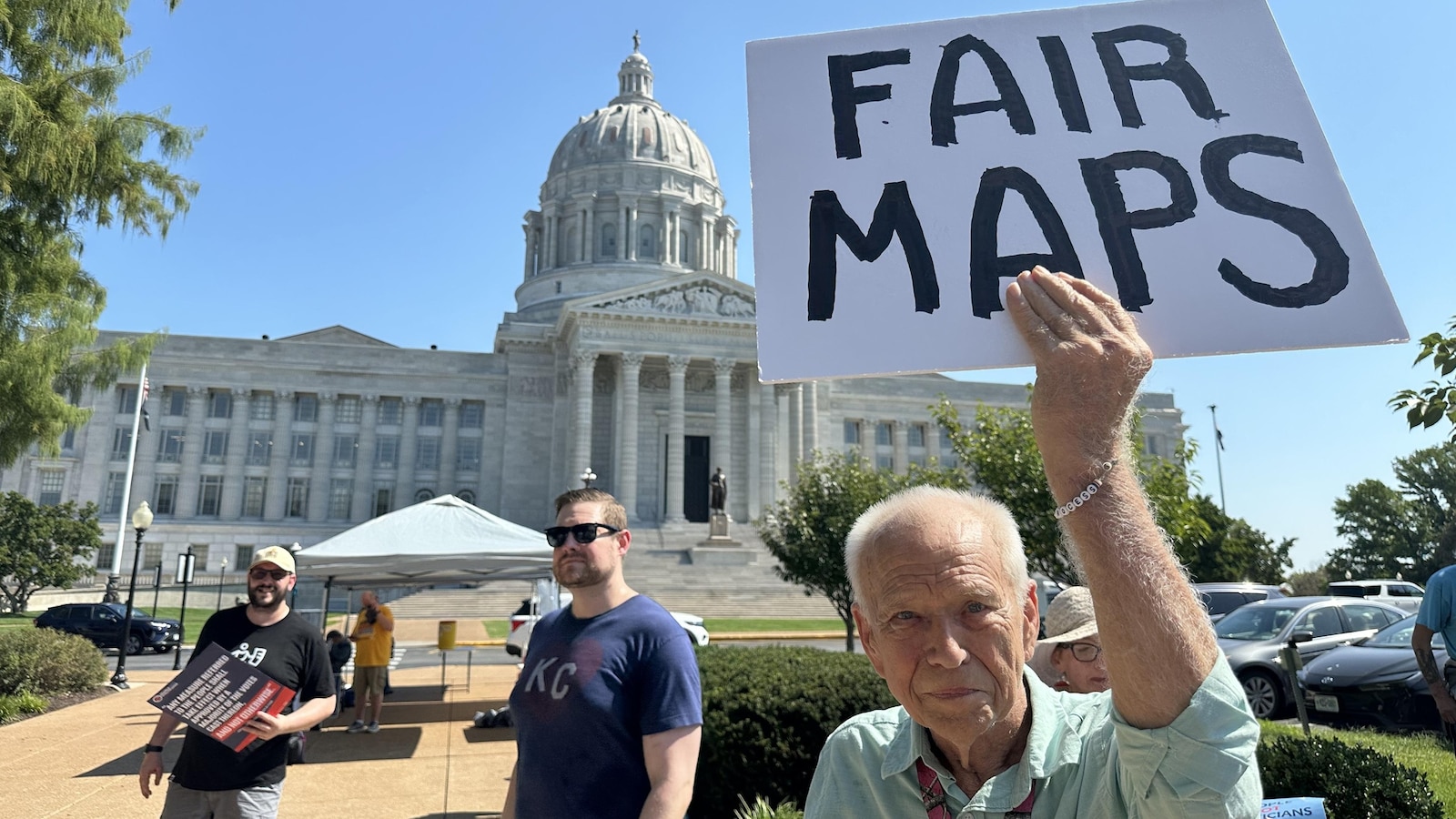
What happened
- The Missouri Supreme Court last Thursday halted a 2025 state law that would have redrawn the state's congressional maps to give Republicans an extra seat in the US House.
- Republicans and Secretary of State Denny Hoskins asked the US Supreme Court to order the new maps into use, and the answer was six words long and signed by Justice Kavanaugh alone.
- Minutes later, Judge Stephen Clark, a Trump-appointed federal district judge in Missouri, ordered the state to use the Republican-drawn maps anyway.
- Clark's case, Onder v. Missouri, rests on virtually identical legal issues but a different lead plaintiff, a Republican member of Congress, and is now on appeal to the Eighth Circuit.
Compiled by The Board RoomSomething wrong?How this is made
Why it matters
- constraint With which map governs still unsettled, Missouri district lines are not a usable planning input: filing decisions and canvass targeting have to be built twice, while field budgets end up built late.
- precedent Running one legal theory through two suits with two sets of plaintiffs makes a Supreme Court loss survivable, and the structure is cheap for any 2026 litigant to copy.
- exposure County and state election administrators absorb the operational risk of contradictory commands, and Vox expects them to work under competing orders for the next two months.
- contradiction One court refused the relief and the other granted it on the same three constitutional arguments, so the split traces to posture and plaintiff rather than to any difference in the law.
An order six words long carries no reasoning, and reasoning is what binds a court below it [3]. Vox reports that the Supreme Court's procedures sometimes let a single justice dispose of an application, and that the justices rarely reach for that route unless they see the question as one-sided [5]; whatever Justice Kavanaugh saw, he did not put it on paper [4]. Judge Clark had nothing to apply, and his opinion says so, noting that Kavanaugh had refused the same relief shortly before [7]. A denied emergency application and a holding on the merits are different objects, and the gap between them is where Missouri's map now sits.
The two cases differ in their plaintiffs, not in their theory. Republicans press the same three constitutional arguments in both [10]. Hoskins is the Republican secretary of state who opened his brief with the line that "A federal-election-administration disaster is unfolding in Missouri" [11], and the Missouri Supreme Court, on Vox's reading, concluded that the disaster was of his own making [12]. In Onder the lead plaintiff is a Republican member of Congress instead [8]. Carrying one theory in two vehicles means a defeat that attaches to the messenger leaves the message intact.
Beneath both suits is a referendum clock. The legislature enacted the maps on September 12, 2025 [13], and opponents filed their petitions on December 9, 2025 [15], 88 days later [16], meeting the state constitution's threshold of signatures from five percent of legal voters in each of two-thirds of the congressional districts [14]. What the constitution then does to a law whose referendum has qualified is the mechanism the state court's halt rests on, and the record available here stops before stating it [21].
Emergency applications are often denied without explanation, and no lower court is bound by such a denial. Those facts describe the law accurately, but they leave the practical question unanswered: which map governs. For a county clerk or a campaign's field operation, the operative fact is which map the ballots are printed against, and Vox reports that this is currently unclear [17].
The narrow question this month is which of two maps governs Missouri's midterms, and Vox's expectation is that the answer turns on why Kavanaugh wrote what he wrote in the Hoskins case [18]. The wider consequence outlasts this cycle. A litigant who files parallel cases with different plaintiffs on identical arguments can lose at the Supreme Court and win in a district court within minutes [6], so through 2026 the working assumption for anyone planning around district lines is that a map is provisional until ballots are printed.
What to watch
- Whether the Eighth Circuit stays or affirms Clark's order in Onder v. Missouri, which decides when either map becomes operative.
- Whether the referendum on the 2025 map is certified and reaches a statewide vote.
- The Supreme Court's ruling in the mail-voting case Vox reports is pending before it.